Why Your Beard Itches and Flakes: Seborrheic Dermatitis or Product Reaction?

Having an itchy beard with flakes is one of the most frustrating grooming problems men face. Those tiny white flakes on your beard or mustache, along with constant itching and irritation, can make you feel uncomfortable and self-conscious.
Most people assume it’s just dry skin under the beard, but that’s not always the case. The real cause is often seborrheic dermatitis in the beard–or even a reaction to the beard products you’re using.
In this guide, we’ll break down the most common reasons for beard itching and flaking, how to tell seborrheic dermatitis from a product reaction, and most importantly, how to get your beard looking and feeling healthy again.
Why Does Your Beard Itch and Flakes?

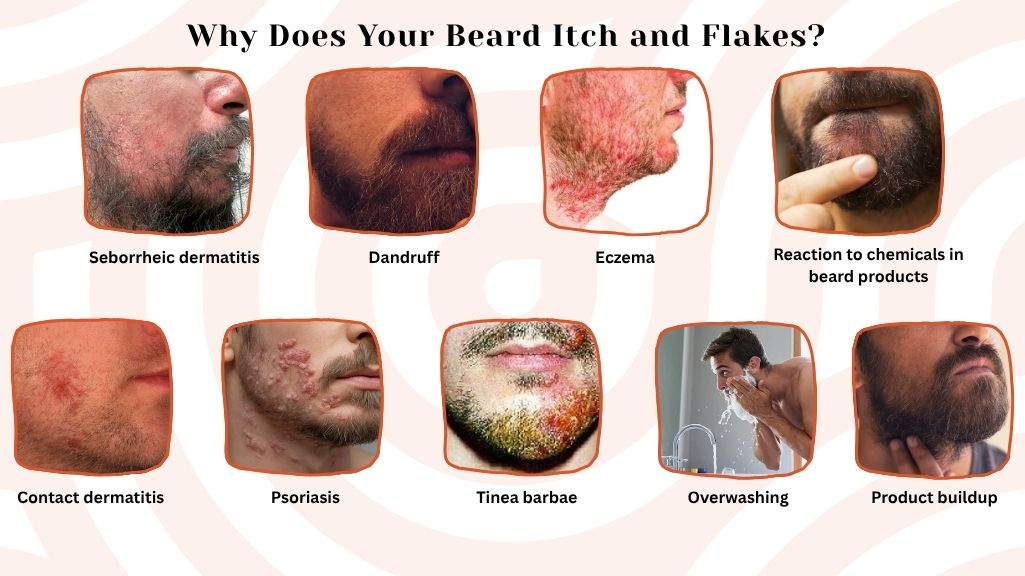
The skin under your beard is more sensitive than you might think–because it’s still facial skin. So when something irritates it, you may develop itching, redness, or flaky skin under the beard. While dry skin is one of the common causes, several other conditions can lead to beard itching and beard dandruff, including:
- Seborrheic dermatitis (the most common cause of beard dandruff)
- Dandruff
- Eczema
- Contact dermatitis (reaction to skin or beard products)
- Psoriasis
- Tinea barbae (fungal infection)
- Product buildup
- Overwashing
And of course, there’s the very common question:
“Why does my beard itch when it grows?”
When new beard hairs grow, the sharp ends can irritate dry or sensitive skin—especially if your skin barrier is compromised. This can make early beard growth feel itchy and uncomfortable, and in some cases, lead to flaking.
While many different conditions can cause an itchy, flaky beard, two of the most common culprits are:
- Seborrheic dermatitis in the beard
- A reaction to beard-grooming products
These two issues often look very similar, which is why so many men confuse beard dandruff with product irritation. Let’s break down each one so you can understand what’s actually happening under your beard.
What is Seborrheic Dermatitis in Beard?
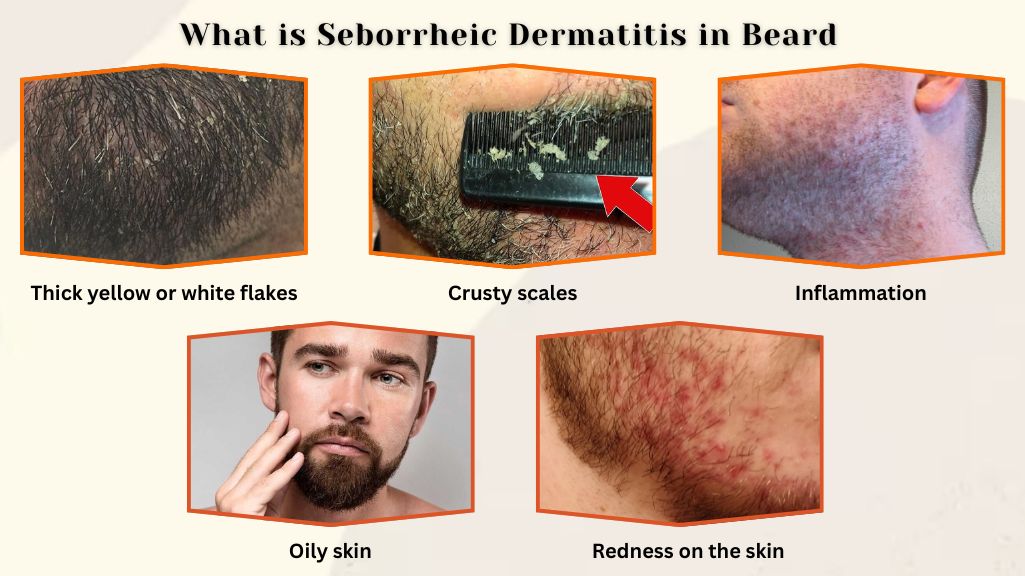
Seborrheic dermatitis is one of the most common causes of itchy, flaky skin under the beard. It’s often described as a more inflamed, persistent form of dandruff. When it appears in facial hair, whether on the beard, mustache, or goatee, it is commonly referred to as beard dandruff or “beardruff.”
Seborrheic dermatitis in the beard can cause a variety of symptoms, including:
- Thick white or yellow flakes
- Greasy or crusty scales
- Skin redness or discoloration
- Itching or irritation
- Oily skin beneath the beard
On lighter skin tones, redness often appears pink or bright red, while on darker skin tones it may look brown, purple, or gray.
Although seborrheic dermatitis may look like simple dry skin, it is actually driven by a combination of biological factors:
1. Excess Sebum Production
Some people naturally produce more oil due to genetics, stress, hormones, or environmental factors. This extra sebum creates an ideal environment for yeast to grow.
2. Overgrowth of Malassezia Yeast
Malassezia is a type of yeast that naturally lives on the skin. When too much oil is present, it multiplies more rapidly. This yeast feeds on sebum, which is why oily skin under the beard is strongly linked to beard dandruff.
3. Skin Sensitivity to Oleic Acid
As Malassezia breaks down sebum, it produces oleic acid. Some people are sensitive to this byproduct, which can irritate the skin, trigger inflammation, and cause skin cells to shed more quickly—leading to visible flakes.
Together, these factors create the classic symptoms of seborrheic dermatitis in the beard: persistent itching, flakes, redness, and greasy scaling.
Product Reaction can Mimic Beard Dandruff
The second most common reason for an itchy, flaky, irritated beard is a reaction to the ingredients in your beard or skincare products. This is known as contact dermatitis—a condition where the skin becomes red, itchy, and inflamed after exposure to an irritant or allergen.
Many beard washes, oils, and grooming products contain harsh or sensitizing chemicals, such as:
- Fragrances
- Parabens
- Sulfates
- Phthalates
- Artificial dyes
- Alcohol
- Silicones
- Formaldehyde-releasing preservatives
These ingredients can:
- Strip away natural oils
- Disrupt the skin’s protective barrier
- Increase dryness and skin sensitivity
- Trigger irritation or an allergic response
When the skin barrier becomes compromised, it loses moisture more easily and becomes more vulnerable to external irritants. As a result, the skin under the beard may become:
- Flaky
- Itchy
- Red or discolored
- Sensitive or burning
- Irritated with rash-like patches
These symptoms often look very similar to beard dandruff, which is why many men confuse seborrheic dermatitis with a reaction to grooming products.
If your symptoms appeared after starting a new beard wash, beard oil, balm, or face product, or if they worsen immediately after use, there’s a strong chance your flaking and itching may be due to contact dermatitis rather than seborrheic dermatitis.
Understanding the difference is essential, because each issue requires a different approach to beard care.
How to Get Rid of Itchy, Flaky Beard?
To finally get rid of an itchy, flaky beard, the first step is identifying the root cause. Flaking from seborrheic dermatitis requires a different approach than flaking from a product reaction, so understanding the difference will guide your treatment.
Below are the recommended approaches for both causes:
Seborrheic Dermatitis Treatment for the Beard
If your beard flakes are caused by seborrheic dermatitis, using the right cleanser is key. The most effective way to manage beard dandruff is by using an anti-dandruff or anti-seborrheic dermatitis shampoo specifically designed for facial skin.
A beard-specific formula, such as Facial Fortress 3-in-1 Anti-Dandruff Beard Wash, is ideal because it is made for the delicate skin under the beard.
How to use a medicated beard shampoo:
- Wet your beard and face with lukewarm or cool water.
- Apply a small amount of cleanser to your hands.
- Massage gently into the beard and skin beneath in circular motions.
- Let the shampoo sit for 1–2 minutes so the active ingredient can work.
- Rinse thoroughly, ensuring no residue remains.
Frequency of use:
- Use once daily during periods of intense flaking or irritation.
- Once symptoms improve, reduce usage to 2–3 times per week for maintenance.
Consistent use helps reduce visible flakes, itching, and oil buildup while supporting a healthier-looking beard and skin surface.
Choose the Right Beard Products
If the itching and flaking are caused by contact dermatitis, switching to gentler products is essential.
Be sure your beard shampoo and skincare products are:
- Fragrance-free
- Paraben-free
- Sulfate-free
- Dye-free
- Phthalate-free
- Hypoallergenic
Regular shampoos, especially ones formulated for the scalp, can dry and irritate the skin under your beard. Instead, choose beard-specific, dermatologist-developed products.
If you’re looking for skin-friendly options, Facial Fortress 3-in-1 Beard Wash is a great choice. It’s gentle, non-irritating, and suitable for beard, face, and scalp cleansing. Always perform a patch test before trying a new product.
Moisturize the Skin Under the Beard
A weak or disrupted skin barrier loses moisture more easily, which leads to dryness, irritation, and flaking. Moisturizing helps support the skin barrier.
Tips:
- After washing, gently pat the beard dry with a towel.
- Apply a beard balm or lightweight beard conditioner to moisturize the area.
- If you have dandruff or seborrheic dermatitis, avoid heavy oils, as Malassezia yeast thrives in oily environments.
- After moisturizing, comb or brush the beard to evenly distribute product.
Consult a Dermatologist
If your beard continues to itch or flake despite using gentle products and proper cleansing, consult a dermatologist. You may be dealing with another skin condition such as:
- Eczema
- Psoriasis
- Tinea barbae (fungal infection)
- Allergic dermatitis
These require different management strategies.
Manage Seborrheic Dermatitis with Facial Fortress
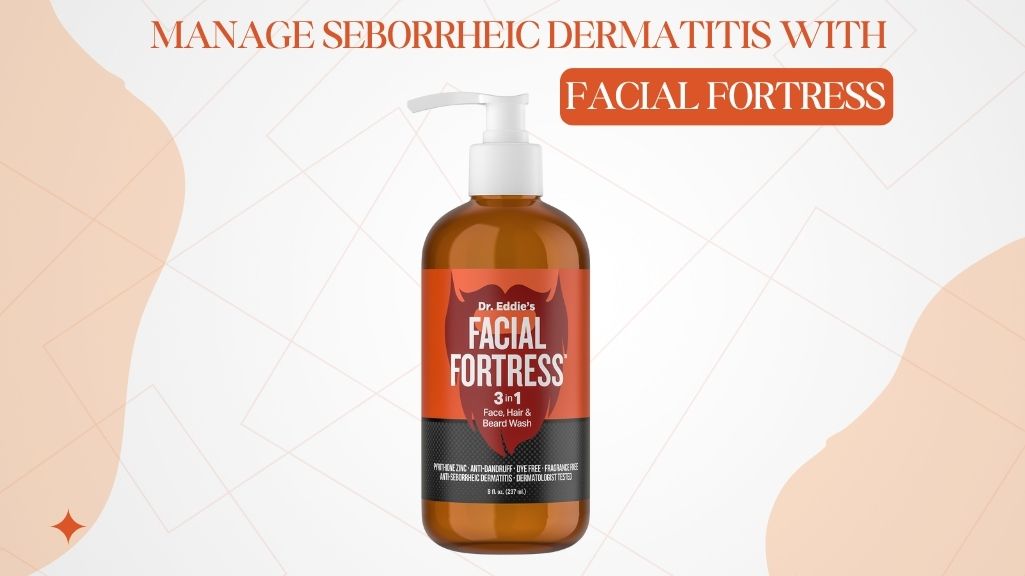
Facial Fortress Anti-Dandruff Beard Wash was created specifically for men dealing with persistent beard flakes, oily skin, and seborrheic dermatitis in the beard area. Developed by physician Dr. Eddie—who has decades of experience treating dandruff and SD—this formula was designed because there simply weren’t many beard-safe, medicated options available.
Why Facial Fortress Works
Facial Fortress contains 0.95% pyrithione zinc, an FDA-approved active ingredient used in OTC dandruff products. Pyrithione zinc is known to:
- Help reduce flaking associated with dandruff
- Help control the growth of Malassezia yeast, a key contributor to seborrheic dermatitis
- Help relieve visible scaling on the beard and mustache
Because facial skin is more delicate than the scalp, using a formula specifically made for the beard is essential—and that’s exactly what Facial Fortress provides.
Gentle Enough for Daily Use
Unlike many harsh dandruff shampoos, Facial Fortress is designed to be:
- Beard-friendly
- Non-drying
- Suitable for daily use during flare-ups
- Effective as a face wash, beard wash, and scalp shampoo
This makes it an easy, all-in-one cleansing option for men with sensitive or dandruff-prone skin.
Infused With Skin-Comforting Ingredients
In addition to pyrithione zinc, the formula includes cosmetic, skin-supportive ingredients such as:
- Licorice root extract — helps improve the appearance of redness
- Apple fruit extract — provides antioxidant support
- Provitamin B5 — helps the skin feel soothed and conditioned
These additions help the skin look and feel more comfortable while complementing the medicated benefits of pyrithione zinc.
Free From Harsh, Irritating Chemicals
Facial Fortress is formulated without:
- Fragrances
- Parabens
- Sulfates
- Dyes
- Phthalates
This makes it especially suitable for men who experience sensitivity to common grooming products.
Conclusion
An itchy, flaky beard is incredibly common, and frustrating, but it always has a cause. In most men, the symptoms come down to one of two issues: seborrheic dermatitis in the beard or a reaction to grooming products. While both can look alike, seborrheic dermatitis often includes redness, inflammation, and greasy flakes, whereas product reactions usually cause irritation, dryness, and sensitivity.
The key to getting rid of beard flakes for good is identifying the root cause and choosing the right approach.
- If seborrheic dermatitis is the culprit, a beard-safe anti-dandruff wash used consistently can help manage visible flakes and irritation.
- If the problem is due to harsh ingredients in your grooming routine, switching to hypoallergenic, fragrance-free beard products is essential.
With the right care, and the right cleanser, you can break the cycle of itching and flaking and finally maintain a beard that looks healthy, feels comfortable, and is truly easy to manage. Whether you’re tackling stubborn beard dandruff or recovering from a product reaction, Facial Fortress offers a gentle, beard-specific solution to keep your skin and facial hair looking their best.

Recent Post
Frequently Asked Questions
How do I stop an itchy, flaky beard?
Is a flaky beard caused by fungus?
What is the white flaky stuff in my beard?
What beard wash is best for flaky skin under the beard?
How often should I wash my beard if I have seborrheic dermatitis?
Why does my beard itch when it grows?