Beard Dandruff vs Dry Skin: How to Tell the Difference
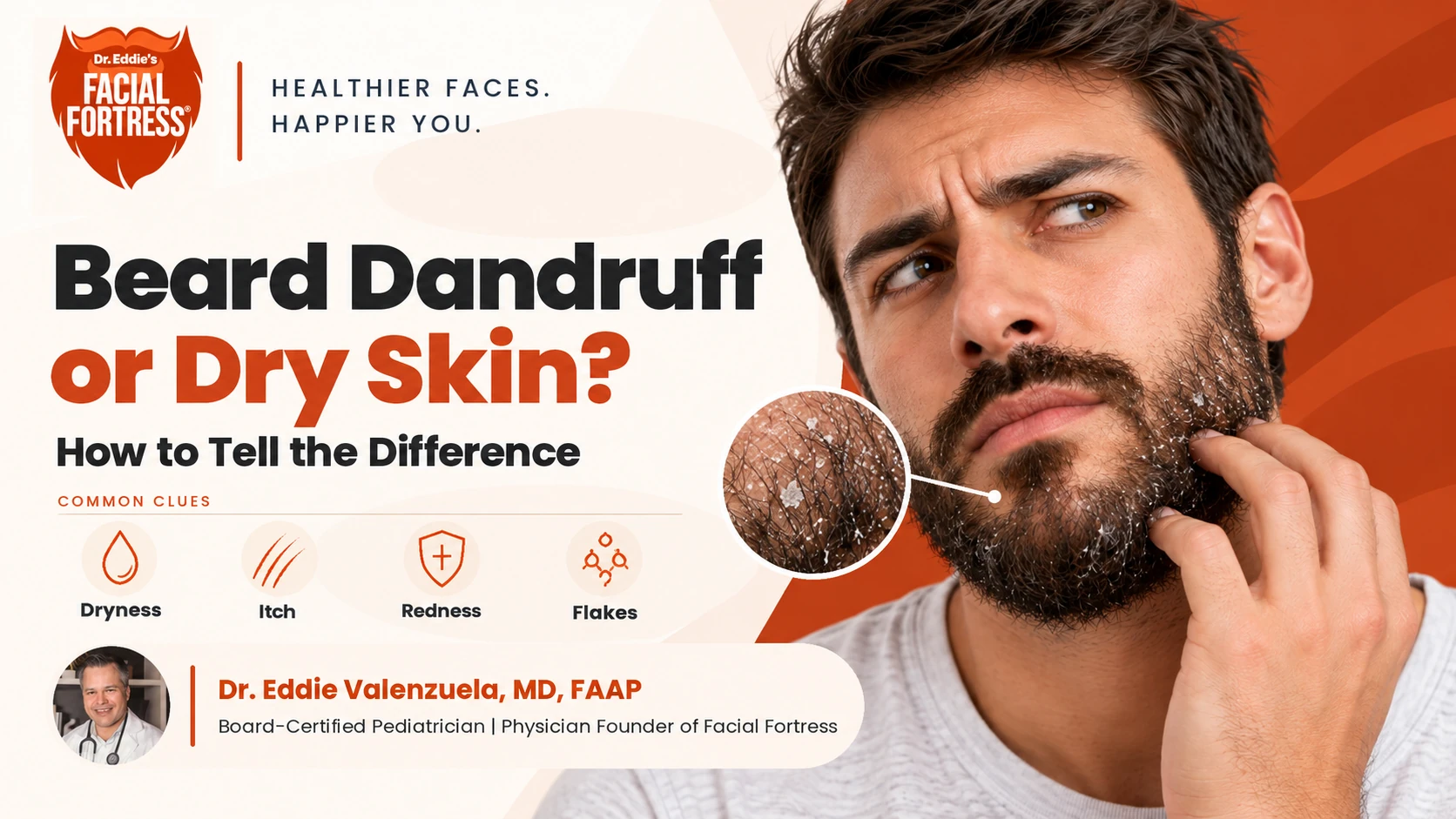
If the skin under your beard is flaky, the cause is not automatically dandruff. Simple dryness, seborrheic dermatitis, irritation from grooming products, eczema, psoriasis, and other skin conditions can all create flakes. The clues are in the pattern: dry skin often feels tight and rough and improves with gentle cleansing and moisturizer, while beard dandruff tends to recur and may come with redness, itching, or greasy scale.
Quick Answer: Is It Beard Dandruff or Dry Skin?
Dry skin is mainly a skin-barrier and moisture problem. “Beard dandruff” is a common name for flaking in facial hair, often related to seborrheic dermatitis. Flake color or size alone cannot diagnose the cause. Look at the whole picture—oiliness, redness, itch, other affected areas, triggers, and how the skin responds to moisturizer or anti-dandruff treatment.
What Is Beard Dandruff?
Beard dandruff is a common term for flaking in facial hair. When persistent scaling affects the beard or mustache, seborrheic dermatitis is one common cause, but it is not the only possibility. Seborrheic dermatitis can also involve the scalp, eyebrows, sides of the nose, and other oil-rich areas of the face. The scale may look dry or greasy, and the underlying skin can be mildly red or irritated.
Seborrheic dermatitis is not simply a problem of making too much oil. It appears to involve an interaction among skin oils, naturally occurring Malassezia yeast, the skin barrier, and an individual inflammatory response. It is also not caused by poor hygiene.
What Is Dry Skin?
Dry skin under the beard happens when the skin barrier is not holding onto enough water and lipids. The skin may feel tight, rough, itchy, or flaky and can sometimes crack. Cold weather, low humidity, hot water, frequent washing, and harsh cleansers can all make it worse. If itching is the main symptom, see our guide to what causes an itchy beard.
Flaking under facial hair can also come from eczema, contact dermatitis, psoriasis, or other skin conditions, so it is worth looking at the entire pattern rather than assuming every flake is dandruff. Typical dry-skin clues include:
- Rough
- Itchy
- Flaky, often with fine scale
- Tight or chapped
These symptoms often improve with a gentle cleanser, lukewarm water, and a fragrance-free moisturizer applied to the skin beneath the beard. Beard oil may soften facial hair, but it is not a substitute for treating an underlying skin condition.
Can Dandruff Look Dry?
Yes. Seborrheic dermatitis can produce scale that looks dry, greasy, white, or yellowish, so the appearance of an individual flake is not enough to diagnose the cause. Malassezia is a normal skin yeast that appears to contribute to dandruff and seborrheic dermatitis in susceptible people, but the condition is more complex than a simple fungal infection. Dry skin, by contrast, is primarily a barrier-and-moisture problem.
How to Tell Beard Dandruff from Dry Skin
No single sign proves the cause, but a few patterns can point you in the right direction. Pay attention to how the skin feels, whether other oily areas of the face or scalp are involved, and whether the problem improves with moisturizer or keeps recurring.
Dry skin more often feels tight, rough, or chapped and may produce fine scale, especially after cold weather, hot showers, or harsh cleansing. It often improves when you simplify the routine and moisturize consistently.
Beard dandruff or seborrheic dermatitis is more likely when scaling keeps coming back and is accompanied by redness, irritation, itch, or involvement of the scalp, eyebrows, or sides of the nose. The scale can be dry-looking or greasy. Patchy beard hair loss is not a typical dandruff sign; if you notice true bald patches, broken hairs, tenderness, or pustules, another condition may be responsible and deserves medical evaluation.
The causes are also different. Dry skin is mainly a barrier-and-moisture problem. Seborrheic dermatitis is multifactorial: naturally occurring Malassezia yeast, skin oils, barrier function, and the immune response all appear to play a role. Weather and stress can influence flares, but they are not the sole cause.
How the skin responds to care can offer another clue. Simple dryness often improves with gentle cleansing and regular moisturizer, while dandruff or seborrheic dermatitis may respond better to an appropriate medicated anti-dandruff product. If symptoms keep coming back, worsen, or the cause is still unclear, it may be worth having the area evaluated rather than continuing to try different products.
The lists below summarize the patterns that are more typical of each condition. They are clues, not a substitute for an examination when symptoms are persistent or unusual.
Clues Your Beard Flakes May Be Dandruff or Seborrheic Dermatitis
- Scale keeps coming back in the beard or mustache area
- The scale may look dry, greasy, white, or yellowish
- The skin underneath is mildly red, irritated, itchy, or sensitive
- You also have dandruff or scaling on the scalp, eyebrows, or sides of the nose
- Moisturizer alone does not fully control the problem
- An appropriate anti-dandruff treatment improves the scaling when used as directed
Clues Your Beard Flakes May Be from Dry Skin
- The skin feels tight, rough, or chapped
- Flaking started or worsened with cold weather, low humidity, hot water, or harsh cleansing
- The scale is usually fine and dry rather than greasy
- There is little or no redness outside irritated or cracked areas
- The problem improves with a gentler routine and consistent moisturizer
- There is no similar recurring scale on other classic seborrheic areas of the face or scalp
What Causes Beard Flakes?
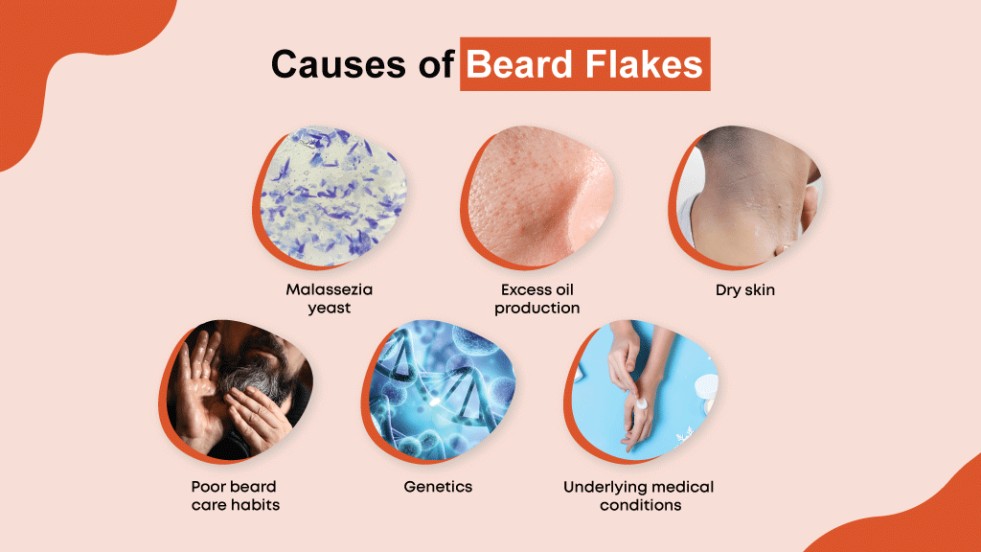
Beard flakes have several possible causes. Seborrheic dermatitis is common, but simple dryness, irritation from grooming products, eczema, psoriasis, and infections can look similar. The pattern of symptoms matters more than the flakes alone.
Malassezia Yeast, Skin Oils, and Susceptibility
Malassezia is a yeast that normally lives on human skin. In people who are susceptible to seborrheic dermatitis, its interaction with skin oils and the skin barrier may contribute to inflammation and scaling. Malassezia enzymes can release free fatty acids from sebum, including oleic acid, which may irritate susceptible skin. That does not mean seborrheic dermatitis is simply a fungal infection.
Skin Oils and Sebaceous Areas
Seborrheic dermatitis tends to show up in areas with many oil-producing glands, including the scalp, eyebrows, sides of the nose, and beard area. Some people have visibly oily skin or greasy scale, while others do not.
Dry Skin and Weather
Dry skin can create flakes under the beard even when dandruff is not present. Cold weather, low humidity, hot water, and over-cleansing can increase water loss from the skin barrier and make the skin feel tighter, rougher, and more sensitive.
Harsh Grooming Products and Over-Cleansing
Dandruff is not caused by poor hygiene. However, very frequent washing, hot water, and harsh or fragranced grooming products can irritate facial skin and worsen dryness. Irritant or allergic contact dermatitis from beard-care products can also cause redness, itching, and flaking.
Individual Skin Susceptibility
People differ in skin-barrier function, oil production, and inflammatory response, which helps explain why the same naturally occurring yeast causes symptoms in some people but not others. A personal or family history of eczema or psoriasis may also raise the possibility that a different inflammatory skin condition is contributing to the flakes.
Other Skin Conditions That Can Look Similar
Eczema, psoriasis, contact dermatitis, and fungal infections such as tinea barbae can all cause flaking in facial hair. Stress may trigger seborrheic dermatitis flares in some people. If you have sharply defined patches, significant hair loss, pain, pustules, crusting, or symptoms that do not respond as expected, the diagnosis should be reconsidered.
How to Treat Seborrheic Dermatitis in Your Beard
Why Facial Fortress Is Different
The American Academy of Dermatology notes that dandruff shampoo can also be used on the beard, face, or other areas affected by seborrheic dermatitis when appropriate. For beard-area dandruff, it also helps to choose a medicated wash designed with facial skin in mind. Facial Fortress 3-in-1 Face, Hair & Beard Wash contains 0.95% pyrithione zinc and is labeled to help relieve flaking, scaling, and itching associated with dandruff and seborrheic dermatitis. Developed by board-certified pediatrician Dr. Eddie Valenzuela with sensitive facial skin in mind, it is fragrance-free, dye-free, sulfate-free, and dermatologist-tested, with glycerin and panthenol to support moisture and licorice root extract to help soothe the appearance of visible redness. That makes it a thoughtfully formulated medicated wash for the face, beard, hair, and scalp—areas where dandruff and seborrheic dermatitis commonly show up. Directions for use are provided on the Drug Facts label.
How to Treat Dry Skin Under Your Beard
Use a Gentle Cleanser and Moisturizer
For simple dryness, start with a gentle cleanser, lukewarm water, and a fragrance-free moisturizer. Apply moisturizer to the skin beneath the beard after washing while the skin is still slightly damp. This helps reduce water loss and supports the skin barrier without adding unnecessary irritation.
Be Careful With Beard Oils
Beard oils can soften facial hair and may make dry skin feel more comfortable, but they are not all interchangeable. Fragrance, essential oils, or other ingredients can irritate sensitive skin in some people. If you use a beard oil, choose a simple formula and stop if it causes burning, redness, or more flaking. Beard oil does not treat seborrheic dermatitis itself.
What If You Have Both Dandruff and Dryness?
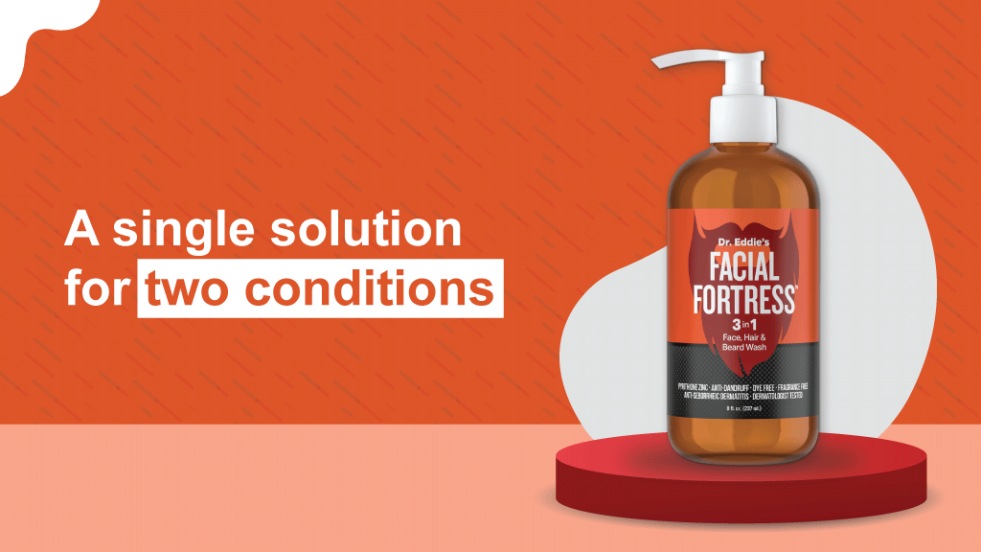
You can have seborrheic dermatitis and dry-feeling skin at the same time. In that situation, the medicated step should target the dandruff or seborrheic dermatitis symptoms, while the rest of the routine stays gentle and supports the skin barrier. Facial Fortress 3-in-1 Face, Hair & Beard Wash can be used on the face, beard, hair, and scalp as directed for flaking, scaling, and itching associated with dandruff and seborrheic dermatitis. If the skin still feels dry after cleansing, add a fragrance-free moisturizer rather than assuming more medicated washing is better.
When to See a Dermatologist
Most mild dryness and dandruff can be managed with an appropriate skin-care routine, but some patterns deserve an examination. See a dermatologist or other clinician if you have:
- Severe or rapidly spreading redness, swelling, pain, or warmth
- Oozing, crusting, pus, or other signs of infection
- Cracks or bleeding that are not healing
- True bald patches, broken hairs, pustules, or tenderness in the beard area
- Features that suggest eczema, psoriasis, contact dermatitis, or another diagnosis
- Symptoms that persist despite an appropriate trial of treatment
Bottom Line
Beard flakes are not one condition. Simple dryness is mainly a skin-barrier and moisture problem, while recurring scale with redness, itch, or involvement of other oily areas may point toward seborrheic dermatitis. Treat the pattern, not just the visible flakes. If dandruff or seborrheic dermatitis is the issue, use an appropriate medicated product as directed; if dryness is part of the picture, keep the rest of the routine gentle and add moisturizer. If the skin is not improving or the diagnosis is unclear, see a clinician.



Frequently Asked Questions
Will shaving off the beard cure dandruff?
Shaving would remove flakes temporarily, but it does not treat dandruff itself. There are associated symptoms such as oiliness or dryness, itchy beard, irritation, and redness that need to be dealt with. Therefore, dandruff needs the appropriate solution, not shaving the beard. And when you get the appropriate treatment, you don’t need to get rid of your beard. Instead, a medicated shampoo for your beard will eliminate the scaling, flaking, itching, and redness on the scalp and skin associated with dandruff and seborrheic dermatitis and may improve the appearance of the beard as well.
Can beard dandruff cause hair loss?
Is there any difference between dry skin and dry dandruff?
Does beard oil stop beard dandruff?

Dr. Eddie created Facial Fortress, a medicated 3-in-1 face, hair and beard wash for dandruff and seborrheic dermatitis.
More about Dr. Eddie
- Seborrheic Dermatitis on the Body: Chest, Skin Folds & Belly Button - September 17, 2026
- Seborrheic Dermatitis Treatment: Zoryve and Other Options for the Face and Beard - September 17, 2026
- GLP-1 Medications and Beard Changes: What Do We Know? - September 17, 2026