Can You Use Anti-Dandruff Shampoo on Your Beard? A Doctor Explains
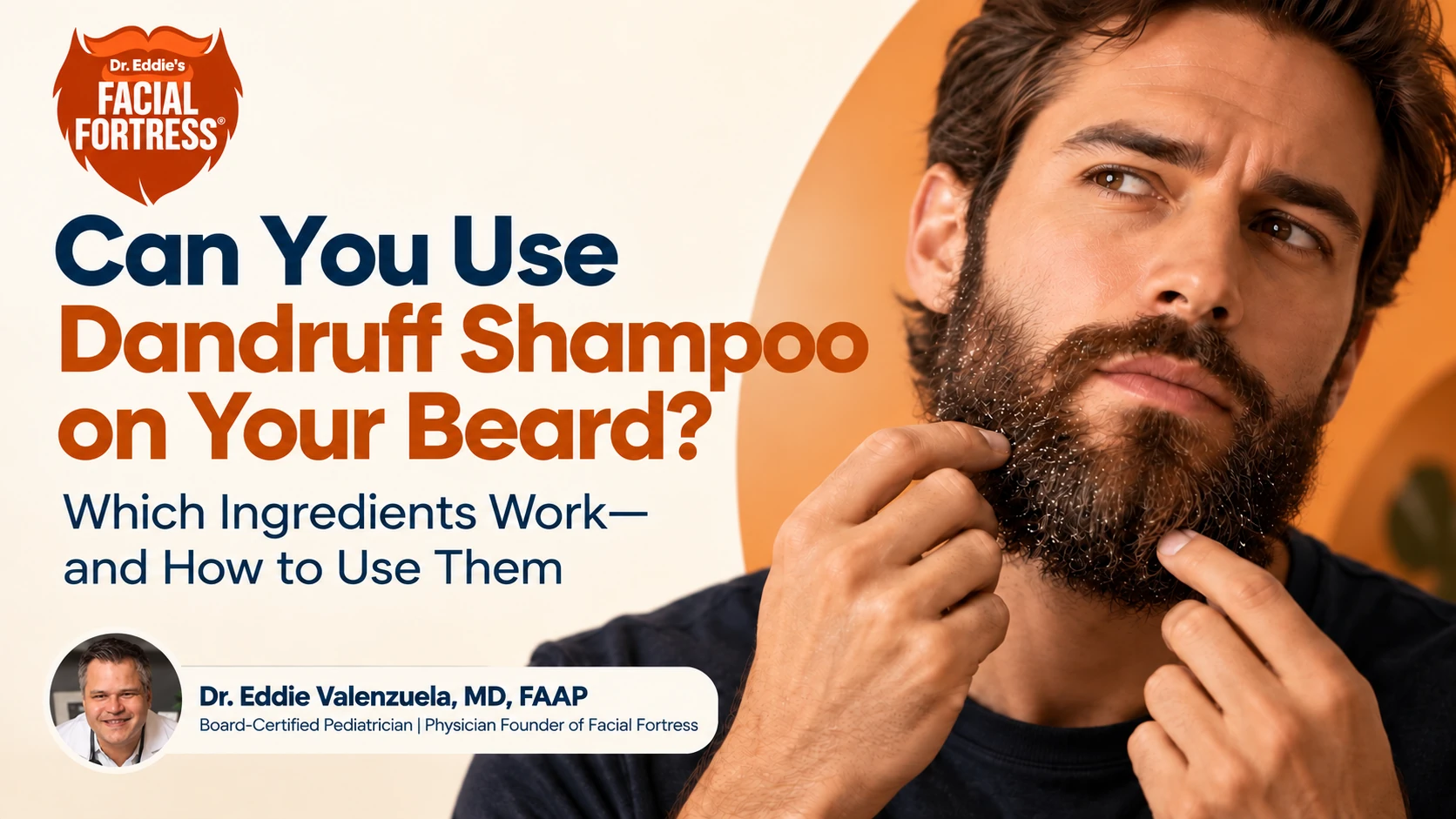
Quick Doctor Answer: Yes—anti-dandruff shampoo can be used on a beard when the flakes and itching are coming from seborrheic dermatitis. The important part is getting the medicated wash onto the skin beneath the beard, not just the hair, and following that product’s directions. Not every beard flake is dandruff, though: dry skin, contact dermatitis, psoriasis, folliculitis, and tinea barbae can look similar and may need different treatment.
Dermatologists commonly use medicated dandruff shampoos on beard and facial-hair areas affected by seborrheic dermatitis. The American Academy of Dermatology specifically notes that dandruff shampoo may be used on the beard or face when recommended for seborrheic dermatitis. Because formulas vary, a scalp shampoo should not automatically be treated as a facial cleanser.
This guide focuses on the questions people actually ask: which anti-dandruff ingredients are used for beard-area seborrheic dermatitis, how to apply them safely, how often to wash, when facial skin needs a gentler formula, and when persistent beard flakes deserve a dermatologist’s evaluation.
Is Beard Dandruff the Same as Scalp Dandruff?
Not exactly. Dandruff is generally considered the mildest form of seborrheic dermatitis and is limited to the scalp. When similar white-to-yellow scale, itching, redness, or greasy patches develop beneath a beard or mustache, dermatologists usually describe it as seborrheic dermatitis of the facial-hair area. “Beard dandruff” or “beardruff” is useful shorthand, but the skin beneath the beard is the real treatment target. Malassezia yeast is involved in seborrheic dermatitis, but this is not simply a contagious yeast infection; sebum, skin-barrier susceptibility, inflammation, and individual response all contribute.
Which Anti-Dandruff Shampoo Ingredients Can Be Used on a Beard?
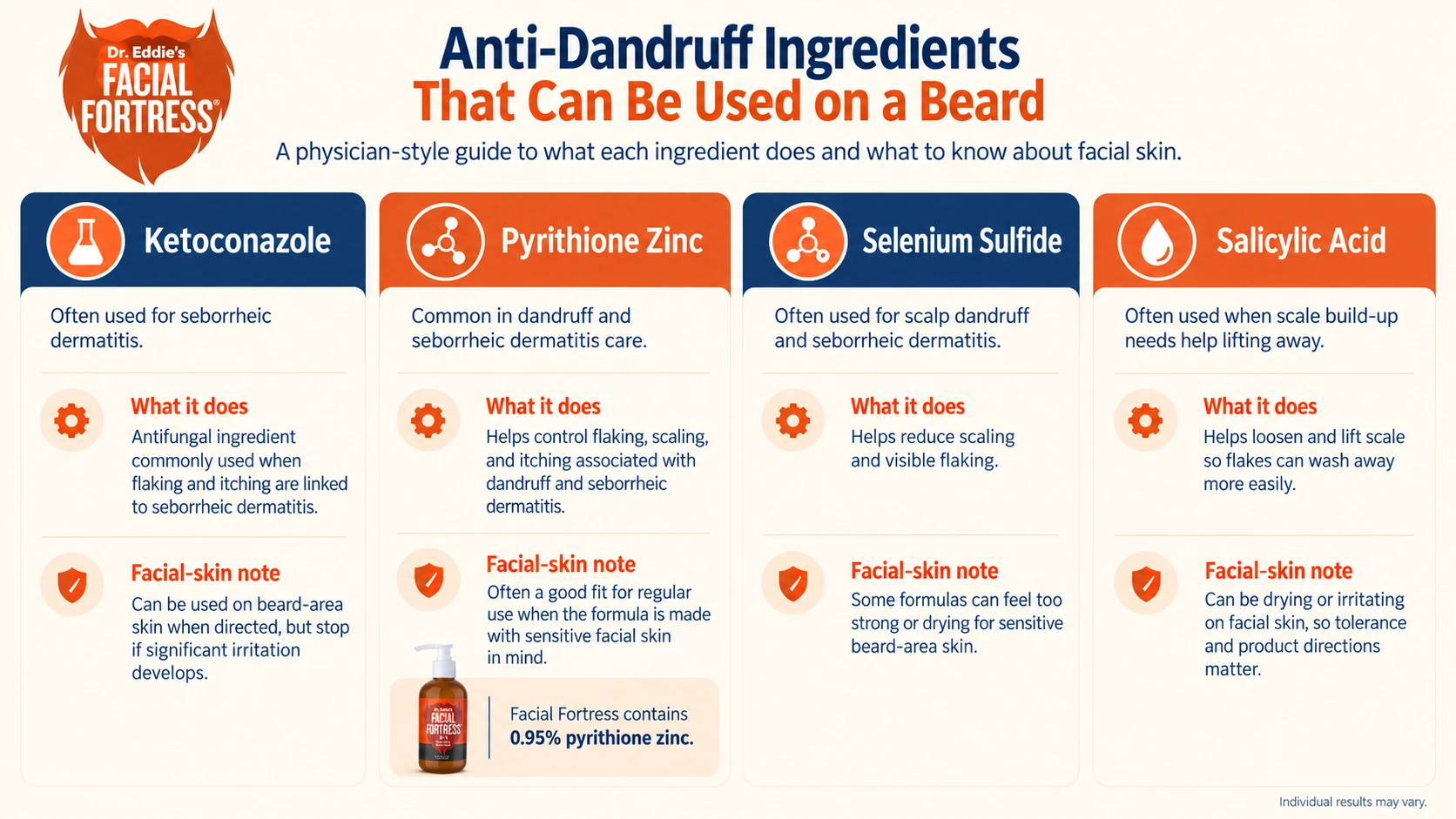
For beard-area seborrheic dermatitis, the most useful question is not simply whether a product says “dandruff” on the front. Look at the active ingredient, whether the directions allow use on the affected skin, and how well the formula is tolerated on facial skin. Common medicated options used for seborrheic dermatitis include:
- Ketoconazole: an antifungal commonly used for seborrheic dermatitis; the American Academy of Dermatology specifically discusses 1% ketoconazole shampoo for beard and mustache areas.
- Pyrithione zinc: a medicated anti-dandruff active used to help control flaking, scaling, and itching associated with dandruff and seborrheic dermatitis.
- Selenium sulfide: another dandruff active that may help seborrheic dermatitis, although some formulas are better suited to the scalp than sensitive facial skin.
- Scale-lifting ingredients such as salicylic acid: useful in some dandruff formulas, but potentially drying or irritating on facial skin, so product directions and tolerance matter.
- The vehicle matters too: fragrance-free, dye-free formulas designed with facial skin in mind may be easier to tolerate than strongly fragranced or scalp-only products.
For a medicated wash built specifically around face-and-beard use, Facial Fortress 3-in-1 Medicated Wash contains 0.95% pyrithione zinc to help relieve the flaking, scaling, and itching associated with dandruff and seborrheic dermatitis. It was formulated with sensitive facial skin in mind: fragrance-free, dye-free, dermatologist tested, and physician developed. Glycerin and panthenol help skin feel moisturized, while licorice root extract helps soothe the appearance of redness; apple fruit extract is also included in the gentle cleansing formula. The goal is straightforward—medicated care that reaches the skin beneath the beard without making the routine feel harsh or overly clinical.
How to Prepare Your Beard for a Medicated Wash
You do not need an elaborate pre-wash routine. If the beard is tangled, gently comb or brush it first, then wet the beard and the skin underneath with lukewarm water. Skip heavy oils immediately before the medicated wash—the goal is to let the cleanser reach the affected skin. If your face tends to feel dry after washing, a fragrance-free moisturizer afterward can help support the skin barrier.
How to Use Anti-Dandruff Shampoo on Your Beard
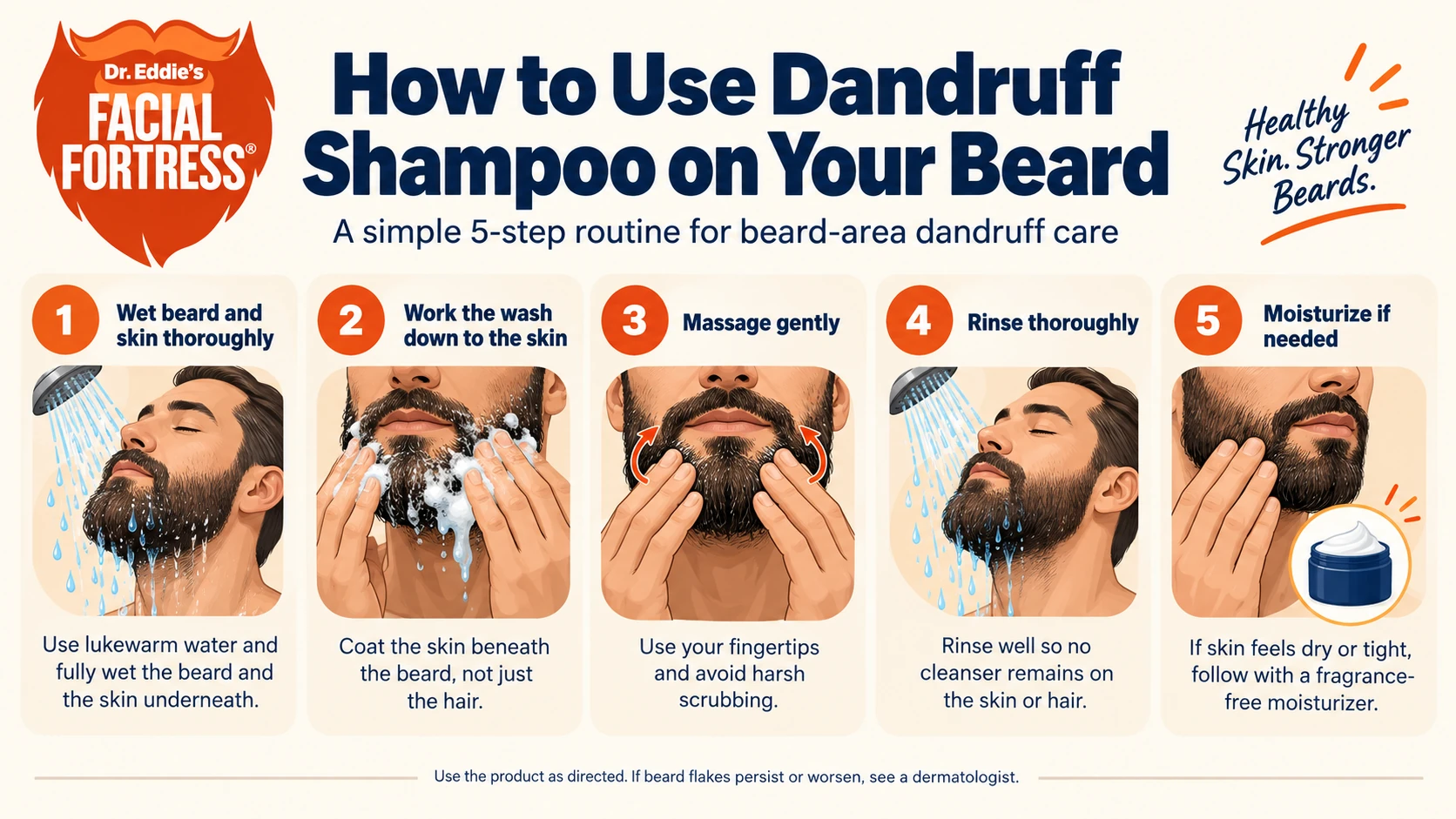
The American Academy of Dermatology recommends following the directions on the specific dandruff shampoo. For a beard, concentrate on the skin beneath the hair, rinse thoroughly, and adjust the overall routine if irritation or dryness develops.
Step 1: Wet your beard and scalp thoroughly
- Wet the beard, scalp, and affected skin thoroughly with lukewarm water.
- You do not need a separate pre-wash or a full shower first; thoroughly wetting the area is enough unless your product label says otherwise.
- If your skin is dry or easily irritated, keep the water lukewarm and focus the medicated wash on the affected area rather than repeatedly cleansing unaffected skin.
Step 2: Work the medicated wash down to the skin
- Use enough product to gently work through the beard and onto the affected skin underneath. Coating the beard hair alone will not treat the skin where seborrheic dermatitis develops.
- If you use Facial Fortress 3-in-1 Medicated Wash, its fragrance-free, dye-free formula was designed with face-and-beard skin in mind, so the same wash can cover the beard, face, hair, and scalp as directed.
Step 3: Massage gently
- Massage gently with your fingertips rather than scratching or scrubbing. The goal is contact with the affected skin without adding mechanical irritation.
- Use the product according to its directions. For Facial Fortress, wet thoroughly, massage onto the scalp and affected skin, and rinse.
Step 4: Rinse thoroughly with lukewarm water
- Now, wash your face and beard thoroughly with tepid or lukewarm water.
- Rinse thoroughly so no medicated cleanser remains on the skin or hair.
Step 5: Pat dry and support the skin barrier
After rinsing thoroughly, pat the beard and skin dry instead of rubbing. If the skin feels dry or tight, follow with a fragrance-free moisturizer. The American Academy of Dermatology recommends fragrance-free moisturizer after washing because hydrated skin is less likely to become irritated.
What if Medicated Shampoo Is Not Enough?
Persistent or more inflamed facial seborrheic dermatitis may need treatment beyond shampoo. Depending on the location and severity, a dermatologist may recommend a topical antifungal, a short course of a low-potency corticosteroid, or a nonsteroidal anti-inflammatory treatment such as a topical calcineurin inhibitor. Facial skin deserves extra caution, especially around the eyes, so these treatments should be selected and used with medical guidance.
Common Mistakes When Using Dandruff Shampoo on a Beard
Over-washing or daily use that causes dryness
There is no single washing schedule that fits every beard or every medicated product. Frequency depends on the active ingredient, the label, your symptoms, and how your skin tolerates treatment. Too little cleansing may allow scale and oil to accumulate, while overly frequent or harsh cleansing can leave the skin under the beard dry and itchy. Use the medicated product as directed and adjust non-medicated cleansing to your skin’s needs rather than assuming “more washing” is always better.
Using a beard oil or balm that worsens your flare
Beard oils and balms are not automatically harmful, but fragranced, irritating, or very occlusive products can aggravate some people’s facial skin. If itching or flaking started after a new beard product—or clearly worsens when you use it—stop that product and simplify the routine. Persistent symptoms may reflect seborrheic dermatitis, contact dermatitis, or another condition rather than a problem that can be solved by adding more oil.
How Skin Type and Climate Can Change Your Washing Routine
There is no single beard-washing routine that fits everyone. Oiliness, sensitivity, weather, sweating, and beard density can all affect how often you cleanse and how much moisture support your skin needs. Use these as practical adjustments rather than rigid rules.
| Skin / Environment | Practical Adjustment | What to Watch For |
|---|---|---|
| Oily skin or hot, humid weather | You may need more frequent cleansing if sweat, oil, and scale build up quickly. | Tightness, stinging, or increasing redness can mean the routine is becoming too harsh. |
| Dry or sensitive skin | Reduce unnecessary cleansing and use a fragrance-free moisturizer after washing if skin feels dry or tight. | Dryness itself can cause flaking, so not every new flake means seborrheic dermatitis is worsening. |
| Cold, dry weather | Use gentler cleansing and more moisture support if your skin barrier starts to feel dry or irritated. | Watch for roughness, cracking, or persistent tightness beneath the beard. |
| Frequent exercise or heavy sweating | An extra rinse or gentle cleanse may help if sweat clearly worsens itching, oiliness, or scale. | Avoid turning every post-workout wash into another harsh medicated cleanse. |
| Curly, coily, or dense beard hair | Part the hair and massage gently so the wash reaches the skin underneath; moisturize the beard and skin if they become dry. | Aggressive scrubbing or combing can add irritation without improving control. |
For Facial Fortress: use at least twice a week or as directed by a doctor. Its fragrance-free, dye-free formula was made with sensitive facial skin in mind, with glycerin and panthenol to help skin feel moisturized while you treat the flaking, scaling, and itching associated with dandruff and seborrheic dermatitis. For a deeper guide to adjusting washing frequency by oiliness, hair type, climate, and sweating, see our doctor’s guide to how often to wash hair and beard with dandruff.
Combing and scratching
Regular grooming—like combing and trimming your beard—helps keep flakes under control and makes it easier for shampoo to reach the skin. However, avoid using a rough comb or brushing too aggressively, as this can irritate the skin and even cause temporary hair loss. The same risk comes with scratching. While itching may be tempting, scratching damages the skin barrier and worsens irritation. Instead, rely on a proper anti-dandruff shampoo routine to calm the itch and keep your beard and scalp healthy.
Beyond Shampoo: Beard and Scalp Care Tips to Prevent Dandruff Recurrence
Using the right anti-dandruff shampoo is only part of the solution. To keep your beard and scalp healthy and reduce the chance of flare-ups you’ll want to follow a few additional habits. These tips can easily become part of your daily beard care and skincare routine.
1. Proper Grooming and Trimming Habits
Beard and scalp care go beyond washing. Regular trimming, combing, and grooming help keep hair neat and make it easier for shampoos and treatments to reach the skin.
- You don’t need to trim daily, but keep your beard well-shaped and tidy.
- Comb or brush gently with soft bristles to avoid irritation.
- Clean, groomed hair allows anti-dandruff products to work more effectively.
2. Protect the skin barrier and simplify your routine
Facial seborrheic dermatitis often feels both oily and dry at the same time. Use lukewarm water, avoid fragranced or irritating grooming products, rinse cleansers thoroughly, and add a fragrance-free moisturizer if the skin feels dry. There is no specific diet or amount of water proven to eliminate beard dandruff, so nutrition and hydration should be viewed as general health measures—not substitutes for appropriate skin treatment.
3. Notice your personal flare triggers
Stress is commonly reported as a seborrheic dermatitis trigger, although it is not the underlying cause. If your beard-area symptoms reliably worsen during stressful periods, consistent sleep, exercise, and whatever stress-management habits work for you may be useful alongside—not instead of—medicated treatment.
Bottom line: The highest-yield routine is usually simple: get the right medicated cleanser onto the affected skin, use it as directed, avoid irritating grooming products, moisturize when needed, and stay consistent enough to recognize what is helping.
A Medicated Wash Made with Face-and-Beard Skin in Mind
If you want one medicated cleanser for the places seborrheic dermatitis commonly shows up, Dr. Eddie’s Facial Fortress 3-in-1 Medicated Wash was designed for the face, beard, hair, and scalp. Its 0.95% pyrithione zinc helps relieve the flaking, scaling, and itching associated with dandruff and seborrheic dermatitis, while the surrounding formula was built to feel at home on sensitive facial skin—not just on the scalp.
What gives it that gentler, skin-conscious feel:
- Fragrance-free and dye-free
- Glycerin and panthenol to help skin feel moisturized
- Licorice root extract to help soothe the appearance of redness
- Dermatologist tested and physician developed
How to use Facial Fortress: For best results, use at least twice per week or as directed by a doctor. Wet the hair and skin thoroughly, massage onto the scalp and affected skin, and rinse.
When Beard Flakes Need a Dermatologist
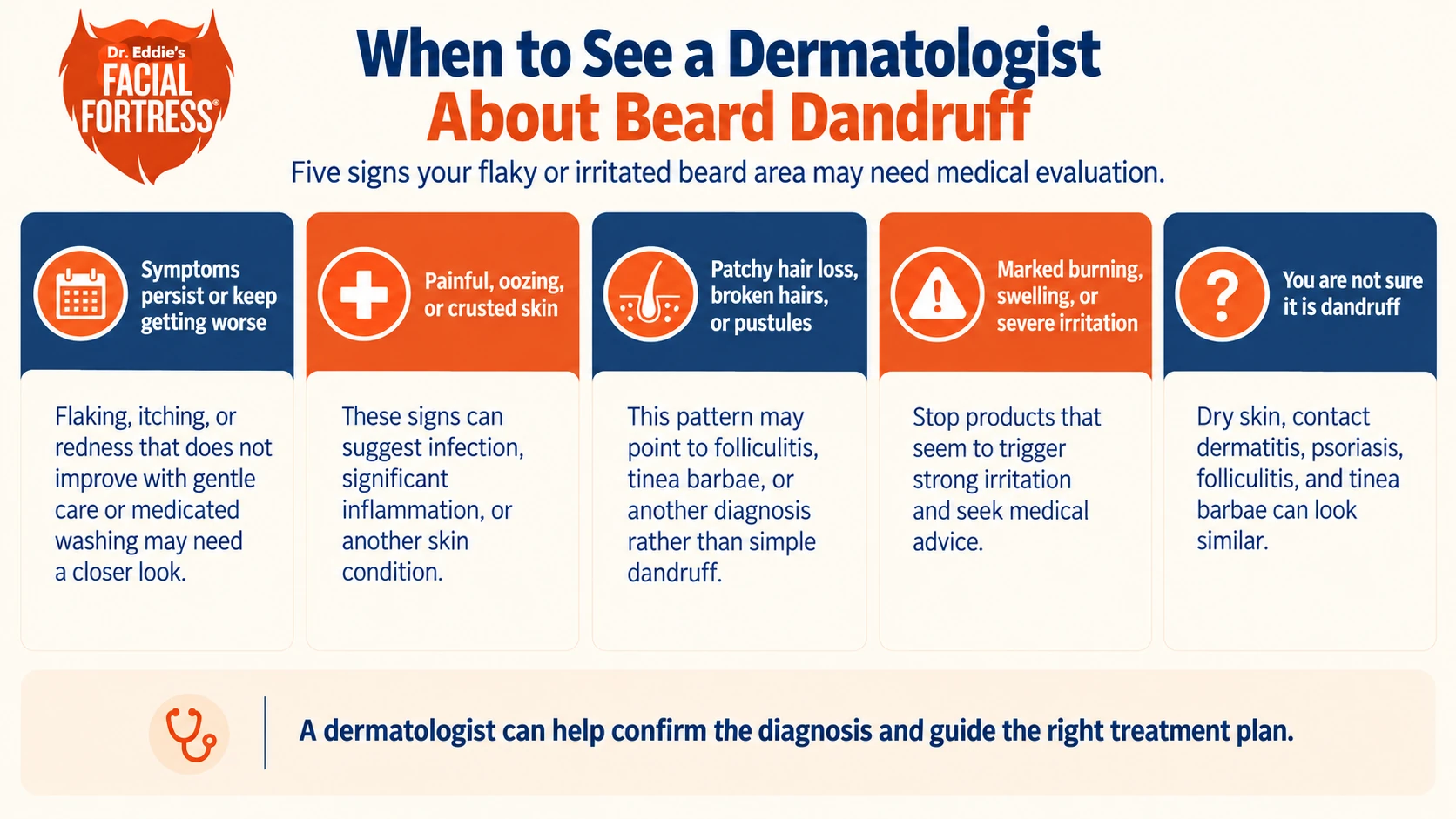
A medicated dandruff shampoo is reasonable for uncomplicated beard-area seborrheic dermatitis, but not every flaky beard is seborrheic dermatitis. Get medical advice when:
- Symptoms persist or worsen despite consistent, label-directed treatment.
- The skin is painful, swollen, oozing, crusted, bleeding, or looks infected.
- You develop patchy hair loss, broken hairs, pustules, tender bumps, or a ring-like rash, which can point to conditions such as tinea barbae or folliculitis rather than ordinary beard dandruff.
- A product causes marked burning, swelling, or worsening redness, or the diagnosis is simply unclear.
The Takeaway
Yes—you can use an appropriate anti-dandruff shampoo on a beard, but the target is the skin beneath the facial hair. Choose a medicated product that fits the diagnosis and the area you are treating, use it according to the label, and do not confuse every beard flake with dandruff. For people who want medicated dandruff care in a fragrance-free wash made with sensitive facial skin in mind, Facial Fortress 3-in-1 Medicated Wash combines 0.95% pyrithione zinc with glycerin, panthenol, licorice root extract, and a gentle face-and-beard cleansing formula.
Medical References



Frequently Asked Questions
Can I use dandruff shampoo on my beard?
Can I use ketoconazole shampoo on my beard?
Can I use regular scalp dandruff shampoo on my beard?
How often should I use anti-dandruff shampoo on my beard?
Can anti-dandruff shampoo dry out or irritate beard skin?
Why does beard dandruff keep coming back?

Dr. Eddie created Facial Fortress, a medicated 3-in-1 face, hair and beard wash for dandruff and seborrheic dermatitis.
More about Dr. Eddie
- Seborrheic Dermatitis on the Body: Chest, Skin Folds & Belly Button - September 17, 2026
- Seborrheic Dermatitis Treatment: Zoryve and Other Options for the Face and Beard - September 17, 2026
- GLP-1 Medications and Beard Changes: What Do We Know? - September 17, 2026