Can Stress or Diet Make Beard Dandruff Worse? What the Evidence Says
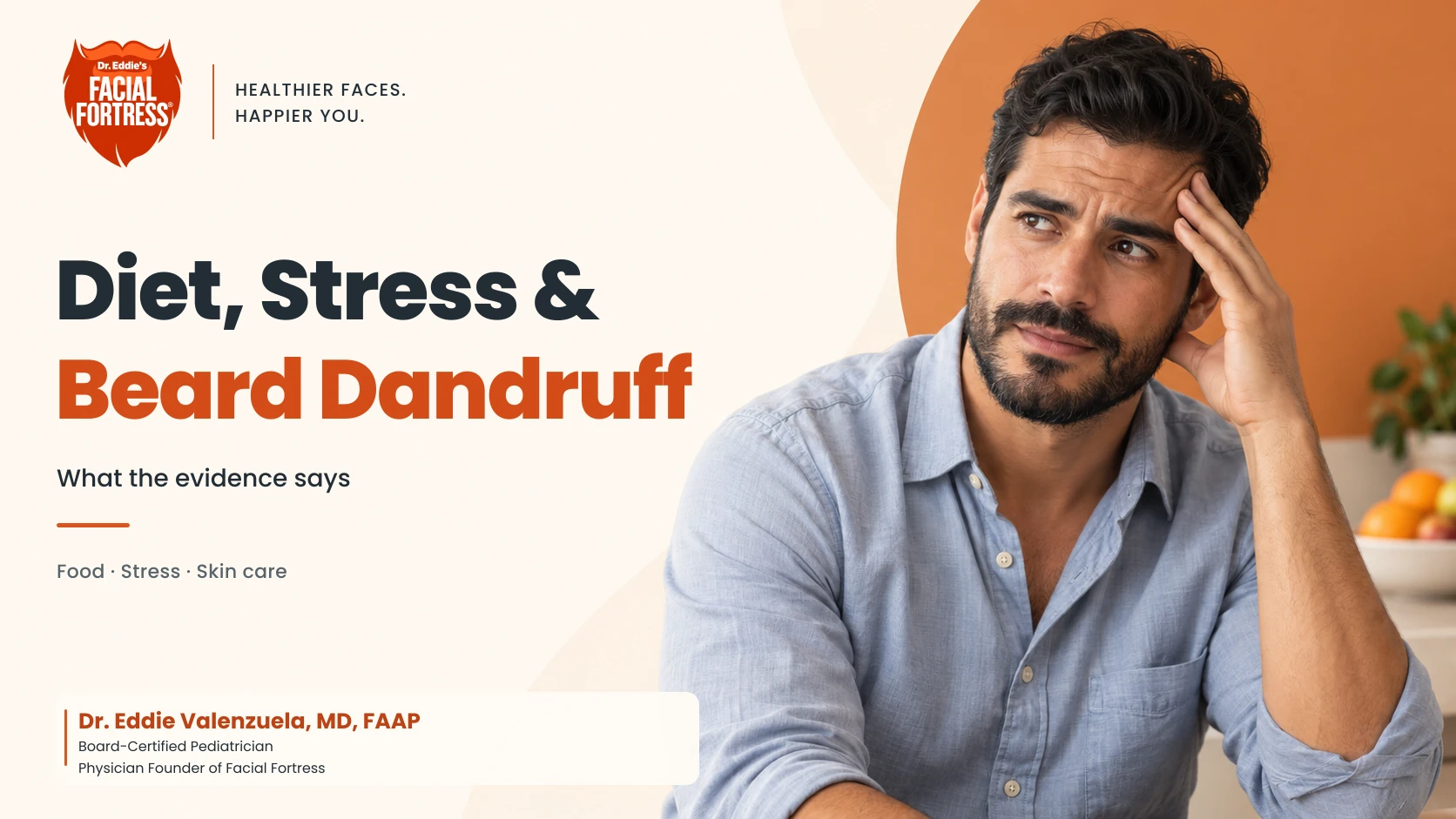
Quick answer: Stress can trigger seborrheic dermatitis flares, including under a beard. Diet may play a role, but studies have not established a universal food trigger or a diet that reliably treats beard dandruff. Keep treating the affected skin, watch for repeatable personal patterns, and avoid unnecessary food restrictions.
If your beard starts flaking during a difficult week, it is understandable to wonder whether stress, late nights, or what you have been eating is responsible. Online advice can make the answer sound much simpler than it is: cut sugar, quit dairy, fix your gut, and the flakes will disappear.
The evidence calls for a more measured approach. Stress is a recognized flare trigger. Nutrition research is developing, but it has not produced a dependable beard-dandruff diet. You deserve useful guidance without turning every meal into a test you might fail.
First, make sure the flakes are actually dandruff
Recurring flaking, itching, and inflamed skin beneath a beard can be seborrheic dermatitis. Its biology involves the skin’s response to Malassezia yeast, skin oils, and individual susceptibility. It is not a sign of poor hygiene. The American Academy of Dermatology explains these contributing factors.
Dry skin and reactions to grooming products can also flake. A new beard oil, fragranced wash, or change in washing habits may be a more useful clue than yesterday’s lunch. Our guide to dandruff versus dry skin under a beard explains the overlap.
This distinction matters: changing your diet will not remove an irritating ingredient from the product you keep applying to your face.
Can stress cause beard dandruff or make it worse?
Stress can be one of the things that sets off a flare in someone prone to seborrheic dermatitis. The AAD includes stress among common flare triggers. That does not mean every stressful week produces dandruff, or that everyone with dandruff is unusually stressed.
In a prospective study of 82 people with seborrheic dermatitis, participants frequently identified stress before an episode. The researchers followed participants over four months, but the study did not include a healthy control group or test a stress-reduction treatment. It supports a connection without establishing a precise cause-and-effect formula. Read the original stress study.
A later study of 120 patients also found that greater perceived stress tracked with more severe disease. Because both were measured together, it could not establish which came first. Read the 2022 study.
Itching and a visible facial rash can themselves be stressful. Treating the skin and taking the emotional burden seriously belong in the same conversation. A flare is not evidence that you failed to relax.
What about cortisol, poor sleep, and beard growth?
The familiar explanation that stress raises cortisol, which increases oil, which feeds yeast, can sound like a proven chain of events in every beard. The clinical studies above do not establish that chain. They also do not show that a cortisol test or a “cortisol-balancing” supplement will solve beard dandruff.
A difficult week may bring several changes at once: less sleep, more scratching, missed washes, or a disrupted treatment routine. These are useful things to notice, without assuming one explains the entire flare.
New bald patches or persistent beard thinning deserve a separate assessment. For that question, see what actually affects beard growth.
Can diet make beard dandruff worse?
Possibly, but the strength and meaning of the evidence matter. Most relevant studies look at seborrheic dermatitis generally, rather than beard-only disease. They usually compare what people already eat; they do not assign a diet and demonstrate that it clears the condition.
| Research | What the researchers found | What it does not prove |
|---|---|---|
| Rotterdam Study, 4,379 adults | Higher fruit intake was associated with less seborrheic dermatitis. A Western dietary pattern was associated with more disease in women. | That fruit treats dandruff, or that the finding in women applies directly to men with beard symptoms. |
| Glycemic-factor study, 49 patients and 40 controls | Patients reported higher dietary glycemic loads; more severe disease was associated with higher glycemic measures. | That removing sugar will clear an individual’s beard dandruff. |
| Nutrition-habits study, 100 patients and 110 controls | Dietary habits differed between groups, and some food patterns were associated with severity. | Which dietary change, if any, would improve symptoms when tested as a treatment. |
Sources: Sanders and colleagues, 2019; Semiz and Aktaş, 2025, published online in 2024; 2025 nutrition-habits study.
These findings justify further research. They do not justify promising that an “anti-inflammatory” meal plan will control beard dandruff. When diet and disease occur together, other explanations remain possible, including differences in health, lifestyle, or food choices made after symptoms began.
Should you cut out sugar, dairy, gluten, or yeast?
There is no established list of foods that everyone with beard dandruff should avoid. The newer sugar-related findings are associations, not proof that a particular dessert triggers a flare or that carbohydrate restriction is necessary.
Food-trigger reports also vary. In a smaller case-control study, almost half of the 59 participants with seborrheic dermatitis reported no food-related flares. Some foods were reported as helpful by certain participants and troublesome by others. That inconsistency is a reason to look for your own pattern rather than adopt a universal ban list. Read the original diet study.
Likewise, Malassezia’s role on the skin does not establish that avoiding bread or dietary yeast will “starve” it. Removing dairy or gluten solely for beard flakes is not supported by these studies. A diagnosed food allergy, celiac disease, or another medical reason for avoidance is a separate matter.
Can alcohol make seborrheic dermatitis worse?
Heavy alcohol consumption is a recognized risk factor, but the evidence does not define a number of drinks that triggers everyone’s beard symptoms. The AAD’s discussion of risk factors includes heavy alcohol use.
If you repeatedly notice flares around drinking, record the pattern alongside sleep, stress, and skin-care changes. An evening out often changes several things at once, so one bad morning cannot tell you which mattered.
Do vitamins, probiotics, or supplements help?
A nutrient deficiency deserves attention when there is a reason to suspect or diagnose one. That is different from recommending supplements to everyone with flakes.
A systematic review found nutritional associations and a small number of intervention studies, but called for stronger trials of vitamin and mineral supplementation. Lower nutrient levels in a study group do not establish that extra supplements treat people who already have adequate levels. Read the evidence review.
Probiotics do have some early clinical evidence. A placebo-controlled study in 60 men found that eight weeks of oral Lactobacillus paracasei NCC2461 ST11 improved several measures of scalp dandruff. That result concerns one strain and scalp symptoms; it does not establish that any probiotic supplement, yogurt, or “gut reset” treats beard seborrheic dermatitis. Read the original probiotic study.
There is no established probiotic or supplement regimen that can be recommended as a reliable treatment for beard dandruff. If your diet is very restricted or you have other symptoms, discuss targeted evaluation rather than buying a collection of supplements based on flakes alone.
A practical way to look for your triggers
Keep the investigation simple enough that it does not become another source of stress. The following is a practical tracking approach, not a validated diagnostic test:
- Keep your treatment and grooming routine consistent. Otherwise, it becomes difficult to interpret any food or stress pattern.
- Make a brief record for a few weeks. Note flaking and itch, unusually stressful days, sleep changes, new products, and any food or drink you repeatedly suspect.
- Look for repetition. A single meal followed by a flare is a clue at most. Several similar episodes are more useful to discuss with your clinician.
- Change one manageable thing at a time. Avoid cutting out several food groups at once. Get nutritional guidance before a substantial elimination diet.
For stress, choose something you can realistically repeat, such as a short walk, a regular wind-down time, or asking for support during an overloaded week. These steps can support well-being even when they do not eliminate skin symptoms. Stress that persistently disrupts sleep or daily life deserves care in its own right.
Keep treating the skin while you work on the triggers
You do not have to solve every lifestyle question before treating an uncomfortable beard. Gentle skin care and an appropriate medicated treatment can remain the foundation of your routine.
Facial Fortress contains 0.95% pyrithione zinc to help control flaking, scaling, and itching associated with dandruff and seborrheic dermatitis. Its fragrance-free formula includes glycerin and panthenol for moisture and conditioning support. It does not treat stress, dietary intolerance, or nutritional deficiency.
Follow the product’s directions: use at least twice weekly or as directed by a doctor, wet the area, massage onto the skin, and rinse. Its label does not specify a timed leave-on step. Stop use and ask a doctor if the condition worsens or fails to improve with regular directed use.
For the practical washing schedule, see how often to wash hair and beard to control dandruff. For questions about aloe, oils, vinegar, and other topical options, read beard dandruff home remedies: what helps and what can irritate.
Seek medical assessment for painful or spreading inflammation, pus-filled bumps, broken hairs or bald patches, or persistent symptoms despite appropriate care. Those findings should not be attributed to food or stress without examining the skin.
Frequently asked questions
Does stress dandruff mean my cortisol is too high?
No. Flaking cannot diagnose an abnormal cortisol level. Stress can accompany or trigger seborrheic dermatitis flares, but that does not establish a hormone disorder.
What is the best diet for beard dandruff?
No specific diet is established as a reliable treatment. A varied eating pattern that meets your nutritional needs is a reasonable starting point; tailor restrictions to a clear medical reason or a carefully assessed personal pattern.
Will quitting sugar clear my beard flakes?
It is not possible to promise that. Some studies associate higher dietary glycemic measures or sugar intake with seborrheic dermatitis, but they did not show that quitting sugar clears beard dandruff.
Can stress reduction replace a medicated wash?
It may help you manage a trigger, but it does not replace treatment that your skin needs. Continue your recommended care while working on stress and other personal triggers.
Can diet affect dandruff even if the research is limited?
Yes, a personal connection is possible. Limited evidence means we should investigate that connection thoughtfully, without treating it as a proven rule for everyone.