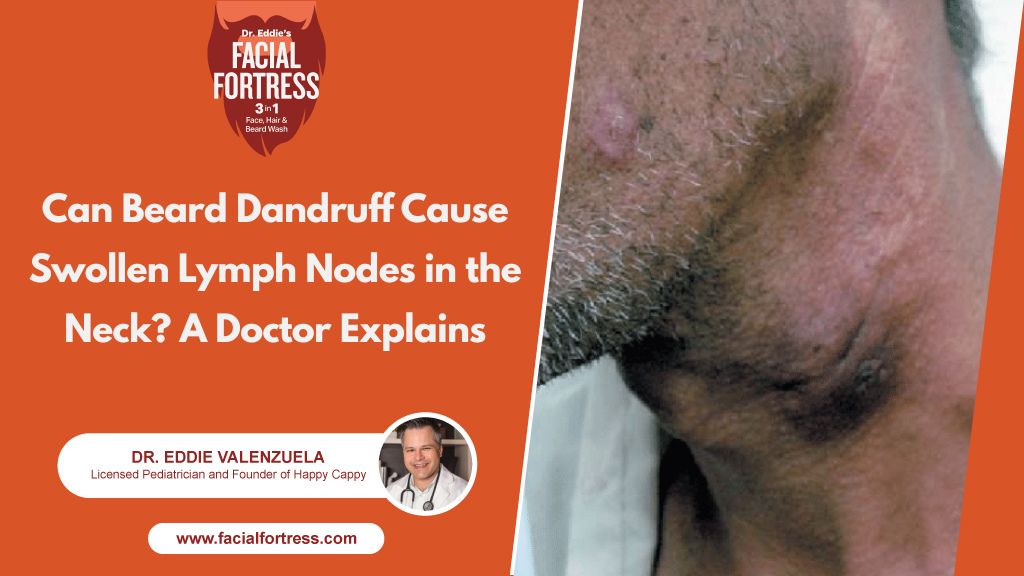
Can Beard Dandruff Cause Swollen Lymph Nodes in the Neck? A Doctor Explains
Quick Doctor Answer: Does Beard Dandruff Cause Swollen Lymph Nodes?
In most cases, no. Beard dandruff does not directly cause swollen lymph nodes in the neck.
However, if beard dandruff leads to significant skin irritation, repeated scratching, or secondary bacterial infection, nearby lymph nodes may temporarily enlarge as part of the body’s immune response. This is known as reactive lymphadenopathy.
Swollen lymph nodes in the neck are more commonly caused by:
- Viral infections such as colds or flu
- Bacterial infections
- Dental infections
- Throat infections
- Skin infections
Mild, tender lymph node swelling that improves within one to two weeks is usually not concerning.
Medical evaluation is recommended if you notice:
- Hard or fixed lymph nodes
- Rapid enlargement
- Swelling lasting longer than two weeks
- Fever, night sweats, or unexplained weight loss
- Significant redness or pain over the node
Dr. Eddie Valenzuela
What Is Beard Dandruff? (Seborrheic Dermatitis of the Beard)
Beard dandruff is medically classified as seborrheic dermatitis affecting the beard area. It is not simply dry skin. It is a chronic inflammatory skin condition influenced by oil production, yeast activity, and individual immune response.
Common signs include:
- White or yellow flakes within the beard
- Itching beneath facial hair
- Redness of the underlying skin
- Greasy or scaly patches
- Beard skin irritation
For a broader overview of beard flaking and treatment options, see our full guide on beard dandruff.
Causes of Beard Dandruff
Beard dandruff develops through a combination of biological factors.
Excess Sebum (Oil) Production
Sebum is the natural oil produced by sebaceous glands to maintain skin hydration and barrier function. When produced in excess, it creates an environment that supports yeast growth.
Malassezia Yeast
Malassezia is a naturally occurring fungus that lives on the skin. In certain individuals, overgrowth of this yeast can trigger inflammation and accelerated skin cell turnover, leading to visible flakes associated with seborrheic dermatitis.
Oleic Acid Sensitivity
When Malassezia breaks down sebum, it produces oleic acid. Some individuals are sensitive to this byproduct. That sensitivity can disrupt the skin barrier, increase inflammation, and worsen itching and flaking.
Beard dandruff, therefore, reflects an interaction between oil production, yeast activity, and immune response — not simply dryness.
What Are Lymph Nodes and Why Do They Swell?
Lymph nodes are small, bean-shaped collections of immune cells that filter lymphatic fluid and help the body fight infection.
They are located throughout the body, including:
- The neck (cervical lymph nodes)
- Under the chin (submental lymph nodes)
- Behind the ears
- The occipital region (back of the head)
- Armpits
- Groin
Each group drains specific regions. The cervical and submental lymph nodes help drain the face, scalp, beard area, mouth, and throat.
Why Lymph Nodes Enlarge
Lymph nodes enlarge when they respond to infection or inflammation. Common triggers include:
- Viral illnesses
- Bacterial infections
- Dental infections
- Skin infections
- Inflammatory skin conditions
- Rarely, autoimmune disease or malignancy
The location of swelling often helps identify the source.
Can Beard Dandruff Indirectly Cause Swollen Lymph Nodes?
Beard dandruff itself rarely causes lymph node swelling directly.
However, it can contribute indirectly under certain circumstances.
Here is the typical sequence:
- Persistent beard dandruff can lead to ongoing beard skin irritation beneath facial hair, particularly in individuals prone to inflammation or sensitive skin.
- Scratching damages the skin barrier
- Bacteria enter through small breaks in the skin
- A localized infection develops, such as folliculitis of the beard
- Nearby lymph nodes respond and temporarily enlarge
In this situation, the lymph node swelling is reactive. It reflects immune activation due to infection, not the dandruff flakes themselves.
Other Skin Conditions That Can Cause Swollen Neck Lymph Nodes
Several dermatologic conditions may enlarge nearby lymph nodes.
Tinea Barbae (Ringworm of the Beard)
A fungal infection of the beard area that may cause redness, scaling, hair loss, and swollen lymph nodes.
Psoriasis
An autoimmune skin condition that produces thick, scaly plaques. Severe inflammation may occasionally enlarge nearby lymph nodes.
Bacterial Skin Infections
Folliculitis, abscesses, or infected cuts beneath the beard may trigger swelling of cervical or submental lymph nodes.
If there is uncertainty about whether flakes represent dandruff or infection, review our guide on how to get rid of beard dandruff.
When to See a Doctor for Swollen Lymph Nodes
Most swollen lymph nodes are reactive and benign.
You should seek medical evaluation if:
- Swelling persists longer than two weeks
- Lymph nodes are firm, hard, or fixed
- They continue to enlarge
- Fever, night sweats, or unexplained weight loss occur
- Multiple lymph node regions are involved
How Doctors Evaluate Swollen Lymph Nodes
A healthcare professional may perform:
Medical History Review
Questions about recent infections, beard skin conditions, systemic symptoms, and overall health.
Physical Examination
Assessment of size, tenderness, firmness, mobility, and distribution.
Additional Testing (if indicated)
Blood tests, ultrasound or CT imaging, and rarely a biopsy if concerning features are present.
Most cases of reactive lymphadenopathy resolve once the underlying trigger improves.
How to Get Rid of Beard Dandruff
Managing beard dandruff early reduces irritation and lowers the risk of secondary infection.
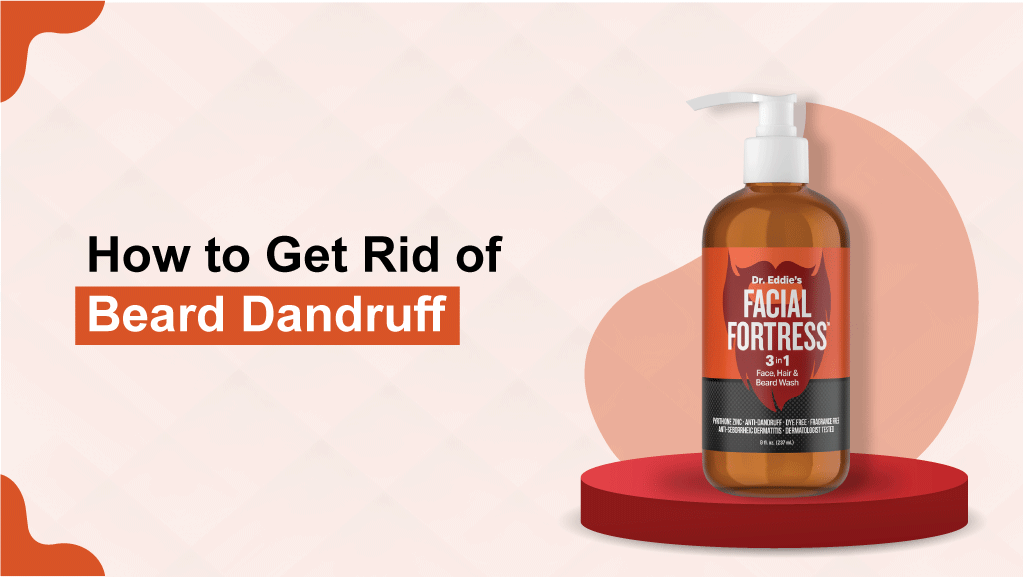
One of the most effective approaches is using a medicated anti-dandruff beard shampoo formulated specifically for facial skin.
The Facial Fortress 3-in-1 Beard Shampoo is designed to help reduce visible flakes, soothe itching, and cleanse both beard hair and the underlying skin.
Suggested Use
- Use once daily during active flare-ups, or as directed by a healthcare professional
- Reduce to 2 to 3 times per week as flakes improve
- Use once weekly for maintenance once symptoms are controlled
What Makes Facial Fortress Stand Out?
The formula contains 0.95% pyrithione zinc as its active ingredient.
Pyrithione zinc is an FDA-recognized active ingredient used in over-the-counter dandruff treatments. It helps control flaking and itching associated with dandruff and seborrheic dermatitis when used as directed.
In addition, the formula is:
- Fragrance-free
- Paraben-free
- Sulfate-free
- Phthalate-free
- Dye-free
- Hypoallergenic
- Doctor-developed
- Formulated with skin-supportive ingredients
- Designed as a 3-in-1 solution for beard, face, and scalp
How to Use
- Wet your beard thoroughly with warm water.
- Apply a small amount and gently massage into the beard and underlying skin.
- Allow the formula to remain in place for 1 to 2 minutes.
- Rinse thoroughly and pat dry.
Avoid aggressive scrubbing, which may worsen irritation.
Many people also ask whether beard oil alone can control flakes. In most cases, beard oil does not stop beard dandruff and may even worsen it for some individuals, since dandruff is driven by yeast activity and inflammation rather than simple dryness. If you are considering adding oils to manage flakes, read our detailed breakdown on does beard oil stop dandruff to understand when oil may help and when it may make symptoms worse.
Conclusion
Beard dandruff is common and usually harmless. However, persistent irritation and scratching can occasionally contribute to secondary infection, which may trigger nearby lymph nodes to swell.
While beard dandruff itself rarely causes lymph node enlargement directly, proper beard care is essential to reduce inflammation and prevent complications. Managing seborrheic dermatitis early and monitoring any unusual or persistent lymph node swelling helps maintain both skin health and overall well-being.

Recent Post
Frequently Asked Questions
Can beard dandruff cause swollen lymph nodes in the neck?
Why are my lymph nodes swollen under my chin and I have beard dandruff?
How long do reactive lymph nodes last?
Can seborrheic dermatitis of the beard cause lymphadenopathy?
When should I worry about swollen lymph nodes in the neck?