
Dry, Flaky Skin Under Your Mustache? Causes, Quick Fixes, and Beard Care Tips

You’ve been taking extra good care of your mustache, trimming it regularly, investing in grooming products, and sticking to a consistent routine. Yet you still notice dry, flaky skin under your mustache. If this sounds familiar, you’re not alone.
Flakes under facial hair can appear because of simple dryness, reactions to products, weather changes, or skin conditions such as dandruff and seborrheic dermatitis. These problems can look similar, but they do not all have the same cause. Understanding what is happening beneath your mustache helps you choose an appropriate routine. Seborrheic dermatitis is not caused by poor hygiene.
Quick answer: Dry, flaky skin under your mustache can come from moisture loss, a grooming-product reaction, or a skin condition. Start with when the flakes appeared and what your skin feels like, then match your care to the likely cause.
Dr. Eddie’s Insight
Flaky skin under the mustache isn’t always caused by dryness alone. Oil levels, yeast activity, grooming habits, and skin sensitivity can all contribute to visible flakes, which is why identifying the trigger helps guide the best treatment approach.
Use the comparison below to sort through the clues, then work through the eight causes and practical care tips. For recurring dandruff, our mustache dandruff symptoms and treatment guide takes a closer look at medicated care.
Is It Dry Skin, Dandruff, or a Product Reaction?
| Possible cause | Clues to discuss with a clinician | First step |
|---|---|---|
| Dryness | Tight or rough skin; may worsen with hot water, dry weather, or harsh cleansing. | Gentle cleansing and a fragrance-free moisturizer. |
| Dandruff or seborrheic dermatitis | Recurring flakes, sometimes with greasy scale or skin discoloration; scalp or eyebrows may also be affected. | Appropriate dandruff care used as directed. |
| Product reaction | Burning, itching, or rash associated with a grooming product. | Stop the suspected product; seek advice for persistent or severe symptoms. |
These are clues, not a diagnosis. The conditions can overlap, and flake color alone cannot reliably distinguish them.
What Causes Dry, Flaky Skin Under the Mustache?
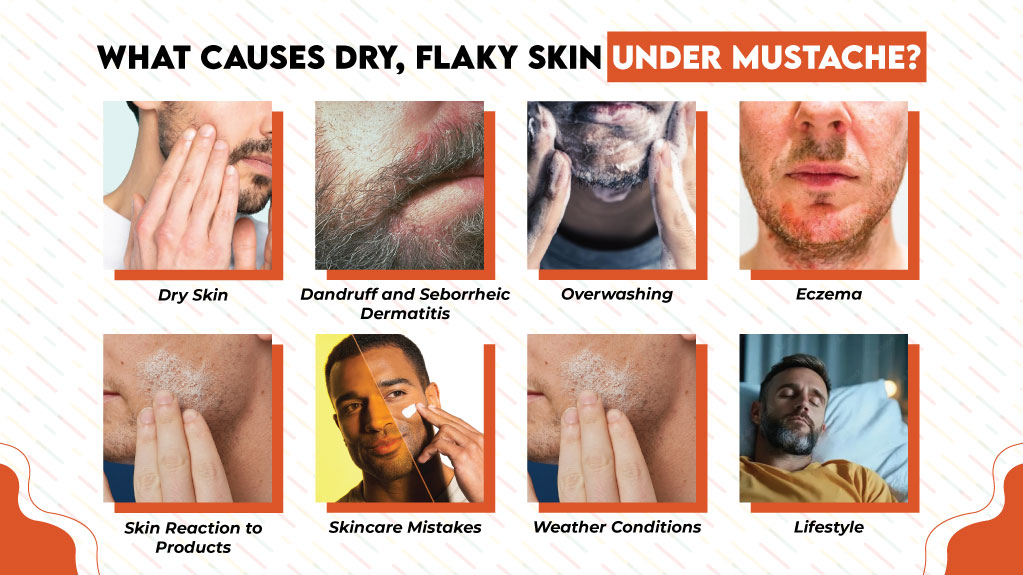
Did the tightness start after a hot shower? Did a new mustache wax leave your skin stinging? Do the flakes return even when your grooming routine stays the same? Those details can help you and your clinician narrow down the cause.
1. Dry Skin
Dry skin, medically referred to as xerosis, is one of the most common reasons for flaky skin under the mustache. It develops when the skin loses too much moisture or struggles to maintain its natural barrier. Triggers may include:
- Hot showers
- Cold or dry weather
- Aging skin
- Harsh cleansing products
- Skipping moisturizer
Dryness can produce fine flakes, but their color or size alone cannot identify the cause. Other symptoms may include:
- Itching
- Tightness
- Rough texture
- Mild redness or a change in skin color
Treatment
Keeping the skin hydrated is key. Wash gently with lukewarm water, pat dry, and apply a fragrance-free moisturizer to the skin beneath your mustache. A beard balm is not automatically the best choice; choose a product your skin tolerates.
2. Dandruff and Seborrheic Dermatitis
Dandruff is commonly described as a mild form of seborrheic dermatitis, usually affecting the scalp without obvious inflammation. Seborrheic dermatitis can also affect the face; our facial dandruff guide explains the common facial patterns. Flaking associated with this condition beneath facial hair is often called mustache or beard dandruff. Other causes of facial flaking still need to be considered.
Common symptoms may include:
- Yellow or white flakes
- Greasy scales, which may be thicker in some areas
- Itching
- Oily skin
- Redness, discoloration, or inflammation
- Flakes that stick to hair
Skin oils, naturally occurring Malassezia yeast, and individual skin sensitivity can interact in seborrheic dermatitis. Substances released as yeast breaks down skin oils may irritate susceptible skin. The yeast normally lives on skin, so its presence alone does not establish a diagnosis.
Treatment
If the cause is mustache dandruff or seborrheic dermatitis, an appropriate anti-dandruff shampoo may help when used as directed. Choose a formula appropriate for facial skin and seek advice if symptoms persist.
3. Overwashing
Washing your mustache too frequently may seem helpful when flakes appear, but overwashing can weaken the skin barrier. Cleansing too often, especially with harsh products, removes natural oils that protect the skin, leading to dryness, irritation, and increased flaking.
Keep washing gentle, rinse away cleanser thoroughly, and pat dry rather than rubbing. Adjust ordinary cleansing to what your skin tolerates. For a medicated wash, follow its labeled frequency or your clinician’s instructions rather than repeatedly washing whenever you notice a flake.
4. Eczema
Eczema refers to a group of inflammatory skin conditions. Atopic eczema can cause dryness, irritation, and flaking under facial hair. When it affects the mustache area, symptoms may include:
- Persistent itching
- Inflamed patches that may look red, darker, or lighter than surrounding skin
- Dry, scaly flakes
- Cracked skin during flare-ups
Eczema often develops when the skin barrier becomes weakened and loses moisture more easily.
Treatment
A consistent eczema skincare routine focused on gentle cleansing, barrier support, and regular moisturizing can help skin comfort. Persistent inflammation may require treatment from a clinician; a dandruff wash does not treat every type of eczema.
5. Skin Reactions to Products
Sometimes, grooming products themselves contribute to irritation. Fragrances, strong cleansing agents, or a product you are sensitive to may cause itching, burning, redness, or flaking under the mustache. A reaction may begin after a new product or develop after repeated exposure.
Signs of a reaction may include:
- Burning or stinging
- Redness
- Increased flaking
Treatment
Stop the suspected product and simplify your routine. Seek medical advice if symptoms persist, recur, or are severe; a clinician may recommend patch testing for an allergy. “Hypoallergenic” does not guarantee that a product will not cause a reaction. Our seborrheic dermatitis versus product reaction guide explains this distinction.
6. Skincare Mistakes
Even with good products, certain habits can weaken the skin barrier and lead to flakes:
- Leaving residue behind after washing
- Scrubbing too aggressively
- Skipping moisturizer
- Using hot water
- Pulling at irritated skin with a comb or brush
Small adjustments to technique can make a noticeable difference in mustache health.
7. Weather Conditions
Environmental changes can trigger dryness or flaking in different ways:
- Cold air reduces moisture in the skin
- Hot, humid weather may increase oil production
- Indoor heating can make the air drier
- Excess sun exposure may lead to irritation or peeling
Treatment
Adjust your routine seasonally and focus on gentle cleansing and hydration.
8. Lifestyle Factors
Lifestyle habits also influence skin health:
- High stress may worsen inflammation
- Poor sleep can slow skin recovery
- Normal hydration supports general health, but drinking extra water is not a treatment for mustache dandruff
- A balanced diet supports overall health; dietary changes do not replace care for a diagnosed skin condition
A Gentle Routine for Dry, Flaky Skin Under Your Mustache
The goal is to reach the skin beneath the hair without scrubbing it raw or layering on products that sting. Keep the routine simple and choose each step according to whether you are dealing with dryness, irritation, or diagnosed dandruff.
Here are some practical ways to help reduce visible flakes:
- For dandruff or seborrheic dermatitis, cleanse regularly with a gentle anti-dandruff beard shampoo appropriate for facial skin, following its label directions.
- Use lukewarm water instead of hot water to avoid drying out the skin barrier.
- Rinse thoroughly after washing to prevent product buildup beneath dense facial hair.
- Moisturize the skin underneath your mustache daily using a fragrance-free moisturizer your skin tolerates.
- Choose fragrance-free grooming products and stop any product that causes irritation.
- Stay hydrated and maintain a balanced diet to support overall skin health.
- Manage stress and aim for consistent sleep, which can help support skin recovery.
- Maintain regular grooming habits, including gentle trimming and combing, without scraping irritated skin.
Notice how your skin feels after washing and which products you used before a flare. A short note about tightness, burning, or recurring scale can make patterns easier to discuss with a clinician.
Choosing a Cleanser for the Skin Under Your Mustache
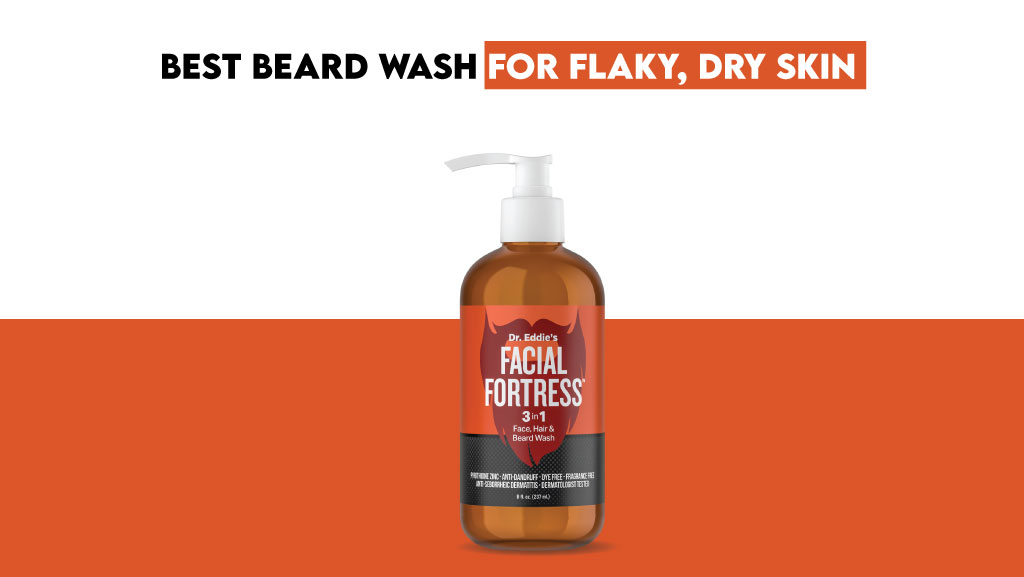
Choosing a cleanser starts with the cause of the flakes. For ordinary dryness, gentle cleansing and moisturizing may be enough. When flaking is associated with dandruff or seborrheic dermatitis, a medicated wash designed for the face, hair, and beard can combine cleansing with dandruff care. A suspected product reaction needs a different approach.
Facial Fortress 3-in-1 Medicated Wash was developed by Dr. Eddie specifically for the face, hair, and beard. Beyond its 0.95% pyrithione zinc dandruff active, the formula is fragrance-free, dye-free, dermatologist tested, and built with added humectants and conditioning ingredients such as glycerin and panthenol. Those extra formulation choices make it a more skin-conscious option for the delicate skin beneath a mustache or beard than a stripped-down scalp dandruff shampoo.
Skin-Supporting Ingredients
The formula contains carefully selected ingredients that help support the skin barrier and maintain hydration:
- Licorice-derived Dipotassium Glycyrrhizate – included for soothing skin care
- Apple Fruit Extract – included for skin conditioning
- Provitamin B5 (Panthenol) – supports moisture retention and barrier function
Zinc-Based Dandruff Support
The active ingredient is 0.95% pyrithione zinc. Facial Fortress helps relieve flaking, scaling, itching, redness, and irritation associated with dandruff and seborrheic dermatitis. These uses apply to those conditions; they do not mean the wash treats every cause of dry or irritated skin.
Designed for Sensitive Skin
The formula is fragrance-free, paraben-free, dye-free, and phthalate-free, and is made without harsh sulfates such as SLS and SLES. It is formulated with sensitive skin in mind. Individual reactions are still possible, so stop using it if your skin becomes more irritated.
A single wash for the face, hair, and beard can simplify your routine. Keep moisturizing and grooming gentle, and pay attention to how the skin beneath your facial hair responds.
For best results, use Facial Fortress at least twice a week or as directed by a doctor. Wet hair thoroughly, massage onto the scalp and skin, and rinse. Avoid the eyes; rinse thoroughly with water if contact occurs. Stop use and ask a doctor if symptoms worsen or fail to improve with regular use as directed. If you want the complete label details, you can review the full Drug Facts here.
When to Seek Medical Advice
See a healthcare professional if symptoms are severe, persistent, or worsening, or if the cause is unclear. Pain, spreading redness, drainage, or patches of hair loss need evaluation. The right treatment depends on the condition affecting your skin. For itch affecting the wider beard area, see our guide to common causes of an itchy beard.
Conclusion
A carefully trimmed mustache can still hide irritated skin. Start with the clues: tightness after washing, stinging after a product, or flakes that keep returning. The cause should guide your next step.
Gentle cleansing and moisturizing support dry skin; stopping a suspected product addresses a possible trigger. For recurring dandruff, see our mustache dandruff treatment guide, including when Facial Fortress medicated wash may help.
You do not need to overhaul every grooming habit at once. Pay attention to your skin’s response, keep the steps gentle, and seek advice if the problem persists or worsens.
Medical References


Frequently Asked Questions
Why is the skin under my mustache dry and flaky?
Is it dandruff or just dry skin under my mustache?
How do I get rid of dry, flaky skin under my mustache?
- Cleanse gently with a product appropriate for facial skin.
- Use lukewarm water, rinse thoroughly, and pat dry.
- Apply a fragrance-free moisturizer to the skin beneath your mustache.
- Stop any grooming product that seems to trigger irritation.
- If dandruff or seborrheic dermatitis is the cause, use an appropriate medicated wash as directed.
Seek medical advice for severe, persistent, or worsening symptoms.
Can mustache dandruff go away on its own?

Dr. Eddie created Facial Fortress, a medicated 3-in-1 face, hair and beard wash for dandruff and seborrheic dermatitis.
More about Dr. Eddie
- Seborrheic Dermatitis on the Body: Chest, Skin Folds & Belly Button - September 17, 2026
- Seborrheic Dermatitis Treatment: Zoryve and Other Options for the Face and Beard - September 17, 2026
- GLP-1 Medications and Beard Changes: What Do We Know? - September 17, 2026