
Why Fragrance-Free and Dye-Free Skin Care Matters for Sensitive Skin: Expert Guidance
Doctor Answer: Why Do Fragrance-Free and Dye-Free Products Matter for Sensitive Skin?
Yes. Added fragrance and dyes are among the most common triggers of skin irritation and allergic contact dermatitis, especially in people with sensitive skin, eczema, rosacea, or seborrheic dermatitis.
Fragrances, including essential oils, can disrupt the skin barrier and lead to redness, stinging, itching, burning, or flare-ups. Synthetic dyes add visual appeal but provide no therapeutic skin benefit and may increase irritation risk in reactive individuals.
Fragrance and dyes are commonly associated with:
- Allergic contact dermatitis
- Skin barrier disruption
- Increased redness and inflammation
- Delayed improvement in already irritated skin
Choosing fragrance free skin care reduces unnecessary exposure to sensitizing ingredients and supports calmer, more resilient skin over time.
Dr. Eddie Valenzuela
If you’ve ever tried a product that smelled amazing and looked beautiful on your shelf, only to feel stinging, itching, or irritation minutes later, you are not alone.
That “eau de flower bomb” vibe and those soft pink or bright blue tints may make a product feel luxurious, but your skin does not always appreciate the extras. For people with sensitive or reactive skin, added fragrance and synthetic dyes are among the most common triggers of redness, itching, and inflammation.
In many cases, irritation is not caused by what your skin lacks, but by what it does not need. Choosing fragrance-free skincare is often less about minimalism and more about protecting your skin barrier from unnecessary stress, especially in a routine for sensitive skin.
When barrier disruption overlaps with flaking around facial hair, it may also resemble conditions like beard dandruff, which share similar inflammatory pathways.
What Is Sensitive Skin?
Sensitive skin is not a medical diagnosis. It describes skin that overreacts to environmental triggers, harsh ingredients, or allergens that would not bother most people.
Common signs include:
- Redness or flushing
- Dry, rough, or flaky patches
- Itching, tingling, or burning sensations
- Small bumps not typical of acne
Triggers vary from person to person, but fragrance and artificial dyes are frequent offenders, particularly for individuals with eczema or compromised barrier function.
Because sensitive skin is more reactive by nature, building a consistent skincare routine for sensitive skin is essential. Gentle cleansing, regular moisturization, and minimizing unnecessary additives form the foundation of long-term skin health.
What Does “Fragrance-Free” Mean?
Fragrance is one of the most common triggers of contact dermatitis, especially in reactive skin. The National Eczema Association identifies fragranced cosmetics as a frequent trigger for eczema flare-ups, which is why understanding label terminology matters.
Here’s how to decode common terms:
Fragrance-Free
No fragrance ingredients have been added to the formula. The product may still have a mild scent from raw materials, but no added perfumes, essential oils, or scent blends are included.
Unscented
Unscented products may contain masking agents designed to neutralize odor. These masking agents can still act as fragrance chemicals and may irritate sensitive skin.
Parfum (or Fragrance)
On ingredient lists, “parfum” is an umbrella term that may represent multiple fragrance compounds. Individual components are not always disclosed. For people seeking gentle fragrance-free skin care products, this lack of transparency can make it difficult to identify triggers.
If your skin is reactive, choosing clearly labeled fragrance free skin care instead of simply unscented formulas can significantly reduce the risk of redness and inflammation.
What Are Dye-Free Products?
Dye-free skin care products are formulated without synthetic colorants added primarily for visual appeal. These ingredients enhance aesthetics but do not improve performance.
Synthetic Dyes
Often listed as FD&C or D&C followed by a number, these dyes are certified for use in foods, drugs, and cosmetics. They are manufactured synthetically and provide consistent color. While approved for cosmetic use, they offer no skin benefit and may contribute to irritation or allergic reactions in susceptible individuals.
Lakes
Lakes are pigments created by combining a dye with an insoluble binder, often a metallic salt. They are stable and widely used in cosmetics. Because lakes are derived from synthetic dyes, they may carry similar irritation potential in reactive skin.
Azo Dyes and Pigments
Certain compounds used in dyes and pigments may act as irritants in susceptible individuals. For those prioritizing non irritating skin care products, minimizing unnecessary colorants may reduce cumulative exposure.
Botanical Colorants
Plant-derived pigments such as beetroot or henna are sometimes perceived as gentler. However, natural does not automatically mean non-irritating. Individual skin sensitivity and overall formulation determine tolerance.
Why Fragrance and Dyes Can Disrupt the Skin Barrier
The skin barrier is composed of lipids such as ceramides and fatty acids that help retain moisture and defend against environmental stress.
Repeated exposure to fragrance and unnecessary additives can:
- Increase transepidermal water loss
- Promote low-grade inflammation
- Heighten skin reactivity over time
Many dermatologist recommended skin care strategies that emphasize simplifying formulas and minimizing avoidable irritants rather than layering multiple fragranced products.
When selecting the best face wash for sensitive skin, dermatologist recommended principles that prioritize fragrance-free, dye-free formulations that support barrier function without unnecessary additives.
Benefits of Fragrance-Free and Dye-Free Skin Care
Switching to hypoallergenic skin care and fragrance-free skin care products can help:
- Reduce cumulative irritation
- Support long-term barrier stability
- Improve product tolerance
- Simplify ingredient exposure
Many dermatologist recommended skin care approaches that focus on simplified formulas and gentle skincare products for sensitive skin that reinforce the skin barrier rather than challenge it.
What to Look for in Skincare Products for Sensitive Skin
When building a skincare routine for sensitive skin, look for:
- Fragrance-free
- Dye-free
- Hypoallergenic skin care formulations
- Minimal, purposeful ingredient lists
A 3-step sensitive skin routine, fragrance-free approach often includes:
- Gentle cleanse
- Moisturize to reinforce barrier health
- Daily sunscreen
Reducing unnecessary additives and choosing non irritating skin care products supports long-term comfort and resilience.
Facial Fortress Commitment to Fragrance and Dye-Free Skincare
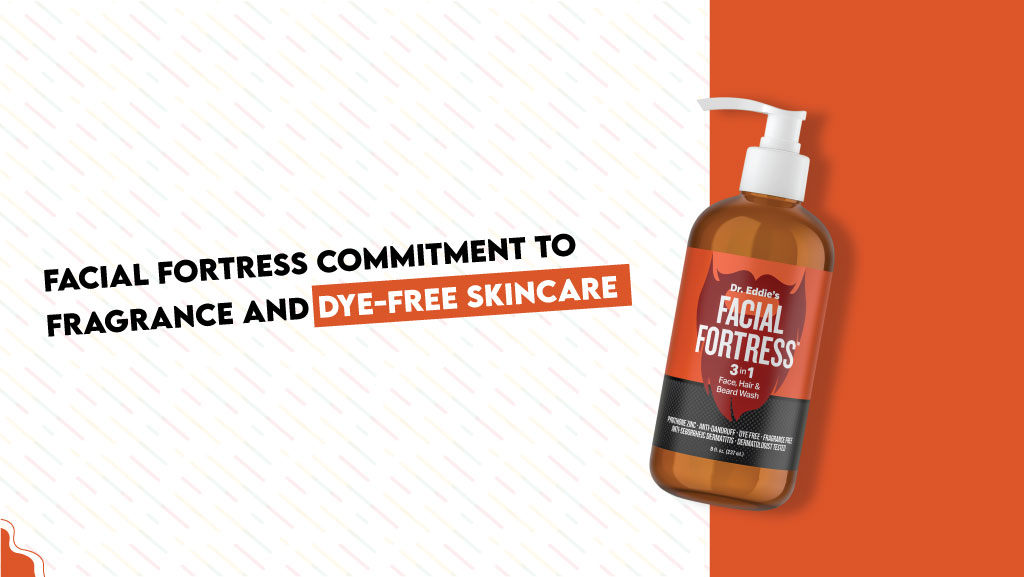
At Facial Fortress, formulation decisions begin with minimizing unnecessary irritation.
Sensitive and reactive skin does not benefit from added perfumes or decorative colorants. That is why our approach to fragrance-free skin care prioritizes simplified, barrier-supportive cleansing solutions without added dyes.
Dr. Eddie Valenzuela developed the line with barrier support and simplicity in mind. The goal was to create gentle skincare products for sensitive skin that align with dermatologist-recommended skin care principles.
The Facial Fortress 3-in-1 Face, Hair, and Beard Wash was designed to function as a beard wash, face wash, and scalp cleanser while minimizing common irritants.
Conclusion
Caring for sensitive skin does not require complexity. It requires thoughtful ingredient selection.
Fragrance and artificial dyes can contribute to irritation and barrier disruption in reactive individuals. Choosing fragrance free skin care and dye-free formulas reduces exposure to common triggers and supports long-term skin resilience.
Final Step
If you are working to reduce irritation and simplify your routine, removing unnecessary additives is often the most effective place to begin. You can explore fragrance-free options designed with sensitive skin in mind.

Recent Post


Frequently Asked Questions
Is fragrance-free better for sensitive skin?
Does fragrance-free mean hypoallergenic?
What is the best face wash for sensitive skin dermatologist recommended?
What should a skincare routine for sensitive skin include?