Mustache Dandruff: Symptoms, Causes, and Treatment
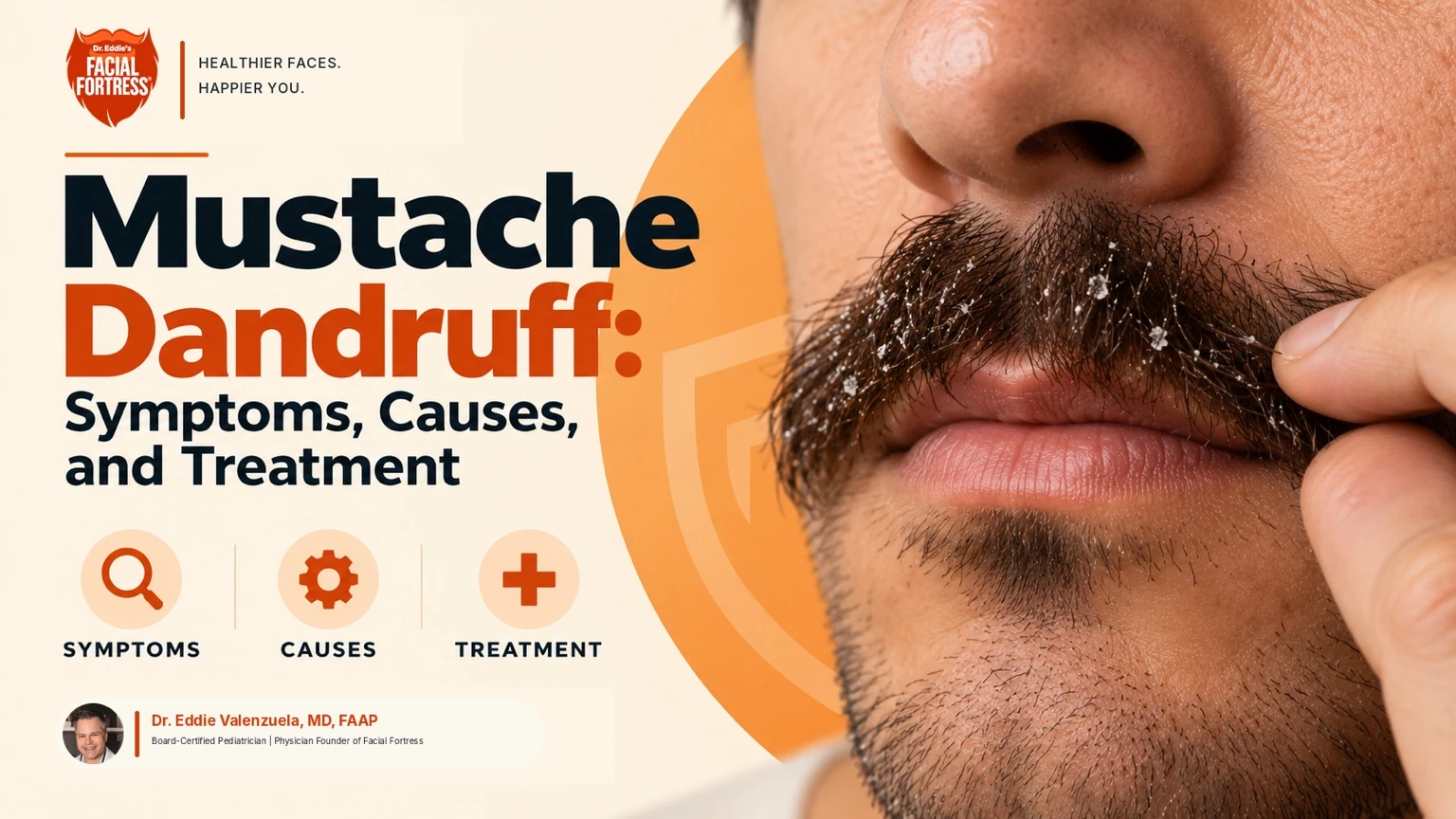
Dandruff is one of the most common and frustrating skin conditions we know and dislike. But when those pesky, tiny, white dandruff flakes start hanging around on your mustache and beard, it can be even more annoying.
Not only can they spoil your appearance, but they can also cause itching and irritation on the skin, and usually at the worst possible times. But don’t worry, you are not alone; Dr. Eddie, who has spent more than a decade treating patients dealing with dandruff, seborrheic dermatitis, and cradle cap, is here to help you.
This guide focuses on mustache dandruff: its symptoms, the role of skin oils and yeast, medicated treatment, and managing recurring flakes. You’ll also find practical advice on scratching, picking, and home remedies.
One more thing before we get started. Whether you spell it ‘moustache’ like the Brits or ‘mustache’ like Americans, it’s the same patch of hair—and just as prone to flaking.
Quick Answer: What Helps Mustache Dandruff?
For flakes associated with dandruff or seborrheic dermatitis, an appropriate medicated wash used as directed may help. Gentle washing and avoiding scratching or picking support that care. Because symptoms can return, managing the condition may require an ongoing routine.
What Is Mustache Dandruff?
Just like dandruff on the scalp, when those white or yellow dandruff flakes start appearing on your mustache, it is known as mustache dandruff, and when it affects your beard, we call it beard dandruff.
People often use different names for flaking depending on where it appears. Dandruff is commonly described as a mild form of seborrheic dermatitis, usually affecting the scalp without obvious inflammation. Seborrheic dermatitis can also affect facial skin, including beneath the mustache. However, not every flake in facial hair is caused by this condition.
Want to know what causes dandruff in the mustache? Read on.What Does Dandruff on a Mustache Look Like?
If you have never experienced dandruff on your mustache or beard, you may be curious about what it looks like. It looks pretty much the same as the dandruff you get on the scalp and causes similar dandruff symptoms, such as:
- Yellow or white flakes on the mustache and beard
- Redness or changes in skin color under the mustache
- Skin irritation
- Itchy skin
- Greasy scale or oily patches in some people
- Inflammation (especially if it’s seborrheic dermatitis)
Other skin conditions, including eczema, psoriasis, and rosacea, can overlap with some of these symptoms. Ordinary dryness and reactions to grooming products can also cause flaking. Our guide to dry, flaky skin under the mustache explains these possibilities. Consult a dermatologist if the cause is unclear.
What Causes Mustache Dandruff?
Mustache dandruff starts in the skin beneath the hair. That helps explain why tidying the hairs or brushing away visible flakes may leave the itching and scaling unresolved. Understanding the skin process also helps explain why symptoms may return after an improvement.
The exact cause of dandruff and seborrheic dermatitis is not fully understood. Researchers link them to an interaction between naturally occurring Malassezia yeast, skin oils, and individual skin sensitivity. Excess oil or yeast overgrowth alone does not explain every case. These conditions are not caused by poor hygiene.
Here is how skin oils, yeast activity, and the skin’s response may contribute to itching, flaking, and irritation.
Sebum and Oil-Producing Glands
Our skin produces an oily substance called sebum, which helps protect its surface. The scalp and central face have many oil-producing glands, making them common sites for seborrheic dermatitis. Some people notice oily skin or greasy scale, but the condition can also occur without visibly excessive oil. Dryness and oiliness may be present together.
Malassezia Yeast and the Skin’s Response
Malassezia is a yeast that normally lives on human skin and uses components of skin oils. Its presence is not automatically a problem. In susceptible people, yeast activity and the way the skin responds may contribute to dandruff or seborrheic dermatitis. Differences in skin barrier function help explain why people with the same naturally occurring yeast do not all develop symptoms.
Free Fatty Acids and Skin Sensitivity
Enzymes produced by Malassezia break down components of sebum and release free fatty acids. These substances may contribute to inflammation in susceptible skin. This is one proposed part of the process, rather than a single explanation that applies to everyone with mustache flakes.
Changes in the skin barrier and skin-cell turnover can contribute to visible scaling. Shed cells may collect with skin oils and become noticeable in mustache hair. The balance between yeast activity, oils, and individual sensitivity matters more than simply assuming that the skin is producing too much oil.
How to Get Rid of Mustache Dandruff
When you have mustache dandruff, you naturally want relief from the flakes and itching. These steps combine appropriate dandruff treatment with gentle care for the skin beneath your facial hair.
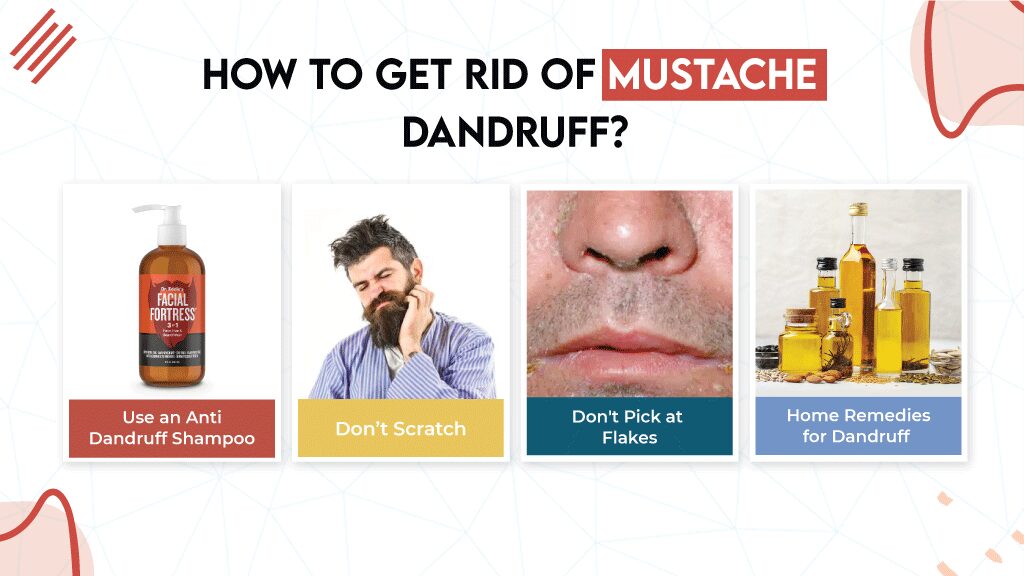
Use an Anti-Dandruff Shampoo
An appropriate anti-dandruff shampoo can help manage mustache dandruff. Choose a formula intended for the area you are treating and follow its directions. Skin beneath facial hair may be sensitive, so avoid assuming that every scalp product is appropriate for your face or that all shampoos will feel the same.
Pay attention to how a formula feels on your facial skin, including any stinging or increased irritation. Facial Fortress 3-in-1 Medicated Wash was created specifically with facial and beard skin in mind. It is fragrance-free, dye-free, dermatologist tested, and physician developed, with added humectants and conditioning ingredients such as glycerin and panthenol. That more thoughtful vehicle helps distinguish it from a basic scalp dandruff shampoo when you are treating the more delicate skin beneath a mustache or beard.
It is specially formulated by Dr. Eddie and infused with 0.95% pyrithione zinc as an active ingredient to help reduce the flaking, scaling, itching, and irritation associated with dandruff and seborrheic dermatitis on the scalp, beard, and mustache.
For best results, use Facial Fortress at least twice a week or as directed by a doctor. Wet hair thoroughly, massage onto the scalp and skin, and rinse. Avoid the eyes; rinse thoroughly with water if contact occurs. Stop use and ask a doctor if symptoms worsen or fail to improve with regular use as directed. If you want the complete label details, you can review the full Drug Facts here.
Don’t Scratch
The itching caused by dandruff can be difficult to resist. However, scratching beneath your mustache can further irritate the skin and may break its surface, increasing the risk of infection. Keep your nails short, avoid scraping with a comb, and seek medical advice if the itch remains difficult to control.
Don’t Pick at Flakes
Visible flakes can be frustrating, and it is tempting to pick them off for quick relief. Picking or pulling at attached scales can damage irritated skin and make it sore. Give the flakes a chance to loosen during gentle washing rather than scraping or peeling them away.
When dandruff is the cause, use an appropriate medicated dandruff wash as directed. Rinse it out thoroughly and pat the area dry. Work a fragrance-free moisturizer onto the skin if needed, and comb gently without dragging the teeth across inflamed skin.
Home Remedies for Dandruff
You may come across home remedies such as olive oil, apple cider vinegar, or coconut oil. Some products can soften scale or condition the skin, but these remedies are not established substitutes for appropriate dandruff treatment. Vinegar and fragranced or concentrated essential-oil products may irritate already sensitive skin.
Oils differ, and individual tolerance varies. A balm that makes your mustache feel soft can still leave the skin beneath it uncomfortable. If an oil, balm, or wax worsens itching, burning, or flaking, stop using it. Persistent reactions deserve evaluation. “Natural” does not guarantee that a remedy will be gentle.
Choosing a Medicated Wash for Mustache Dandruff
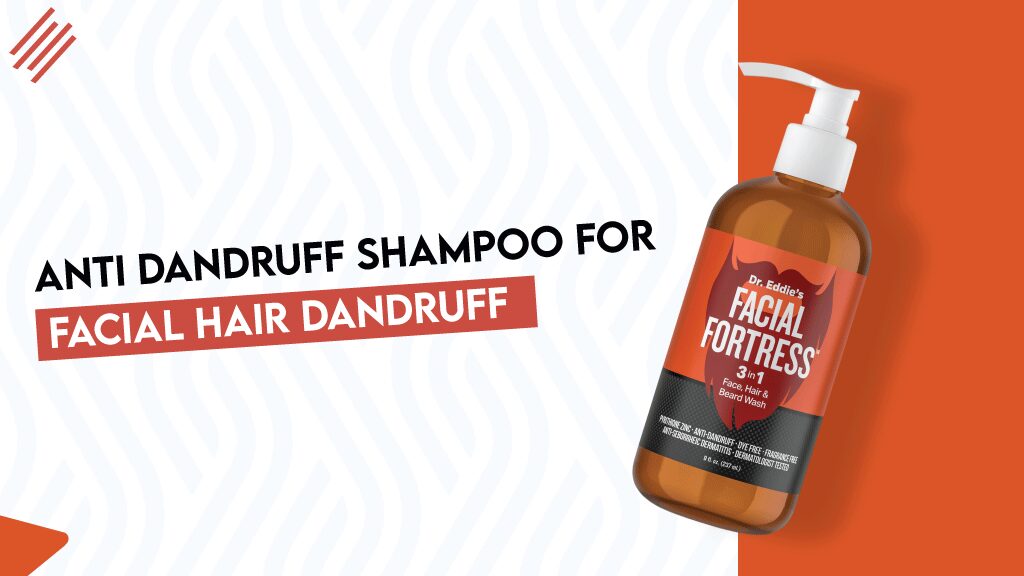
The product you choose should suit both the condition and the area being washed. Facial Fortress was developed for the face, hair, and beard, including the skin beneath the mustache. Its medicated formula is intended to relieve symptoms associated with dandruff and seborrheic dermatitis.
Dr. Eddie’s Facial Fortress 3-in-1 Medicated Wash combines dandruff care with cleansing and conditioning. Its features include:
- Fragrance-free
- Paraben-free
- Made without harsh sulfates such as SLS and SLES
- Dye-free
- Hypoallergenic formula; individual reactions remain possible
- Formulated with sensitive skin in mind
- Physician-developed by Dr. Eddie
- Designed for the face, beard, and scalp
It contains 0.95% pyrithione zinc as its active ingredient. The Facial Fortress Drug Facts label describes relief of flaking, scaling, redness, itching, and irritation associated with dandruff and seborrheic dermatitis. Follow the label rather than assuming that a stronger or more frequent routine will work better.
Its conditioning ingredients include apple fruit extract, licorice-derived dipotassium glycyrrhizate, glycerin, and provitamin B5 (panthenol). These complement the cleansing formula and support skin and hair comfort. The pyrithione zinc is the active ingredient for dandruff and seborrheic dermatitis.
Why Mustache Dandruff Can Keep Coming Back
Seborrheic dermatitis can improve and then flare again. Fewer flakes do not always mean the tendency has disappeared. Follow the product label or your clinician’s plan for ongoing care, and ask for advice if a previously helpful routine stops working. Avoid responding to every flare by scrubbing harder.
When to Seek Medical Advice
See a healthcare professional if symptoms are severe, persistent, or worsening, or if the cause is unclear. Pain, spreading redness, drainage, or patches of hair loss need evaluation. The right treatment depends on the condition affecting your skin.
Conclusion
Brushing flakes out of your mustache may tidy its appearance, but lasting symptom control depends on caring for the skin underneath. Appropriate medicated care, gentle grooming, and attention to flare-ups work together. If dryness or a product reaction seems more likely, use our guide to dry, flaky skin under your mustache to compare the clues.
For dandruff or seborrheic dermatitis, a consistent routine with an appropriate medicated beard wash such as Facial Fortress may help. Use it according to its directions, keep grooming gentle, and avoid scratching or picking. Symptoms can recur, so a clinician may recommend ongoing care tailored to your skin.
If symptoms worsen, fail to improve with regular use as directed, or leave you unsure of the cause, seek medical advice. Treatment should make the skin beneath your mustache more comfortable, not leave it increasingly irritated.
Medical References



Frequently Asked Questions
Why is my mustache flaking?
Is dandruff a fungus or a bacterium?
Will shaving my mustache help get rid of dandruff?
How can I tell if I have dandruff or seborrheic dermatitis?
Dandruff commonly refers to scalp flaking without obvious inflammation. Seborrheic dermatitis can also affect the face, including beneath the mustache. Possible symptoms include:
- White or yellow flakes on the scalp, beard, mustache, or eyebrows
- Greasy scale or oily patches in some people
- Itching or irritation
- Redness or changes in skin color
Other skin conditions can look similar. If the cause is unclear or symptoms do not improve with appropriate care, consult a clinician.
How do I manage dandruff on my mustache?
An appropriate medicated wash may help when the cause is dandruff or seborrheic dermatitis. Facial Fortress 3-in-1 Medicated Wash contains 0.95% pyrithione zinc and is designed for the face, hair, and beard. Follow the Drug Facts directions. Rinse thoroughly, avoid scratching or picking, and keep other grooming products gentle. Stop use and ask a doctor if symptoms worsen or fail to improve with regular use as directed.

Dr. Eddie created Facial Fortress, a medicated 3-in-1 face, hair and beard wash for dandruff and seborrheic dermatitis.
More about Dr. Eddie
- Seborrheic Dermatitis on the Body: Chest, Skin Folds & Belly Button - September 17, 2026
- Seborrheic Dermatitis Treatment: Zoryve and Other Options for the Face and Beard - September 17, 2026
- GLP-1 Medications and Beard Changes: What Do We Know? - September 17, 2026