Oily skin and beard dandruff: why over‑washing can make your beard flakier
When experiencing dandruff, whether it’s on your scalp or beard, most people think that it is caused by dry skin, but then why does your skin get even greasier during a dandruff flare-up? It’s because they both have a deep connection. In fact, oily skin is actually one of the main triggers for beard dandruff.
So what do most men with oily skin under the beard or on the face do? They scrub and wash their face more often to get rid of the oiliness and flakes. But did you know that it can actually make the condition worse?
So what should you do then? Don’t worry, we are here to help you. Read this blog to discover why oily skin and beard dandruff go hand in hand and how to get rid of the flakes and greasiness the right way.
What is Beard Dandruff?
Beard dandruff, also commonly known as ‘beardruff’, is a skin condition that leads to itchy, irritated, flaky skin under beard. It is similar to the dandruff we experience on the scalp, but when it appears on the facial hair, it is known as beard or mustache dandruff.
Some of the common symptoms that you may notice on your beard or mustache if you have facial dandruff are:
- Small yellow or white flakes
- Red flaky skin under beard
- Irritated skin
- Itching
- Excessively oily skin
Medically, dandruff and seborrheic dermatitis are not entirely separate conditions. Instead, dandruff is considered a milder, non-inflammatory form of seborrheic dermatitis. When the same process affects the facial hair, many people simply refer to it as ‘beard dandruff.’
Seborrheic dermatitis is the more inflamed version, often causing redness, irritation, and thicker scaling. It can also appear on other areas such as the eyebrows, sides of the nose, and chest, whereas dandruff tends to cause looser flakes without significant redness.
Both conditions are associated with excess sebum, an overgrowth of Malassezia yeast, and individual sensitivity to oleic acid—making them part of the same spectrum rather than two unrelated skin issues.
Connection Between Dandruff and Oily Skin
To understand why oily skin and beard dandruff often appear together, it helps to look at what actually causes dandruff. Contrary to popular belief, dandruff is not caused by dry skin. Instead, research shows that dandruff—whether on the scalp or under the beard—is driven by three key factors:
- Excess sebum (oil) production
- Overgrowth of Malassezia yeast
- Skin sensitivity to oleic acid, a byproduct created when this yeast breaks down oils
Sebum is the natural oil produced by the sebaceous glands to keep skin soft and hydrated. But several factors can cause these glands to produce too much oil, including:
- Hormonal fluctuations
- Genetics
- Overwashing or using harsh cleansers
- Stress
- Environmental or climate changes
When excess oil accumulates on the skin—especially in areas with facial hair—it creates the perfect environment for Malassezia, a yeast that naturally lives on the skin, to multiply more quickly.
This yeast feeds on sebum, and as it breaks the oil down, it produces oleic acid. Some people are sensitive to this substance, which can trigger:
- Flaking
- Itching
- Redness
- Irritation
- Greasy scales
This combination of excess oil, yeast overgrowth, and skin irritation is what leads to oily dandruff, including flaky skin under the beard and seborrheic dermatitis beard symptoms.
So if you’re noticing oily skin under your beard along with flakes, it’s not a coincidence—these issues are tightly connected through the same biological process.
How Over-Washing Can Make Your Beard Dandruff Worse?

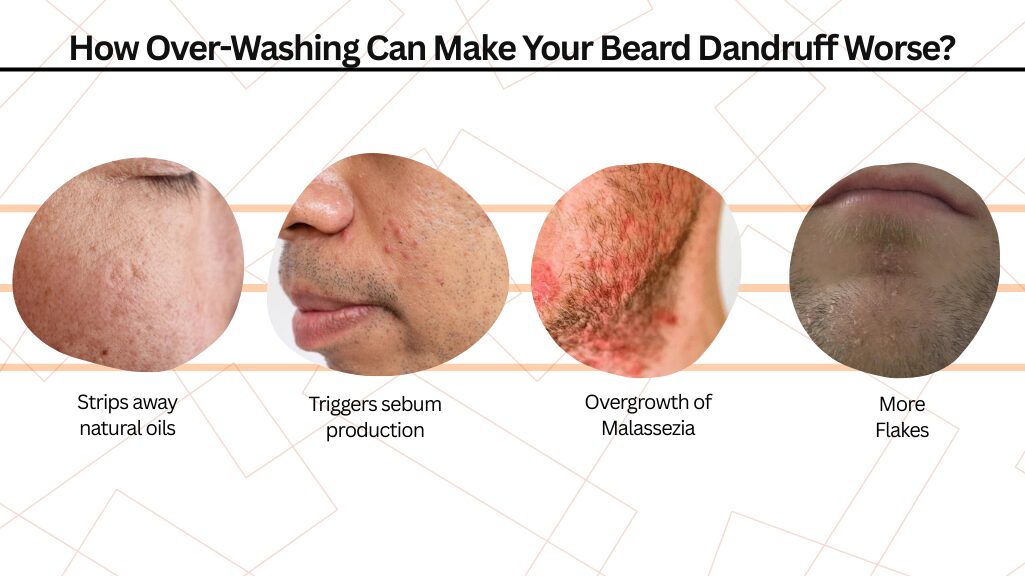
Oily or greasy skin can feel sticky, uncomfortable, and dirty, which leads many people to wash their face and beard more often. But when it comes to beard dandruff, overwashing can actually make the flaking and oiliness worse, not better. Here’s why:
1. Strips Away Natural Oils
Frequent washing—especially with hard water or harsh cleansers—removes the skin’s natural oils. This leaves the skin feeling dry and tight, even if it was oily before.
2. Triggers Excess Sebum Production
When the skin becomes dry, it signals the sebaceous glands to produce more oil to compensate. This rebound effect can lead to even oilier skin under the beard, worsening the greasy feeling.
3. Encourages Malassezia Overgrowth
Higher levels of sebum provide more fuel for Malassezia, the yeast associated with dandruff and seborrheic dermatitis. As oil production increases, the yeast multiplies more quickly.
4. Leads to More Flakes and Irritation
As Malassezia grows and breaks down sebum, it releases byproducts that can irritate sensitive skin. This results in:
- Itchy, flaky skin under the beard
- Persistent dandruff flakes
- Increased redness or irritation
This cycle explains why overwashing—even with the intention of reducing oil—often leads to more dandruff, more flakes, and more discomfort.
Beard Dandruff Treatment
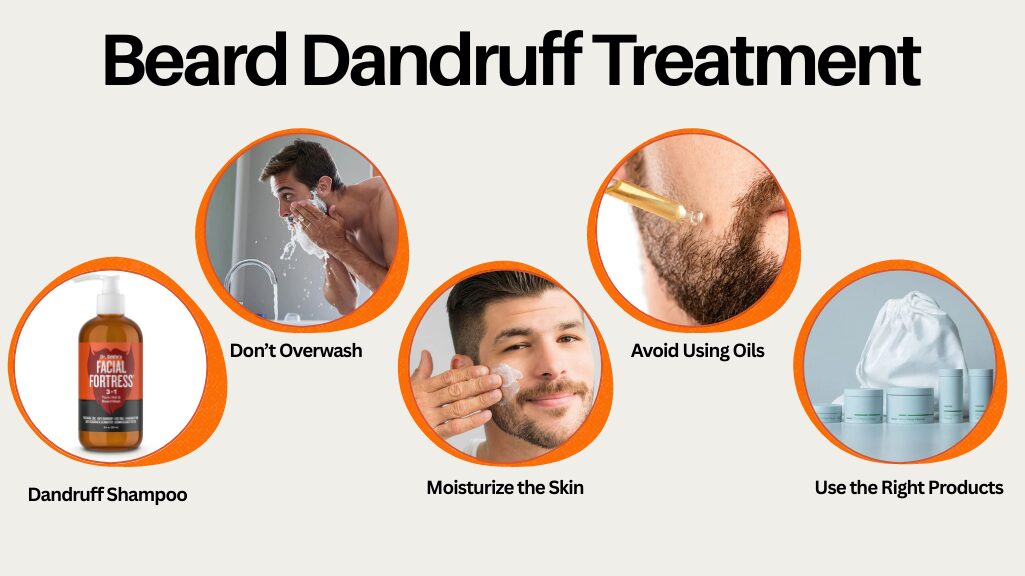
Managing beard dandruff doesn’t have to be complicated. With the right routine and products, you can significantly reduce itching, flaking, and oily buildup under your beard. Here’s a simple, science-backed beard care routine that works.
1. Use a Dandruff Shampoo Designed for the Beard
Just like scalp dandruff, beard dandruff responds best to ingredients that help control yeast and reduce flaking.
However, it’s important to use a beard-specific anti-dandruff wash, because facial skin is more sensitive than the scalp.
A product like Facial Fortress 3-in-1 Face, Scalp, and Beard Wash is ideal because:
- It contains 0.95% pyrithione zinc, an FDA-approved OTC ingredient for dandruff
- It is formulated for the delicate skin under the beard
- It helps reduce flaking, itching, and visible dandruff in both mild and intense phases
How to use a dandruff beard wash:
- Use 2–3 times per week for mild beard dandruff
- For seborrheic dermatitis flares, use once daily until flaking improves
- Once symptoms calm down, return to 2–3 times weekly
- Always use lukewarm or cool water, not hot
- Let the shampoo sit on the skin for 1–2 minutes to allow the active ingredient to work effectively
2. Don’t Overwash Your Beard
When trying to control oily skin around the beard, many men wash too often. But as explained earlier, overwashing strips the skin, triggers more oil production, and ultimately worsens the flakes.
Stick to your wash schedule–don’t scrub or cleanse more than necessary.
3. Moisturize the Skin Under the Beard
Beard hair wicks moisture away from the skin, making dryness more likely.
However, if you have oily skin and beard dandruff, choose non-oily, non-comedogenic moisturizers, such as:
- Beard balms
- Lightweight beard lotions
- Gel-cream moisturizers
These hydrate the skin without creating the greasy environment that Malassezia thrives in.
4. Avoid Beard Oils When You Have Dandruff
Beard oils—although popular—can make oily dandruff and seborrheic dermatitis worse.
That’s because Malassezia feeds on oils, especially:
- Coconut oil
- Olive oil
- Avocado oil
- Almond oil
- Argan oil
Applying oils can unintentionally fuel yeast overgrowth and increase flakes.
5. Choose the Right Beard Products
Harsh cleansers and fragranced beard products can irritate the skin and worsen dandruff.
Look for formulas that are:
- Fragrance-free
- Sulfate-free
- Paraben-free
- Phthalate-free
- Dye-free
A physician-developed wash, like Facial Fortress, checks all these boxes and is gentle enough for everyday use.
⭐ Facial Fortress for Beard Dandruff
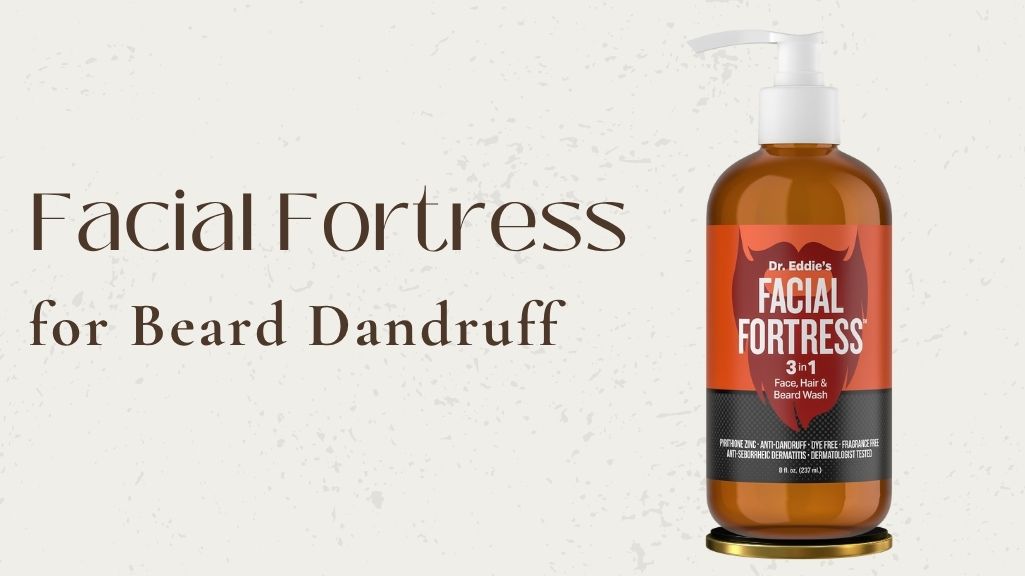
Facial Fortress for Beard Dandruff
Facial Fortress Anti-Dandruff Beard Wash is designed specifically for men dealing with oily skin, beard flakes, and seborrheic dermatitis symptoms. Created by pediatric expert Dr. Eddie, it contains 0.95% pyrithione zinc, which helps control the yeast associated with dandruff and reduce visible flakes.
It also includes cosmetic, skin-soothing ingredients such as:
- Licorice root extract — helps reduce the appearance of redness
- Apple fruit extract — provides antioxidant support
- Provitamin B5 — helps the skin feel soothed and conditioned
The best part is that Facial Fortress is gentle enough for daily use and works as a:
- Face wash
- Beard wash
- Scalp shampoo
If overwashing and harsh soaps have made your beard flakes worse, switching to Facial Fortress can help break the cycle of oiliness and persistent dandruff.
Does Oily Skin Affect Beard Growth?
A common question among men with oily skin is: “Can oily skin slow beard growth?” The answer is yes–indirectly.
When the skin produces excess oil, it can clog pores and hair follicles. This buildup traps dead skin cells, dirt, and Malassezia yeast, creating an environment that irritates the skin and increases inflammation. When follicles stay clogged or inflamed, it becomes harder for healthy beard hairs to grow and break through the surface.
So, while oily skin does not stop beard growth altogether, it can slow it down and lead to patchier, weaker growth over time–especially if the buildup is persistent.
Conclusion
Oily skin and beard dandruff aren’t opposites, they are partners in a cycle. The more oil your skin produces, the more likely you are to experience Malassezia overgrowth, irritation, and flakes. And when you try to fix oily skin by overwashing, you unintentionally strip the skin, trigger even more oil production, and make beard dandruff worse.
Instead of overwashing, the solution is to use the right products:
- A gentle, beard-specific anti-dandruff shampoo
- A formula free from harsh chemicals
- A product containing pyrithione zinc, the proven OTC active for dandruff and seborrheic dermatitis
Using a targeted wash like Facial Fortress 3-in-1 can help break the cycle by cleansing without stripping the skin and reducing visible flakes while supporting healthier-looking facial skin and beard hair.

Recent Post
Frequently Asked Questions
Why do I have so much dandruff in my beard?
Does oily skin cause dandruff?
Do dandruff and oily skin come together?
What does oily dandruff look like?
How do I get rid of beard dandruff flakes?