Can Seborrheic Dermatitis Cause Hair Loss? A Doctor Explains
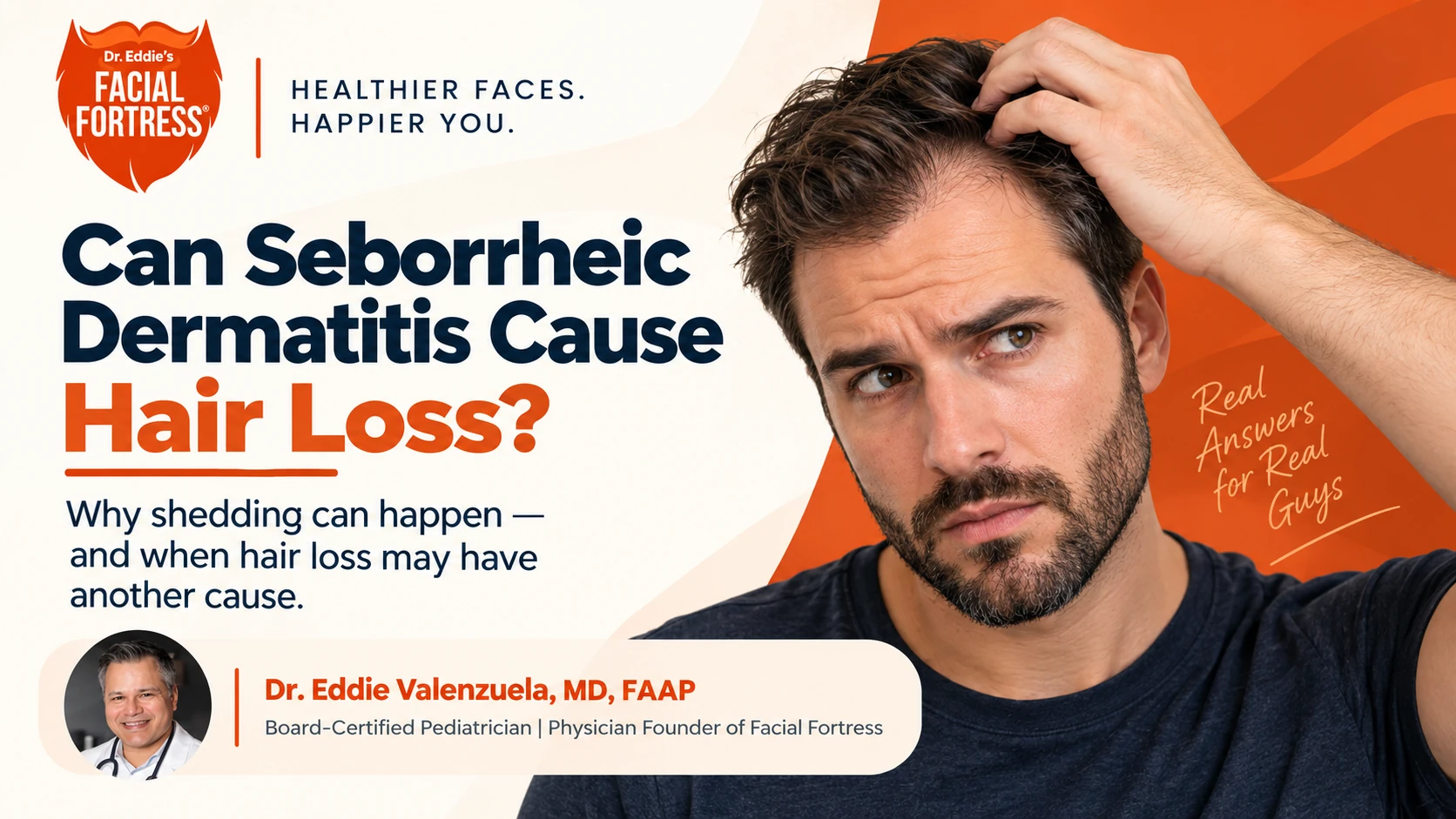
Quick doctor answer: Seborrheic dermatitis usually does not cause permanent baldness. Hair loss is uncommon, but severe scalp inflammation, scratching, or secondary infection can sometimes be associated with temporary shedding. If thinning is progressive, patterned, patchy, or continues after the rash improves, another cause of hair loss should be considered.
This guide explains when seborrheic dermatitis may be associated with temporary shedding, how to distinguish it from more common causes of hair loss, what recovery can look like, and how to care for an inflamed scalp without overpromising regrowth.
What is Seborrheic Dermatitis?
Seborrheic dermatitis, or SD, is a common inflammatory skin condition that causes a flaky scalp and beard. Dandruff and seborrheic dermatitis are closely related. Dandruff is generally a milder, scalp-limited presentation, while seborrheic dermatitis can produce visible inflammation and affect the face, beard, and other oil-rich areas. Even though it is more common on the scalp, it can affect other parts of the body as well. Especially those that are rich in sebaceous glands, such as
- Eyebrows
- Sides of the nose
- Neck
- In the skin folds
- Beard area
While flaking on the hair is its prominent feature, it can also lead to some other common symptoms, such as:
- Itchy skin
- Redness on the skin
- Inflammation
- Yellow or white flakes
- Crusty scales
- Skin irritation
- Excessively oily or dry skin
Current evidence points to an interaction among skin-surface lipids, the skin barrier, the immune response, andMalassezia yeast—a normal part of the skin microbiome. The condition is not explained by excess oil or yeast overgrowth alone; susceptible skin appears to react to lipid byproducts and inflammation in ways that produce scale and itch.
Does Seborrheic Dermatitis Cause Hair Loss?
Two of the most common questions that we often get are “Can seborrheic dermatitis lead to hair loss?” Or “Can dandruff cause hair loss?” The answer to both these questions is the same.
Seborrheic dermatitis is not a typical cause of permanent hair loss. Hair loss is uncommon, but severe inflammation, secondary infection, or repeated trauma from scratching can sometimes be associated with temporary shedding. Just as important, seborrheic dermatitis can coexist with other causes of hair loss, so the pattern of shedding matters.
- When scalp inflammation is severe, loose hairs may shed from affected areas. This is usually temporary rather than permanent follicle destruction.
- Scale and sebum do not simply ‘clog’ follicles and stop new hair from growing. Persistent thinning should prompt consideration of other causes, including androgenetic alopecia or telogen effluvium.
- Repeated scratching can break hairs and further irritate inflamed skin. If there are bald patches, broken hairs, pustules, pain, or scarring, another diagnosis such as tinea capitis, alopecia areata, psoriasis, or a scarring alopecia should be considered.
When shedding is truly related to severe seborrheic dermatitis, regrowth is often possible once inflammation is controlled because the follicles are usually not permanently destroyed. There is no reliable fixed ‘seborrheic dermatitis hair loss recovery time’; visible regrowth follows the normal hair cycle and may take months. Ongoing shedding or progressive thinning deserves evaluation for another cause.
Seborrheic Dermatitis and Hair Loss Treatment
If shedding appears during a significant seborrheic dermatitis flare, controlling the scalp inflammation and scale is important—but it is equally important not to assume the rash explains all hair loss. Temporary shedding may improve as the scalp settles, while progressive, patterned, or patchy loss should be evaluated for another cause.
There are two main approaches to managing seborrheic dermatitis and related hair loss:
Use an Anti-Dandruff Shampoo
How often to use a dandruff shampoo depends on the active ingredient, the product directions, your hair type, and the severity of the flare. Some people use medicated shampoo several times a week, while those with curly or tightly coiled hair may use it less often. Follow the specific label or your dermatologist’s instructions rather than assuming daily use is best.
How Often Should You Wash Your Hair if You Have Seborrheic Dermatitis?
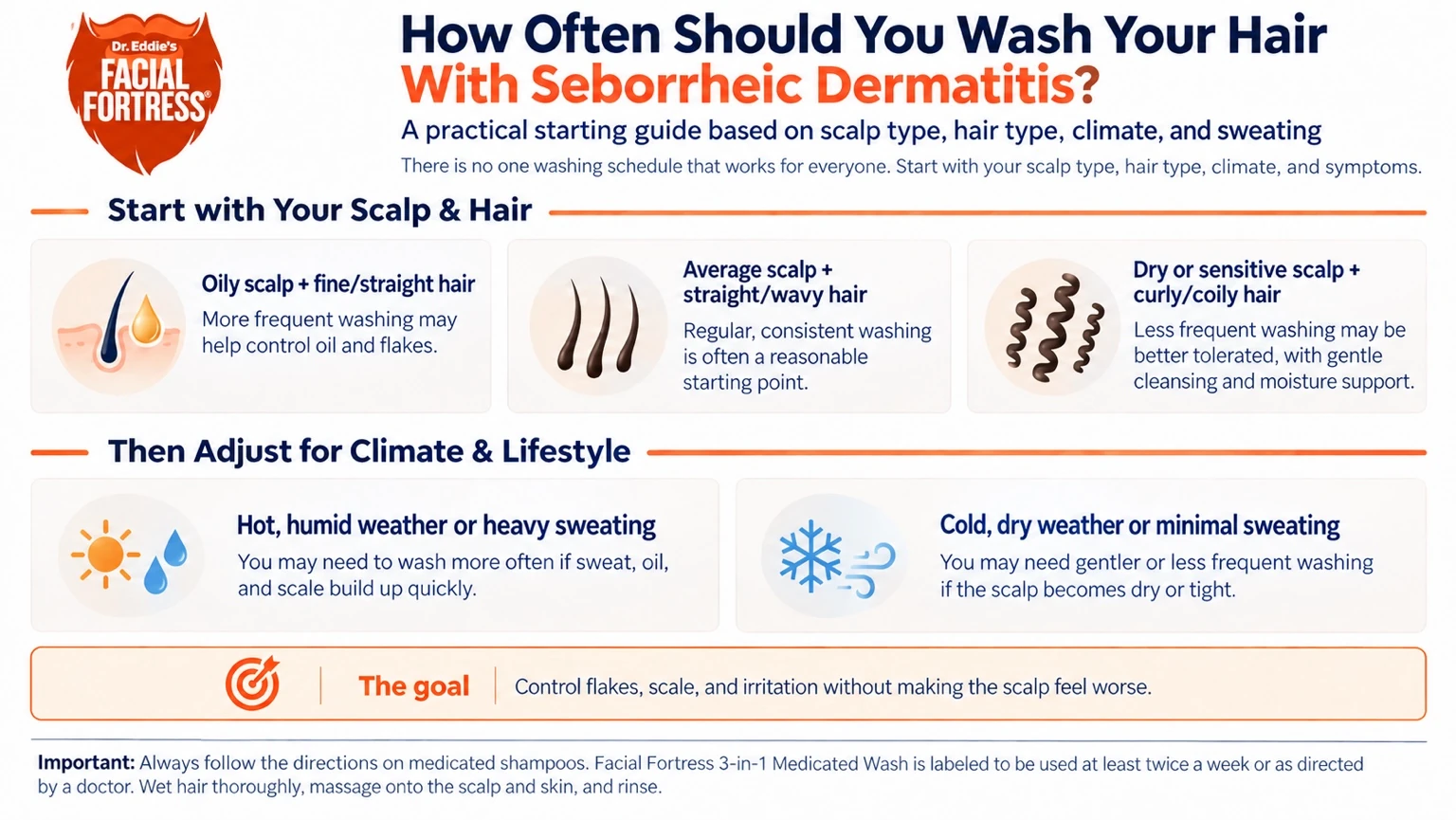
There is no single washing schedule that works for everyone with seborrheic dermatitis. For a more detailed breakdown by hair type, scalp oiliness, climate, and beard care, see our doctor’s guide to how often to wash hair and beard with dandruff. The right frequency depends on your scalp, hair type, climate, sweating, and how your skin responds to washing. Consistent cleansing can help control flakes, scale, and oil, but washing too often can make some scalps feel dry or irritated. Use the guides below as practical starting points, then adjust based on symptoms, tolerance, and the directions on the product you are using.
A Practical Starting Guide
| Scalp / Hair Pattern | Suggested Starting Approach |
|---|---|
| Oily scalp, fine or straight hair, frequent visible scale | More frequent washing may help keep oil and flakes under better control. |
| Average scalp, straight or wavy hair | Regular, consistent washing is often a reasonable starting point. |
| Dry or sensitive scalp, curly or coily hair | Less frequent washing may be better tolerated, with gentle cleansing and moisture support as needed. |
| Visible flare with scale, itching, or redness | Use an appropriate medicated dandruff or seborrheic dermatitis product according to its label and your clinician’s guidance. |
When Climate or Lifestyle May Change Your Routine
| Situation | How It May Affect Washing Frequency |
|---|---|
| Hot, humid climate | You may need to wash more often if sweat, oil, and scale build up quickly. |
| Cold, dry climate | You may need to wash less often or focus more on gentle cleansing and moisture support if the scalp becomes dry or tight. |
| Frequent exercise or heavy sweating | Extra cleansing may help if sweating seems to worsen itching, oiliness, or flakes. |
| Minimal sweating or mostly indoor climate control | Your baseline routine may be enough unless symptoms increase. |
How to adjust: If your scalp still becomes very oily, itchy, or flaky between washes, somewhat more frequent cleansing may help. If it feels tight, irritated, or overly dry after washing, consider a gentler routine, less frequent washing, or better moisture support. The goal is to control flakes and irritation without making the scalp feel worse.
Important: A general washing guide does not replace the directions on a medicated product. Facial Fortress 3-in-1 Medicated Wash is labeled to be used at least twice a week or as directed by a doctor. Wet hair thoroughly, massage onto the scalp and skin, and rinse.
Look for shampoos that are:
- Fragrance-free, paraben-free, and sulfate-free
- Free from dyes, alcohols, and phthalates
- pH-balanced and gentle on sensitive skin
A great example is Facial Fortress 3-in-1 Medicated Wash. Its 0.95% pyrithione zinc helps relieve the flaking, scaling, and itching associated with dandruff and seborrheic dermatitis, while its fragrance-free, dye-free, dermatologist-tested formula includes added humectants and conditioning ingredients such as glycerin and panthenol. That extra attention to the vehicle makes it a more skin-conscious choice for the scalp, face, and beard.
How to use it for the best results:
- Wet your scalp, beard, and hair with lukewarm or cool water (avoid hot water).
- Apply a small amount of shampoo and gently massage it into the scalp and affected areas.
- For Facial Fortress, follow the Drug Facts: wet hair thoroughly, massage onto the scalp and skin, and rinse. No leave-on time is specified on the label.
- Rinse thoroughly, ensuring no residue remains.
Prescription Medications
For moderate to severe or treatment-resistant seborrheic dermatitis, a dermatologist may add prescription therapy. The exact choice depends on the location, severity, age, and formulation, and some commonly used approaches are off-label for seborrheic dermatitis. Options may include:
- Topical antifungal agents
Prescription antifungals such as ketoconazole or ciclopirox may be used in appropriate formulations to reduce yeast-related activity and improve scale and inflammation. - Topical corticosteroids
A clinician may prescribe a topical corticosteroid for a short course when inflammation is significant. Potency and duration matter, especially on the face, because prolonged or overly potent steroid use can cause adverse effects. - Topical calcineurin inhibitors (non-steroidal options)
Topical calcineurin inhibitors such as pimecrolimus or tacrolimus are sometimes used off-label for facial or other sensitive areas when steroid-sparing therapy is appropriate. - Oral antifungals (for severe or widespread cases)
Systemic antifungal therapy is reserved for selected severe or widespread cases and requires clinician supervision because of drug interactions and potential adverse effects.
Note: These prescription options should be used only under medical supervision, as improper or prolonged use, especially of corticosteroids, can cause unwanted side effects.
Appropriate treatment can improve flaking, redness, and itch. If shedding is present, improvement in the scalp does not prove that seborrheic dermatitis was the only cause of the hair loss, so hair density and shedding should be monitored separately.
Gentle Scalp Care During a Seborrheic Dermatitis Flare
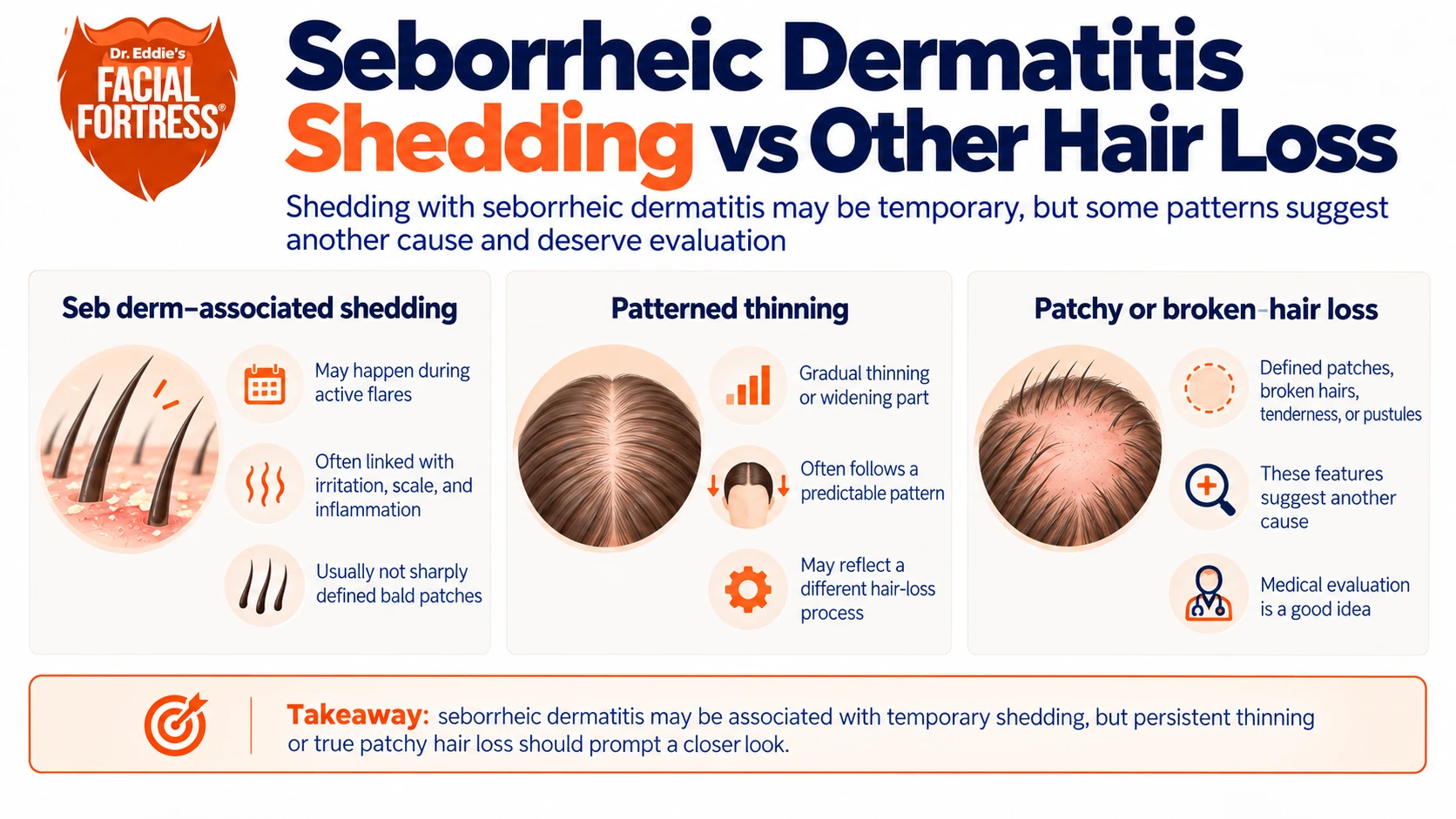
Good scalp care can reduce irritation and scale and help the skin feel more comfortable during a flare. It does not prevent genetic hair loss or guarantee regrowth, so changes in hair density should be assessed separately from improvement in dandruff or seborrheic dermatitis. If your concern is slow or sparse beard development rather than new shedding, see our evidence-based guide to how beard growth actually works.
Here are a few dermatologist-recommended habits to keep your scalp balanced and resilient:
1. Avoid Scratching the Scalp
It’s tempting to scratch an itchy scalp, but doing so can injure the skin, inflame follicles, and worsen shedding. Constant scratching disrupts the protective barrier of the scalp, increasing irritation and prolonging flare-ups. Try instead to gently massage the area when applying medicated shampoo or a cool compress for relief.
2. Don’t Pick at Flakes
Those visible flakes can feel embarrassing, but picking or peeling them can backfire. Removing flakes forcefully may tear the skin, damage follicles, and in some cases, cause infection or scarring. A safer option is to use a medicated anti-dandruff shampoo and a soft scalp or cradle-cap brush to gently lift flakes while cleansing.
3. Choose the Right Hair and Beard Products
An inflamed scalp may sting or react to grooming products that were previously well tolerated. Fragrance is a common irritant for some people, and harsh cleansing or repeated scrubbing can worsen dryness. Choose a gentle formulation you tolerate, rinse thoroughly, and stop products that consistently worsen burning, itching, or redness.
A great example is the Facial Fortress 3-in-1 Face, Hair, and Beard Wash. It is fragrance-free, dye-free, dermatologist tested, and enriched with humectants and conditioning ingredients such as glycerin and panthenol, along with licorice root and apple fruit extracts, and is formulated with sensitive facial and scalp skin in mind.
Can Seborrheic Dermatitis Cause Baldness?
Seborrheic dermatitis is not a typical cause of permanent pattern baldness. Severe or secondarily infected scalp inflammation can occasionally be associated with temporary localized shedding. Regrowth is often possible when the follicles have not been scarred, but persistent or progressive loss should be evaluated rather than automatically blamed on seborrheic dermatitis.
If you’re noticing bald patches in addition to flaking or redness, it could indicate another condition such as tinea capitis (scalp ringworm) or alopecia areata. These could simultaneously occur with seborrheic dermatitis. In that case, consult a dermatologist for evaluation and targeted treatment.
Seborrheic Dermatitis and Alopecia: What’s the Connection?
The link between seborrheic dermatitis and alopecia is often misunderstood. Alopecia, particularly androgenetic alopecia (male-pattern hair loss), is a genetically driven condition that leads to gradual thinning and baldness over time.
‘Alopecia’ simply means hair loss; it is not one single diagnosis. A person can have seborrheic dermatitis at the same time as androgenetic alopecia, alopecia areata, telogen effluvium, or another hair-loss disorder. The distribution and tempo of the hair loss help determine whether the scalp rash is actually related to the shedding.
The informal term “seborrheic alopecia” is sometimes used to describe shedding linked to severe or uncontrolled seborrheic dermatitis, but it is not a recognized medical diagnosis.
Can Seborrheic Dermatitis Cause Alopecia?
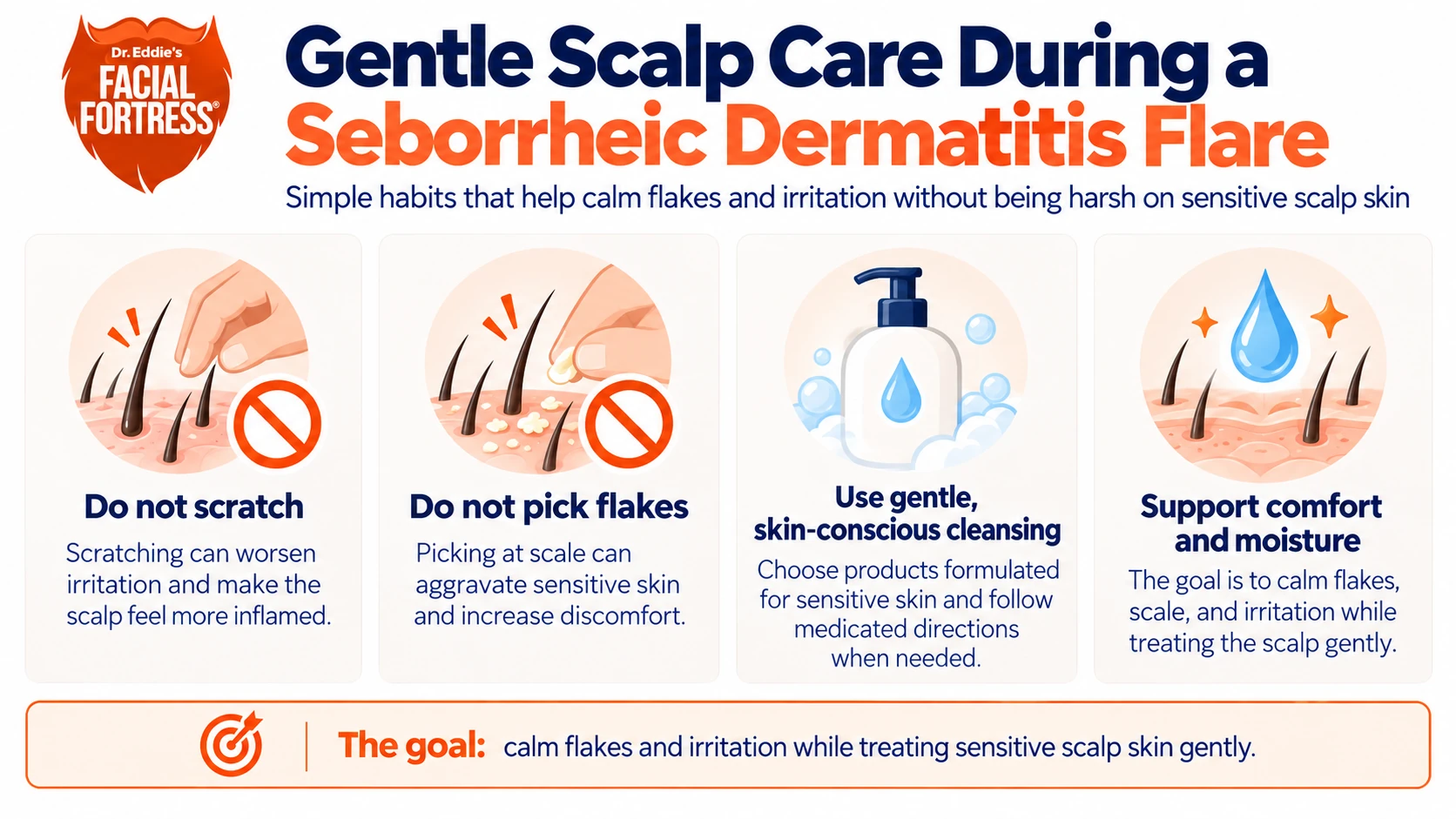
Alopecia simply means hair loss, so the answer needs nuance. Severe seborrheic dermatitis can sometimes be associated with temporary shedding, but it is not the usual cause of permanent alopecia. Seborrheic dermatitis is also not simply caused by Malassezia overgrowth; it reflects an interaction among normal Malassezia yeast, skin lipids, barrier function, and inflammatory susceptibility. If hair loss is progressive or persists after the scalp improves, another diagnosis should be considered.
When Should Hair Loss Be Evaluated?
Seborrheic dermatitis can coexist with other scalp and hair disorders. Consider a dermatology evaluation if hair loss is sudden, progressive, clearly patterned, or does not improve after the scalp inflammation settles. If you also use a GLP-1 medication, see our discussion of hair and beard changes during treatment.
- Round or sharply defined bald patches
- Broken hairs, pustules, drainage, significant tenderness, or scalp swelling
- Scarring, shiny areas, or loss of follicular openings
- Rapid diffuse shedding or thinning that continues for months
- A receding hairline or crown thinning suggestive of androgenetic alopecia
- Scaling that does not improve with appropriate treatment or a diagnosis that remains unclear
Conclusion
Seborrheic dermatitis is a common inflammatory condition that causes flaking, redness, and irritation on the scalp, beard, and other oil-rich areas. Hair loss is not a typical feature, although severe scalp inflammation can occasionally be associated with temporary shedding.
Seborrheic dermatitis is not a typical cause of permanent baldness. In severe scalp disease, inflammation, secondary infection, and trauma from scratching may be associated with temporary shedding, but excess sebum itself should not be presented as clogging or weakening hair follicles.
If temporary shedding is related to severe inflammation and the follicles are not scarred, regrowth is often possible as the scalp improves. There is no guaranteed recovery timeline, and ongoing or progressive loss should be evaluated for another cause.
To care for your scalp and prevent further loss:
- Use a medicated anti-dandruff shampoo according to the product label or your dermatologist’s instructions; frequency varies by active ingredient, formulation, and hair type.
- Avoid scratching or picking at flakes, which can damage hair follicles.
- Choose gentle, fragrance-free products formulated for sensitive or seborrheic-prone skin.
- Follow a balanced diet and maintain hydration to support scalp health.
Facial Fortress 3-in-1 Medicated Wash contains 0.95% pyrithione zinc and is labeled to help relieve flaking, scaling, and itching associated with dandruff and seborrheic dermatitis. It treats those labeled symptoms; it is not a treatment for hair loss.
Medical References

Frequently Asked Questions
Can seborrheic dermatitis cause hair loss?
Can seborrheic dermatitis cause permanent hair loss?
Will my hair grow back after seborrheic dermatitis?
How long does seborrheic dermatitis hair loss take to recover?
What shampoo should I use for seborrheic dermatitis?
Can seborrheic dermatitis lead to baldness or alopecia?

Dr. Eddie created Facial Fortress, a medicated 3-in-1 face, hair and beard wash for dandruff and seborrheic dermatitis.
More about Dr. Eddie
- Seborrheic Dermatitis on the Body: Chest, Skin Folds & Belly Button - September 17, 2026
- Seborrheic Dermatitis Treatment: Zoryve and Other Options for the Face and Beard - September 17, 2026
- GLP-1 Medications and Beard Changes: What Do We Know? - September 17, 2026