Oily Dandruff vs Dry Dandruff: How to Tell the Difference & Treat an Oily Flaky Scalp
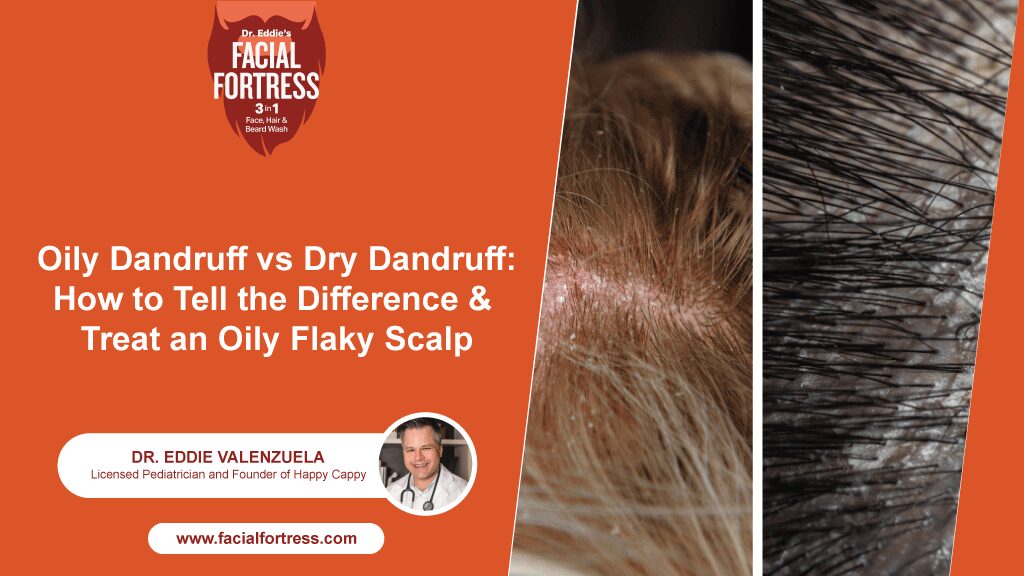
Oily dandruff and dry-looking flakes are part of the same dandruff spectrum. The difference usually comes down to scalp oil levels, skin sensitivity, and how Malassezia yeast interacts with the skin – not separate conditions.
Those tiny white flakes showing up on your shoulders can be frustrating, especially when your hair or beard suddenly looks oily, irritated, or itchy. One of the most common causes of visible scalp flakes is dandruff, a condition that affects up to 50% of adults worldwide at some point in their lives.
Dandruff, medically referred to as pityriasis capitis, is part of the seborrheic dermatitis spectrum. Dermatologists often classify dandruff as the mildest form of seborrheic dermatitis, although the way flakes appear can vary widely from person to person. According to published research, dandruff is closely linked to scalp oil production and the activity of Malassezia yeast, which can lead to flaking, itching, and irritation.
Some people notice greasy, yellow flakes on an oily scalp, while others experience smaller, dry-looking flakes. The terms “oily dandruff vs dry dandruff” describe how flakes appear rather than separate medical conditions.
In this guide, we’ll explain what dandruff is, how oily dandruff differs from dry-looking flakes, what causes an oily flaky scalp, and how to manage symptoms using dermatologist-recognized approaches to managing dandruff.
Many people notice oily hair and dandruff appearing together when excess sebum builds up, while others may confuse dry scalp vs dandruff when flakes look lighter or powdery.
Dermatologists generally view dandruff as part of a chronic seborrheic dermatitis spectrum that includes scalp flakes, beard dandruff, and other facial forms of irritation, such as itchy beard symptoms. This spectrum is influenced by scalp oil levels, skin barrier sensitivity, and the activity of Malassezia yeast.
While people often describe flakes as oily or dry, these differences usually reflect how the scalp responds to environmental factors, grooming habits, and individual skin chemistry rather than separate conditions. Understanding this spectrum helps guide treatment choices and explains why some routines focus on medicated cleansing while others prioritize gentle barrier support.
Medically reviewed by Dr. Eddie Valenzuela, a board-certified pediatrician who develops sensitive-skin formulations.
What is Dandruff?
Dandruff is one of the most common scalp conditions worldwide and can affect the scalp, eyebrows, sideburns, mustache, and beard area. It typically appears as visible flakes that may be white, yellow, or slightly greasy, often accompanied by an itchy or irritated scalp.
When flakes develop within facial hair, it is commonly referred to as beard dandruff. These flakes are usually part of the same dandruff process that occurs on the scalp and are often linked to oil production and the presence of Malassezia yeast on the skin.
Common signs of dandruff may include:
- Greasy yellow or white flakes
- Mild itching or scalp sensitivity
- Irritation or discomfort
- Mild redness in affected areas
Although dandruff is often mistaken for simple dry skin, it is more closely associated with scalp oil balance and yeast activity. Because dandruff exists along the seborrheic dermatitis spectrum, symptoms may vary depending on how oily or dry the scalp appears.
Because symptoms can overlap, distinguishing between dry itchy scalp and dandruff often depends on how the flakes look and how the scalp feels.
What Causes Dandruff?
Many people assume dandruff is simply caused by dry skin, but the reality is more complex. Dandruff is believed to develop from a combination of factors involving scalp oil production, skin sensitivity, and the natural microorganisms that live on the skin.
Some of the most common contributors include:
- Overgrowth of Malassezia yeast, a normal part of the skin’s microbiome, can trigger flaking in certain individuals.
- Increased sebum (oil) production from the scalp.
- Individual sensitivity to oleic acid, a byproduct of yeast activity.
- Underlying skin conditions within the seborrheic dermatitis spectrum.
- Reactions to harsh shampoos, fragrances, or irritating grooming products.
Malassezia yeast naturally lives on most people’s skin and usually causes no problems. However, when excess oil is present, the yeast can break down sebum into compounds that may irritate the skin barrier, leading to itching, redness, and visible flakes.
Because dandruff is influenced by multiple factors, symptoms may fluctuate depending on stress, climate, skincare routines, and hormonal changes.
These factors help explain why dandruff can appear as either greasy dandruff or dry-looking flakes, depending on scalp conditions.
Understanding Types of Dandruff
People often describe an oily vs dry dandruff pattern when a flaky and oily scalp alternates with periods of dryness or irritation.
In medical terms, dandruff is generally considered a mild form of seborrheic dermatitis. However, in everyday language, people often describe flakes as either “oily dandruff” or “dry dandruff” based on how the scalp looks and feels.
These descriptions don’t represent completely separate diseases. Instead, they help explain how dandruff can appear differently depending on oil production, skin sensitivity, and environmental factors.
Oily Dandruff
Oily dandruff, sometimes called greasy dandruff, is associated with excess sebum production. Sebum helps protect the skin, but when too much oil is present, it can encourage the activity of Malassezia yeast. This may lead to:
- Sticky or yellowish flakes
- An oily or shiny scalp
- Itching and mild irritation
- Patchy scaling around the scalp, beard, or eyebrows
Dry-Looking Dandruff
What people often call “dry dandruff” usually refers to flakes that appear lighter, smaller, or powdery. This can happen when the scalp barrier becomes irritated or dehydrated from environmental factors or harsh cleansing routines.
Common triggers may include:
- Cold or dry weather
- Overwashing the hair or beard
- Strong shampoos or fragranced grooming products
- Low humidity or indoor heating
Although the flakes may look dry, the underlying dandruff process can still involve yeast activity and scalp oil balance.
Oily Dandruff vs Dry Dandruff
Understanding how flakes look and feel can help you choose the right scalp care routine. While both fall under the dandruff spectrum, differences in oil levels and scalp irritation can change how symptoms appear.
| Oily Dandruff | Dry-Looking Dandruff | |
| Scalp Oil Level | Excess sebum or oily scalp | Lower oil or irritated scalp barrier |
| Flake Appearance | Yellowish, greasy, or sticky flakes | Small, white, powdery flakes |
| Hair & Scalp Feel | Greasy, heavy, or shiny | Tight, dry, or rough feeling |
| Common Triggers | Increased oil production, yeast activity | Overwashing, harsh products, dry environments |
| Underlying Process | Often linked to the seborrheic dermatitis spectrum | May still involve dandruff, but appears less oily |
| General Care Approach | Medicated anti-dandruff shampoo | Gentle, hydrating cleansing routine |
Persistent redness, thick scaling, or symptoms beyond the scalp may indicate seborrheic dermatitis and should be evaluated by a healthcare professional.
Understanding these differences can help guide your treatment choices. If symptoms persist or worsen, consider speaking with a healthcare professional to rule out other scalp conditions.
How to Get Rid of Dandruff?
Treatment can vary depending on whether flakes appear oily or dry-looking. Because dandruff exists along a spectrum, many people benefit from adjusting their routine based on scalp oil levels and irritation.
A medicated anti-dandruff shampoo is formulated to help manage dandruff symptoms within the seborrheic dermatitis spectrum.
How to Treat an Oily Flaky Scalp
If your scalp feels greasy or you are dealing with oily scalp dandruff, consistent cleansing with a medicated anti dandruff shampoo may help reduce visible flakes and itching.
- Wash the scalp regularly during active flaking, then reduce frequency as symptoms improve
- Allow the lather to remain on the scalp for about 2–5 minutes before rinsing, following product directions
- Look for OTC active ingredients such as pyrithione zinc that help control dandruff symptoms
- Rinse thoroughly to minimize buildup from styling products
- Some heavy oils or pomades may worsen greasy flakes for certain individuals
The best anti-dandruff shampoo is one that balances medicated support with gentle cleansing that won’t overly strip the scalp.
How to Treat Dry-Looking Dandruff
When flakes appear small, powdery, or associated with scalp tightness, focus on maintaining a gentle cleansing routine:
- Use a mild, hydrating shampoo designed for sensitive skin
- Avoid very hot water, which can disrupt the scalp barrier
- Reduce overwashing if the scalp feels irritated
- Choose fragrance-free or low-irritation grooming products when possible
Although flakes may look dry, the underlying dandruff process may still involve yeast activity and scalp oil balance, so consistency with gentle cleansing is important.
Facial Fortress 3-in1 Medicated Wash for Dandruff
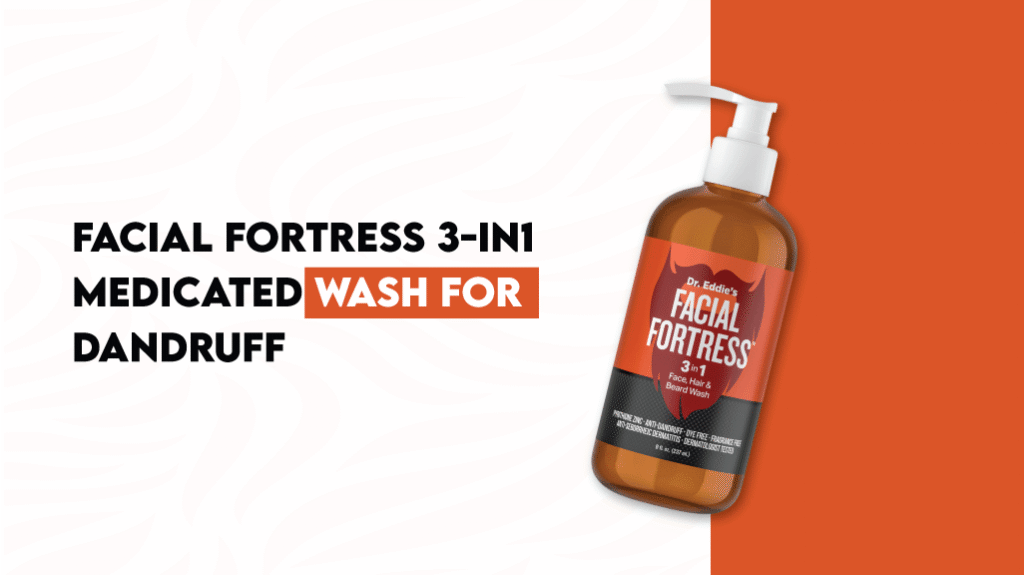
When managing oily dandruff, choosing the right cleanser can make a significant difference. Many traditional anti-dandruff shampoos may contain heavy fragrances or harsh cleansing agents that can feel irritating on sensitive facial skin or beards.
The Facial Fortress 3-in-1 Medicated Wash was developed to simplify scalp, beard, and face care using a single routine. Formulated for people dealing with greasy flakes, an oily flaky scalp, or beard dandruff, it combines gentle cleansing with an OTC-recognized anti-dandruff active.
The formula contains 0.95% pyrithione zinc, an active ingredient included under the FDA OTC monograph to help control flaking, itching, and irritation associated with dandruff and seborrheic dermatitis. You can review the full ingredients and Drug Facts panel for detailed information.
Unlike many heavily fragranced washes, Facial Fortress is designed with a fragrance-free, sulfate-free approach intended to support sensitive skin while still cleansing excess oil. Ingredients such as licorice root extract, apple fruit extract, and provitamin B5 help maintain scalp comfort and softness without leaving a greasy residue.
Because it functions as a scalp shampoo, beard wash, and face cleanser, Facial Fortress helps streamline grooming routines, especially for people managing flakes across multiple areas of the hairline or beard.
Conclusion
Oily dandruff and dry-looking dandruff may appear different, but they often exist along the same dandruff spectrum. Factors like scalp oil levels, skin sensitivity, and Malassezia yeast activity can influence whether flakes look greasy and yellow or lighter and powdery.
Understanding how your scalp behaves can make it easier to choose the right routine. Many people with oily flakes benefit from consistent use of a medicated cleanser such as Facial Fortress Anti-Dandruff Shampoo, which contains pyrithione zinc to help control visible flaking, itching, and irritation associated with dandruff.
If flakes appear dry or the scalp feels easily irritated, a gentle daily cleanser like Dermal Defense Daily Shampoo may help maintain comfort while supporting the skin barrier.
Because dandruff can vary from person to person, finding the right balance between medicated treatment and gentle maintenance is often the key to keeping flakes under control long-term.
Consistency, gentle cleansing, and choosing the right anti-dandruff routine can make a noticeable difference over time.

Recent Post
Frequently Asked Questions
Are oily dandruff and wet dandruff the same?
What is the difference between oily vs dry dandruff?
How can I tell if my dandruff is oily or dry?
Does oily hair cause dandruff?
Can dandruff go away on its own?
How often should I wash my hair if I have oily dandruff?