Oily Skin and Beard Dandruff: What Helps Without Overdrying Your Skin
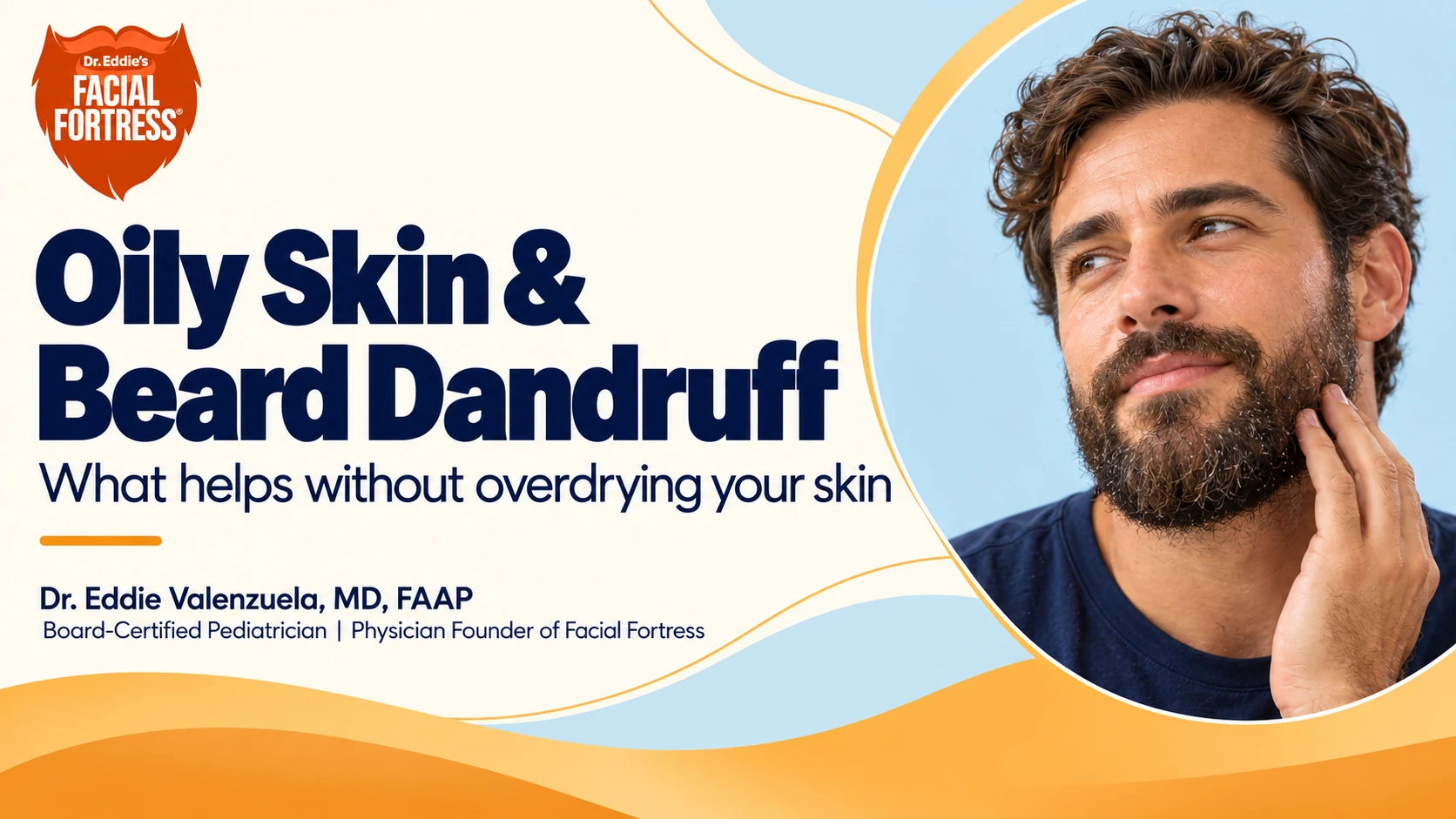
Greasy beard by lunchtime, flakes on your shirt, and skin that feels tight after washing? An oily, flaky beard needs a routine that controls dandruff while keeping both the skin and hair comfortable. Here is how to choose what to wash with, what to apply afterward, and when to use less product.
Quick answer: To manage beard dandruff without a greasy finish, gently cleanse the skin beneath the hair, use an appropriate dandruff treatment, and apply a small amount of lightweight, fragrance-free moisturizer where it is needed. Part longer beards to reach the skin. Beard oil is optional grooming care; adding more oil will not treat the flakes.
Why Can Oily Skin and Beard Dandruff Occur Together?
Seborrheic dermatitis tends to affect areas rich in oil glands. Its cause is not fully understood: skin oils, normally present Malassezia yeast and the way a person’s skin responds all play a role. Having oily skin does not mean you will inevitably develop dandruff, and flakes do not prove that your skin is producing too much oil. The American Academy of Dermatology explains these contributing factors.
Surface oil and skin hydration are different things. A shiny beard area can still feel dry or irritated, especially after strong cleansers or repeated scrubbing. Trying to remove every trace of oil may leave your skin less comfortable without adequately treating the underlying condition. If oiliness also affects your scalp, see why hair can get greasy quickly.
Unsure what is causing the flakes? Start with beard dandruff versus dry skin, or seborrheic dermatitis versus a product reaction if symptoms followed a new grooming product. For scalp flakes, see oily dandruff versus dry-looking flakes.
Can Washing Too Much Make Beard Flaking Worse?
Yes, if the routine irritates your skin. Hot water, harsh cleansers, repeated washing and vigorous rubbing can add dryness, stinging and flaking. That does not establish that washing automatically makes oil glands compensate by producing extra oil, or that more oil then guarantees yeast overgrowth.
Daily gentle cleansing is not automatically over-washing. Pay attention to how your skin feels afterward: comfortable is a better goal than squeaky-clean. The AAD’s seborrheic dermatitis self-care guidance emphasizes gentle washing, thorough rinsing and moisturizing.
What Should You Change When Your Beard Feels Greasy?
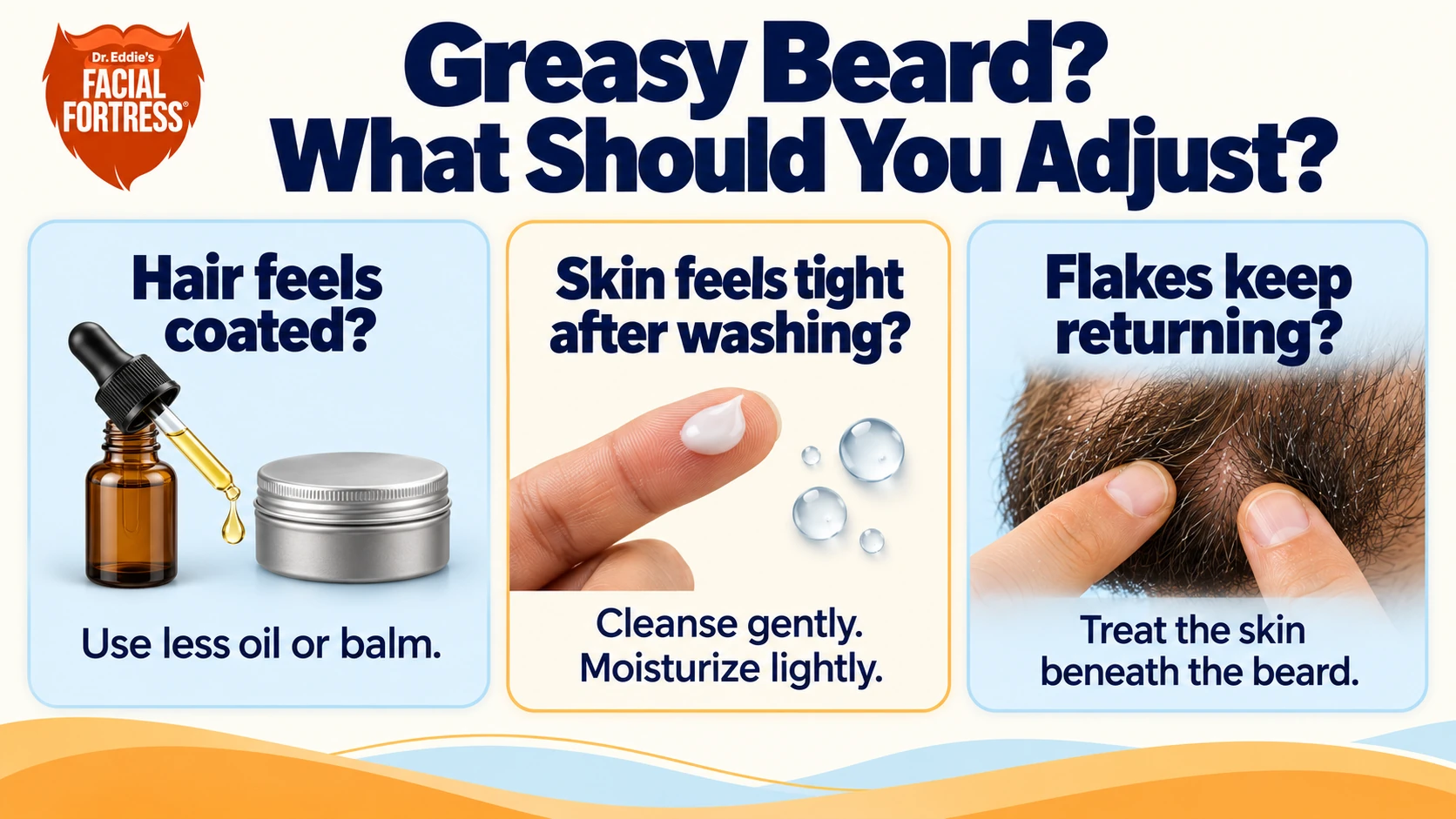
Choose the adjustment that fits your routine. Changing one product or habit at a time can make it easier to notice what helps.
| Your concern | What to adjust | How to apply it |
|---|---|---|
| Greasy skin with recurring flakes | Keep dandruff treatment in the routine. | Work the wash through the hair to the affected skin and rinse fully. Extra beard oil does not replace treatment. |
| Shiny skin that feels tight after washing | Use gentler cleansing and a light moisturizer. | Apply a small amount to slightly damp skin; add more only where dryness remains. |
| Hair feels coated after oil or balm | Reduce the amount or pause that product. | Skip layering oil, balm and conditioner together. Keep the simplest combination that feels comfortable. |
| A long beard hides the flaky skin | Improve access to the skin. | Part the hair in sections and use fingertips underneath. Coating the outside of the beard misses the treatment area. |
| Skin stings after repeated washing | Simplify cleansing and avoid scrubbing. | Use lukewarm water and rinse thoroughly. If a product burns or worsens the rash, stop it and seek advice. |
How Do I Control Beard Dandruff Without Making My Beard Greasy?
For the overall treatment and prevention plan, see our complete beard-dandruff guide. The adjustments below focus on keeping an oily beard comfortable without adding a heavy finish.
1. Cleanse the skin beneath the hair
Use your fingertips and a gentle cleanser rather than scrubbing flakes away with your nails or a stiff brush. Work through the beard, then rinse completely. If your routine includes several cleansers in the same shower, simplify it before adding another product.
2. Separate cleansing frequency from treatment frequency
A sweaty workout or extra styling product can change when you need cleansing; it does not automatically call for an extra medicated wash. Choose treatment appropriate for facial skin. Different dandruff products have different application instructions, so a scalp shampoo’s schedule should not simply be transferred to the beard.
For Facial Fortress, use at least twice a week or as directed by a doctor: wet the hair thoroughly, massage onto the scalp and skin, then rinse. Avoid the eyes. There is no specified timed leave-on step. Our hair and beard washing-frequency guide explains how cleansing and medicated treatment fit together.
3. Moisturize without leaving the beard coated
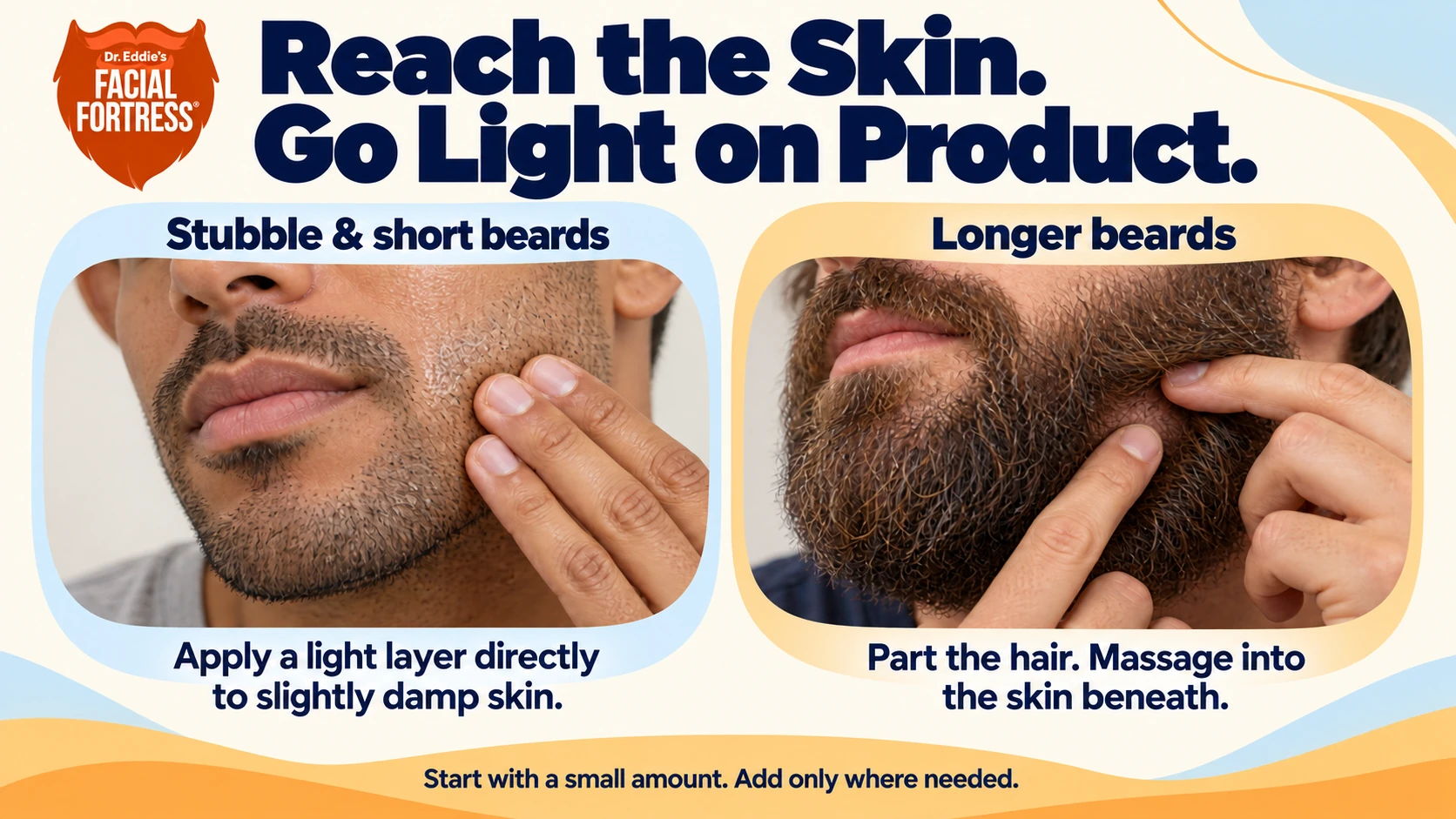
Pat dry, leaving the skin slightly damp, and apply a small amount of moisturizer. For oily, sensitive skin, a lightweight, fragrance-free, non-comedogenic lotion is a practical starting point. Non-comedogenic means formulated to avoid clogging pores; it does not mean a product treats yeast.
With stubble, apply directly to the skin. With a longer beard, part the hair in sections and use fingertips to reach underneath; then comb gently to distribute product through the hair. Beard length changes access to the skin more than it changes the need for medication.
4. Choose beard oil according to skin type and tolerance
Beard oil is a grooming option, not a dandruff medicine. The AAD’s general beard-care advice includes oil for normal or dry skin, conditioner for acne-prone skin, and a fragrance-free moisturizer for sensitive skin. Those recommendations do not mean every oil suits an active seborrheic dermatitis flare.
If your beard already feels greasy, skip adding oil just because you see flakes. If an oil or balm repeatedly increases itching, redness or buildup, stop using it. A blanket claim that every beard oil “feeds yeast” and must be banned goes beyond what we can conclude about a finished product on your skin.
Where Facial Fortress Fits
Facial Fortress™ 3-in-1 medicated wash was developed by Dr. Eddie for the face, hair and beard, with sensitive skin in mind. Its 0.95% pyrithione zinc helps control flaking, scaling and itching associated with dandruff and seborrheic dermatitis.
The dermatologist-tested, hypoallergenic formula is fragrance-free and dye-free. Glycerin and panthenol support moisture and conditioning, while licorice root and apple extracts add skin-conditioning care. That makes the cleansing experience part of the routine, alongside the active ingredient’s medicated role.
Use it consistently rather than scrubbing harder when you see flakes. If symptoms worsen or fail to improve with regular use, stop and ask a clinician about the diagnosis and next treatment step. See the ingredients and product directions for details.
When to See a Dermatologist
Arrange an assessment if symptoms persist despite regular treatment, the diagnosis is uncertain, or you develop patchy hair loss or broken hairs. Seek prompt care for painful swelling, pus, oozing or rapidly worsening inflammation. A clinician can distinguish seborrheic dermatitis from contact dermatitis, folliculitis and other causes, and add treatment when a wash alone is insufficient.
Frequently Asked Questions
Why is my beard oily and flaky at the same time?
Oil on the skin does not rule out dandruff. Seborrheic dermatitis can cause greasy scale and irritation, while dryness or a reaction to grooming products can also produce flakes. The pattern and accompanying symptoms matter more than oiliness alone.
Should I moisturize oily skin under my beard?
Yes, oily skin can still need moisture, especially when it feels tight after cleansing. Start with a small amount of lightweight, fragrance-free, non-comedogenic moisturizer on slightly damp skin. Apply it beneath the beard rather than leaving a heavy coating on the hair.
Can I use beard oil if I have dandruff?
Beard oil can soften hair, but it does not treat dandruff. During an oily, irritated flare, start with a small amount of fragrance-free moisturizer and pause products that worsen symptoms. General beard-oil advice for normal or dry skin is not a treatment plan for seborrheic dermatitis.
How much moisturizer or beard oil should I use?
Start with a thin layer of moisturizer where the skin needs it. If you also use beard oil for the hair, use it sparingly and add more only if needed. Part a longer beard to reach the skin; beard length alone is not a reason to pour on more product.
Should I wash my beard again whenever it feels greasy?
First consider whether the greasy feel comes from skin oil or a product you applied. Use less styling product if the hair feels coated, and cleanse gently when needed. Repeated washing that leaves burning or tightness calls for a gentler routine, not more scrubbing.