
Quick answer: Hair gets greasy when natural scalp oil (sebum) builds up or hair products leave residue. Your oil production, hair type, and washing routine affect how quickly this happens. Wash as often as your scalp and hair need, rinse thoroughly, and avoid heavy product buildup at the roots. If you also have persistent flakes or itch, dandruff or seborrheic dermatitis may need treatment too.
Freshly washed hair that still feels coated is a different problem from hair that gets oily again the next day. The guide below helps you use that distinction, your hair type, and any scalp symptoms to choose a more comfortable routine.
Signs of Greasy Hair
Greasy hair often looks shiny or wet at the roots, lies flatter than usual, and separates into strands that clump together. Your scalp may also feel oily when you touch it. A little natural shine is normal; the practical issue is whether your hair feels coated, loses volume quickly, or comes with scalp discomfort.
Check the roots and ends separately. Your scalp can feel oily while the ends still feel rough or dry. That is a reason to adjust where you cleanse and condition, rather than treating every part of your hair the same way.
Scalp Oil and Hair Texture
Sebaceous glands produce sebum, the natural oil that helps limit moisture loss from skin. Hormones influence these glands, and oil production changes with age. Washing removes oil that has reached the surface; it does not permanently switch off the glands.1
Some people naturally have oilier scalps. Greasy hair alone does not establish a hormonal imbalance or mean you have an underlying illness; most people with excessive oiliness have no other health problems.2
Reasons Hair Gets Greasy Quickly
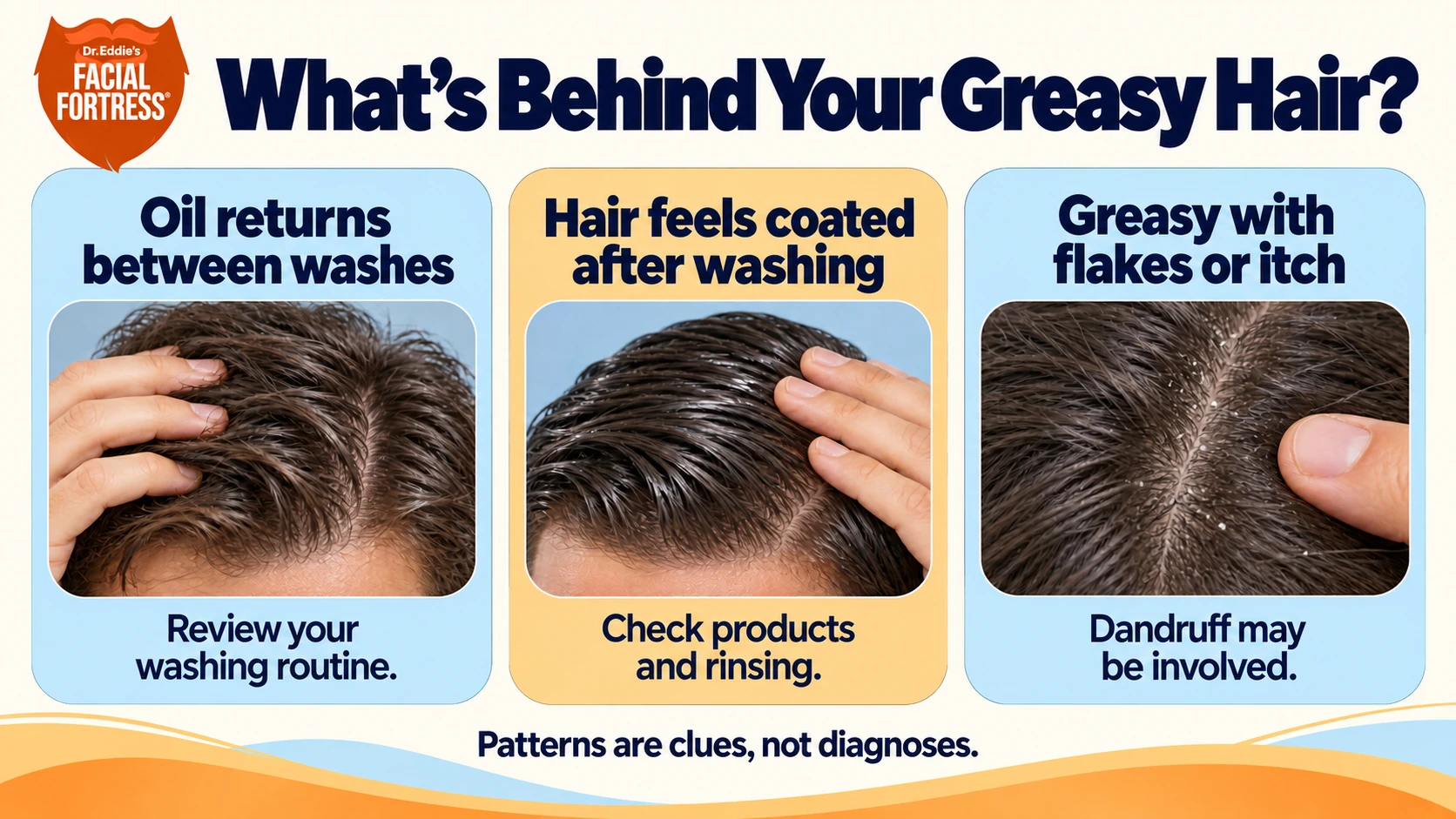
Use the timing and accompanying symptoms as clues. These patterns can guide your first adjustment; they cannot diagnose a scalp condition.
- Hair feels greasy as soon as it dries. Check for leftover product, heavy conditioner near the roots, or incomplete rinsing. Simplify the next wash and check how the roots feel before adding styling products.
- Hair feels clean, then gets oily the next day. Natural oil may be accumulating between washes. Reassess your cleansing schedule and how much product you apply near the scalp.
- Oily roots with dry ends. Your scalp and hair lengths have different needs. Keep cleansing focused on the scalp and conditioning focused on the hair that needs it.
- Oiliness with recurring flakes or itch. Dandruff, seborrheic dermatitis, or another scalp problem may be involved. Consider appropriate dandruff care; get persistent or worsening symptoms assessed.
- Burning, tenderness, or a rash after a new product. Irritation or a product reaction may be responsible. Stop the new product and seek advice if symptoms persist or are severe.
1. Oil is returning between washes
If your hair feels clean after a shower and oily again the following day, your current schedule may leave more time between washes than your scalp needs. Daily washing can suit some people with straight hair and an oily scalp, while dry or curly hair may need a different approach. Adjust washing to your hair type and how oily or dirty it gets.3
You do not need to make your scalp feel squeaky-clean to get a good result. The aim is a comfortable scalp and manageable hair. If a wash leaves your scalp tight or irritated, reconsider the formula and technique along with the schedule.
There is no established washing schedule that “trains” everyone’s oil glands to produce less oil. Adjust cleansing to how the scalp actually feels instead of pushing through increasing buildup to meet a preset interval.
2. Your hair never feels fully clean after washing
When hair feels waxy, slick, or heavy immediately after it dries, review what you used and how you rinsed. Check that shampoo reached the scalp, including the back of your head, and that conditioner rinsed away. Also check whether a leave-in product or pomade went straight onto the roots.
Try a simpler wash before replacing your whole routine. Skip optional styling products for that wash so you can judge the result. A coated feeling is a clue to investigate, not proof that your scalp produced a large amount of new oil during the shower.
3. Products are adding more weight than your hair needs
Rich conditioners, oils, waxes, and pomades can be useful for the right hair and style, but the amount and placement matter. A product that works well on dry ends may make your roots look greasy. Start with less and add more only where needed.
You do not have to ban every oil or silicone to manage greasy hair. Pay attention to the finished formula and how your hair feels after using it. For an easily irritated scalp, fragrance-free options can make a simpler routine easier to build. The American Academy of Dermatology includes fragrance avoidance in its seborrheic dermatitis self-care advice.7
4. Sweat and everyday residue are changing how your hair feels
After exercise, a humid day, or time under a hat, hair may look flatter and feel less fresh. Sweat is different from sebum, even when both are present. Brushes, pillowcases, hats, and hands can also carry product residue back onto hair.
These are practical things to check, but they do not justify a rigid brushing or laundry schedule for everyone. Notice your own pattern: a waxy brush or heavily coated hat is worth cleaning; washing every linen more often will not switch off scalp oil production.
5. Oiliness is accompanied by dandruff or seborrheic dermatitis
Recurring flakes and itch deserve attention beyond oil removal. Dandruff and seborrheic dermatitis are related conditions involving scalp oils, Malassezia yeast, and individual susceptibility. More visible inflammation or involvement around the eyebrows, nose, or beard can suggest seborrheic dermatitis. Oiliness alone does not establish either diagnosis.8
If flakes are the main concern, our oily dandruff versus dry dandruff guide explains the overlapping clues and why appearance alone is not enough to tell them apart.
Adjusting Care for Greasy Hair
Scalp Cleansing and Thorough Rinsing
Wet your hair thoroughly, work shampoo onto the scalp, and rinse carefully. Use comfortable lukewarm water and your fingertips rather than scratching. Pay attention to areas that are easy to miss, especially under dense hair and at the back of your head.
Concentrating shampoo on the scalp removes oil and buildup while limiting drying along the hair. This follows the American Academy of Dermatology’s healthy-hair guidance.3
For help choosing your schedule, see how often to wash hair and beard to control dandruff. Your overall cleansing schedule and a medicated wash’s treatment schedule serve different purposes.
Conditioner Placement for Your Hair Type
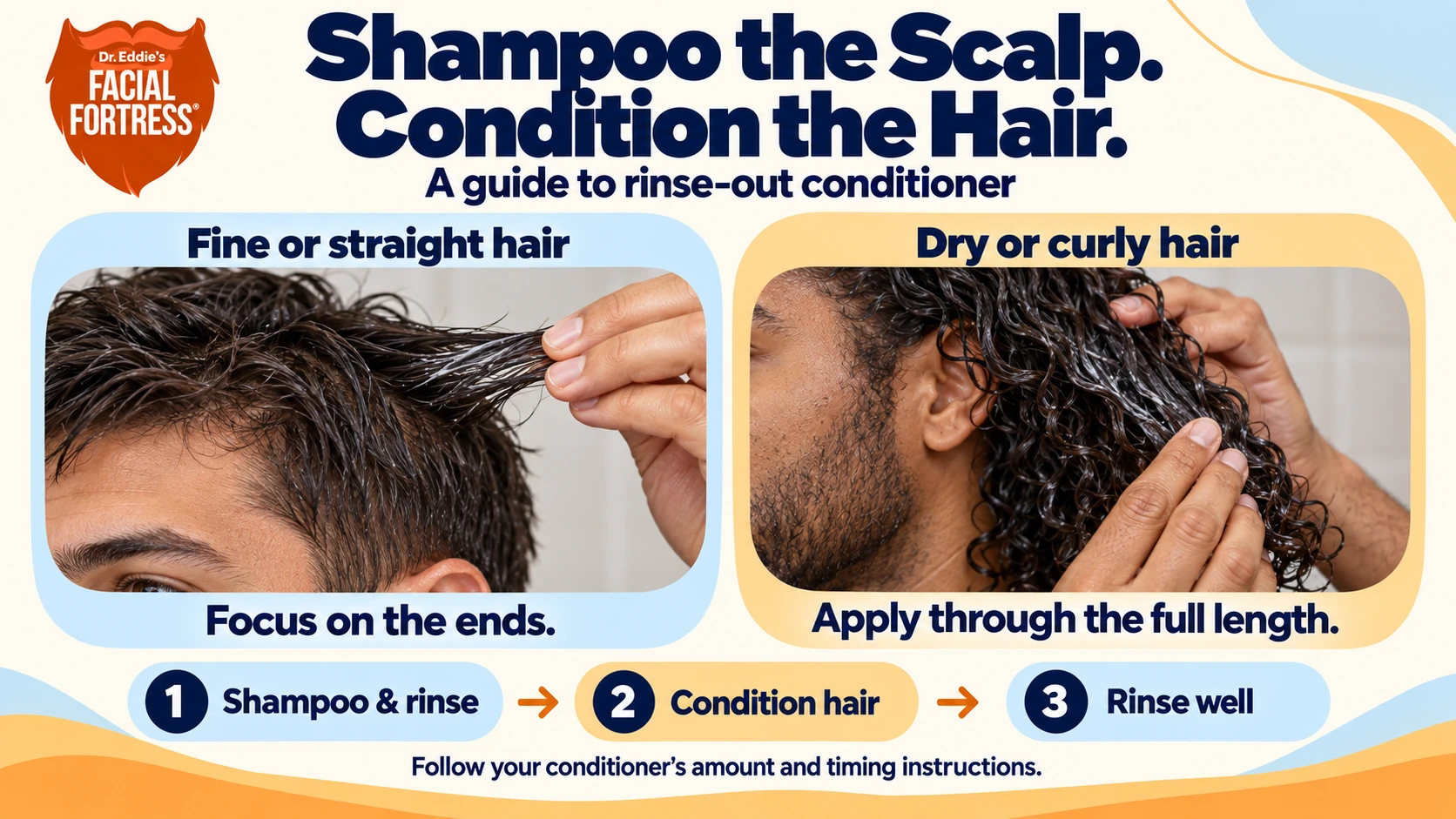
For a rinse-out conditioner, use this simple sequence:
- Shampoo and rinse. Concentrate shampoo on your scalp, then rinse it away.
- Apply conditioner to your hair. Use the amount recommended for your product. For fine or straight hair, focus on the ends. For dry or curly hair, distribute it through the full hair length.
- Follow the product’s timing. Use any leave-on time stated on your conditioner’s label.
- Rinse thoroughly. These steps are for rinse-out conditioner; products labeled leave-in have different directions.
This placement guidance follows the American Academy of Dermatology’s recommendations for conditioning different hair types.3
If a product leaves your roots heavy, adjust its amount or placement before deciding that conditioner itself is the problem. You can take care of dry lengths while managing an oily scalp.
Clean Brushes, Pillowcases, and Hats
Remove collected hair from your brush or comb and clean away visible product residue according to its care instructions. Launder pillowcases and washable hats regularly, especially when they are sweaty or coated with styling product. You do not need harsh disinfectants, very hot water, or aggressive scalp scrubbing to manage ordinary oiliness.
Dandruff Treatment for Flakes and Itch
Oiliness with recurring flakes or itch may need dandruff care as well as cleansing. Common medicated shampoo ingredients include ketoconazole, selenium sulfide, pyrithione zinc, and salicylic acid. Their functions, intended uses, and directions differ, so choose for the scalp problem you have and follow that product’s label.4
Facial Fortress Medicated 3-in-1 Face, Hair & Beard Wash contains 0.95% pyrithione zinc for flaking, scaling, and itching associated with dandruff and seborrheic dermatitis. Its fragrance-free formula includes glycerin and panthenol for moisture and conditioning support. A scalp that is simply oily may only need a better-fitting cleansing and styling routine.5
For treatment days and ordinary wash days, follow the dandruff washing-frequency guide. For symptoms beneath facial hair, see oily skin and beard dandruff.
Dry Shampoo Between Washes
Dry shampoo can absorb oil between washes, but it does not cleanse the scalp or replace shampoo and water. Treat it as an optional bridge between washes, and follow its directions.6
Stress and Scalp Oiliness
Stress may coincide with changes in your routine, and it can trigger seborrheic dermatitis flares in susceptible people. That does not make stress or a hormonal disorder the explanation for every oily scalp. Other flare triggers can include cold weather, hot showers, and irritating products.7
If your symptoms come and go, jot down which products you used, when you washed, and whether you had flakes or itch. That is more useful than assuming every change in shine has the same cause.
Scalp Changes That Need Assessment
Get medical advice for persistent itching or inflammation, painful or oozing areas, patchy hair loss, or symptoms that keep worsening despite appropriate care. A sudden, unexplained change in oiliness that persists is also worth discussing. A clinician can check for a scalp condition or product reaction and help tailor treatment.
Related Guides
Medical References
- DermNet. Sebum.
- DermNet. Seborrhoea.
- American Academy of Dermatology. Tips for healthy hair.
- American Academy of Dermatology. Seborrheic dermatitis: Diagnosis and treatment.
- DailyMed. Facial Fortress: Drug Facts.
- American Academy of Dermatology. Dry shampoo: Tips for getting your best results.
- American Academy of Dermatology. Seborrheic dermatitis: Self-care.
- Borda LJ, Wikramanayake TC. Seborrheic Dermatitis and Dandruff: A Comprehensive Review. 2015.
