Can Beard Dandruff Spread? Why Flakes Appear on Your Eyebrows and Nose
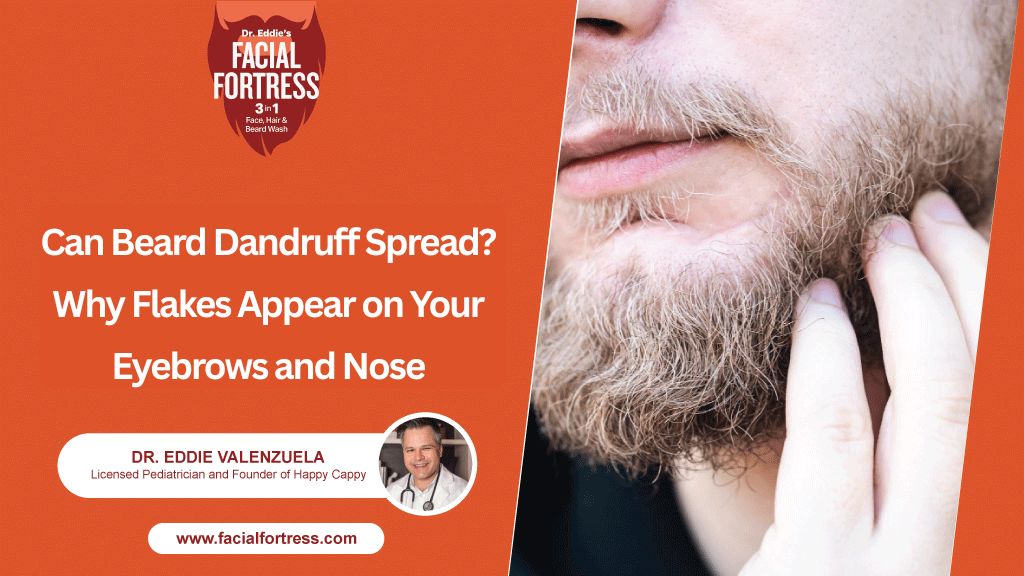
Dandruff is one of the most frustrating skin conditions, especially due to the intense itching and irritation it causes. Those tiny, white flakes can be even more bothersome and embarrassing when they start appearing on your beard and mustache.
In many cases, beard dandruff is responsible for those flakes. But suddenly you notice that the flakes also start appearing on your eyebrows and around your nose. Does that mean your dandruff is spreading?
In this blog, we will answer two common questions: “Can beard dandruff spread?” and “How to get rid of dandruff in beard?”
Understanding Beard Dandruff
Beard dandruff or also known as beardruff, can cause oily flakes to appear on the beard, mustache, and sideburns. Dandruff usually affects the oil-producing areas and is believed to be associated with increased malassezia yeast activity.
Malassezia is a naturally occurring yeast in the beard and on the skin, which, when it multiplies, can lead to dandruff symptoms, such as
- Itchy beard
- Yellow or white flakes
- Greasy scaly patches
- Redness
- Irritated skin
These symptoms may sound intimidating, but the good news is that dandruff, whether it’s on the scalp or beard, can be easily managed with the regular use of a medicated anti-dandruff shampoo.
Can Dandruff Spread?
One of the most common questions about dandruff is whether it can spread. If you’re asking whether dandruff is contagious or can pass from one person to another, the answer is no. Dandruff is not contagious.
However, dandruff can appear in multiple areas of the body at the same time, especially in oil-producing regions. When flakes show up on the scalp, beard, eyebrows, or around the nose, it may feel like the condition is spreading.
This happens because the same underlying skin condition, most often seborrheic dermatitis, can affect several areas simultaneously. As a result, dandruff may seem to “spread,” even though it is not infectious.
Can Beard Dandruff Spread to Eyebrows and Nose?
Dandruff usually appears on the scalp and beard. A more severe form of dandruff, known as seborrheic dermatitis, can actually appear on other parts of the body as well, such as
- Eyebrows
- Sides of the nose
- Forehead
- Eyelids
- Back
- Armpits
- Groin
- In skin folds
Seborrheic dermatitis doesn’t spread like an infection. But when flakes show up in multiple areas at once, it’s easy to assume that it’s spreading.
This usually happens during more intense flare-ups or when the skin isn’t being managed consistently.
What Causes Flakes on Your Eyebrows and Nose?

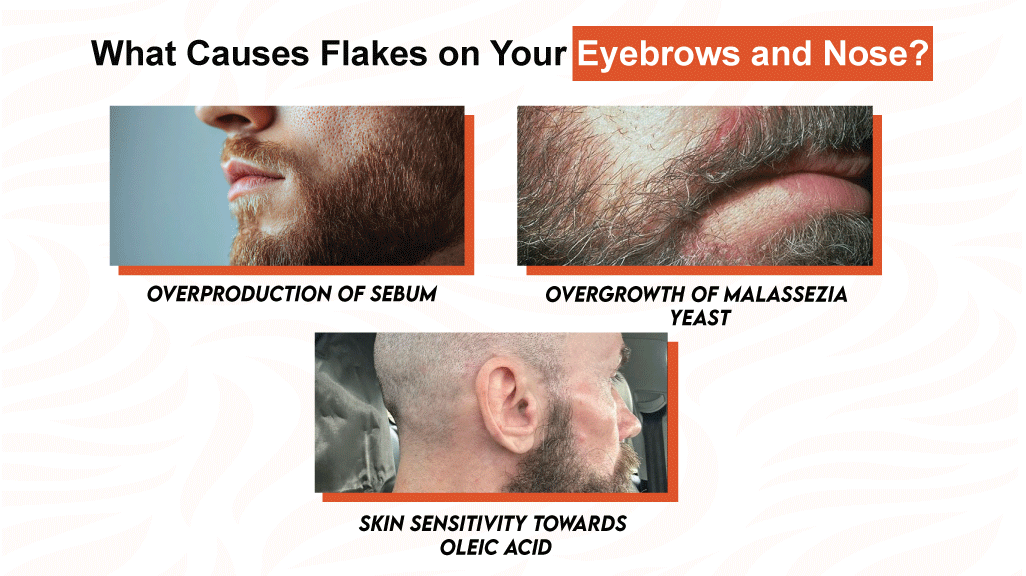
Now the question arises, what causes seborrheic dermatitis or those irritating flakes to appear on your eyebrows and nose? Seborrheic dermatitis is caused by a combination of factors that altogether give you all that flaking, scaling, itching, inflammation, and irritation.
The primary causes of seborrheic dermatitis are:
- Overproduction of sebum
Due to certain factors such as stress, genetics, hormonal changes, or extreme temperatures, the skin starts producing excess sebum, an oily substance that keeps your skin moist. It can create an environment where Malassezia yeast becomes more active.
- Overgrowth of Malassezia yeast
Malassezia yeast normally lives on the skin without causing problems. But when oil levels are high, it can become overactive, leading to flaking, irritation, and beard dandruff in people who are prone to it.
- Skin sensitivity towards oleic acid
When the yeast feeds on sebum, it leaves behind a byproduct known as oleic acid. This acid can cause a reaction in some people and lead to the redness, inflammation, and flaking associated with seborrheic dermatitis.
So those flakes are not caused by something you are doing wrong. However, if you don’t take proper care of your skin and cleanse it regularly, your condition can get worse.
How to Get Rid of Beard Dandruff?
Managing dandruff and seborrheic dermatitis works best with a simple, consistent skin and beard care routine. The following steps can help keep symptoms under control.
Use a Medicated Cleanser
The best thing for beard dandruff and seborrheic dermatitis is to use a medicated anti-dandruff shampoo or cleanser regularly to wash your beard. However, make sure the dandruff shampoo you are using is specially formulated for the beard and your facial skin.
A medicated cleanser like Facial Fortress 3-in-1 Face, Hair, and Beard Wash is a beard-safe option designed for facial skin. Its 3-in-1 formula allows it to be used on the face, hair, and beard to help control the flaking, scaling, and itching associated with dandruff.
- Use it once daily to cleanse your skin and facial hair when the flaking is intense.
- Once symptoms improve, reduce use to 2–3 times per week to help keep flakes under control.
- When shampooing, make sure to let the cleanser rest on your skin for a few minutes before rinsing.
- Also, make sure not to leave any product residue behind, as it can make the skin irritation worse.
Support Skin Hydration When Needed
After cleansing, pay attention to how your skin feels. If the skin under your beard feels dry, tight, or irritated, light moisturization can help support the skin barrier.
Dry, compromised skin can trigger the sebaceous glands to produce more oil as a compensatory response, which may worsen dandruff and seborrheic dermatitis in some men.
If moisturizing is needed:
- Use a hypoallergenic, fragrance-free face moisturizer to hydrate the skin
- Choose a light, fragrance-free beard balm or lotion designed for sensitive skin
For many men with beard dandruff, the best approach for dry skin under the beard is gentle cleansing followed by barrier-supporting moisturization only when dryness is present. Heavy oils or thick, occlusive products are best avoided, as they can trap oil on the skin and worsen flaking.
Do Not Apply Oil
When searching for dandruff treatments, you may come across advice to use olive oil, coconut oil, or essential oils. However, according to Dr. Eddie Valenzuela, leaving oils on dandruff-prone skin can worsen symptoms in many people.
Dandruff and seborrheic dermatitis are associated with Malassezia yeast, which thrives in oil-rich environments. Adding oils to affected areas can increase yeast activity, leading to more flaking, itching, and irritation rather than improvement.
Consult a Doctor
If your symptoms do not improve with regular use of a medicated cleanser, or if flaking, redness, or itching continues to worsen, it’s best to consult a doctor.
Some skin conditions, such as eczema, psoriasis, or rosacea, can mimic beard dandruff and require a different treatment approach. In more severe or persistent cases, a healthcare professional may also recommend prescription treatments to help control seborrheic dermatitis.
Facial Fortress: Beard Safe Solution for Dandruff on Beard, Nose, and Eyebrows
When dandruff appears on the beard or face, many people reach for scalp dandruff shampoos. However, these products are formulated for the scalp and are often too drying for regular use on delicate facial skin.
Facial Fortress 3-in-1 Face, Hair & Beard Wash is designed specifically for use on facial skin, while still providing effective control of dandruff and seborrheic dermatitis.
Facial Fortress is a 3-in-1 solution that can help you manage dandruff on:
- Your beard and mustache
- Eyebrows and facial skin, including the sides of the nose
- Scalp and hair
So, instead of juggling separate products for your scalp and face, Facial Fortress offers a single cleanser formulated with sensitive facial skin in mind, while still helping control dandruff wherever it appears.
What Makes Facial Fortress Stand Out
What truly sets Facial Fortress apart from typical dandruff shampoos and beard washes is:
- Designed for facial skin
Unlike scalp-only medicated shampoos, this formula is made to be safe on delicate areas like the eyebrows, nose, and cheeks.
- Medicated but gentle
Formulated with FDA-approved active ingredient pyrithione zinc, which has been clinically shown to control the flaking, scaling, and itching associated with dandruff and seborrheic dermatitis.
- Safe for daily use
Gentle enough to be used consistently, which is essential for managing recurring dandruff and seborrheic dermatitis.
- One solution for multiple areas
Designed for use on the beard, face, eyebrows, and scalp—helping manage dandruff wherever it appears.
- Sensitive-skin friendly
It is fragrance-free, sulfate-free, paraben-free, dye-free, phthalate-free, soap-free, and pH-balanced.
- Contains soothing ingredients
It is infused with natural ingredients like the licorice root extract, apple fruit extract, provitamin B5, and glycerin that help soothe the redness, itching, and irritation on the skin.
This thoughtful balance of effectiveness and gentleness is what makes Facial Fortress a standout choice for people dealing with dandruff beyond the scalp.
Conclusion
Beard dandruff does not spread like an infection, and it is not contagious. When flakes appear on the beard, eyebrows, and around the nose at the same time, it is usually because the same underlying skin condition, most often seborrheic dermatitis, is affecting multiple oil-producing areas simultaneously.
Beard dandruff develops from a combination of excess oil, sensitivity to Malassezia yeast, and skin inflammation. Stress, diet, and environmental factors do not directly cause dandruff, but they can worsen flare-ups by increasing oil production and skin reactivity. This is why dandruff may become more noticeable during periods of high stress, poor sleep, or inflammatory dietary patterns.
Managing beard dandruff effectively is less about scrubbing flakes away and more about consistent, gentle cleansing and skin-barrier support. Using a beard-safe, medicated cleanser with an FDA-approved active ingredient, such as Facial Fortress, helps manage the yeast activity associated with dandruff and the flaking and itching that come with it, and is designed for use on the beard, face, eyebrows, and scalp.
A healthy beard isn’t built by harsher grooming. It’s built with calm skin, a supported barrier, and a routine that addresses the source of flakes, not just what’s visible on the surface.

- Can Beard Dandruff Spread? Why Flakes Appear on Your Eyebrows and Nose - January 29, 2026
- The role of diet and stress in beard dandruff and skin inflammation - January 29, 2026
- Exfoliating Under Your Beard: What Helps, What Hurts, and What Actually Works - January 29, 2026
Recent Post
Frequently Asked Questions
Can beard dandruff spread to other people?
Can beard dandruff spread to my eyebrows and nose?
Why do I have flakes on my beard, eyebrows, and nose at the same time?
Is beard dandruff caused by poor hygiene?
What is the best thing for beard dandruff?
Should I exfoliate to remove dandruff from my beard?
Can treating beard dandruff help thicken my beard?
Can oils help with beard dandruff?
Will shaving my beard get rid of dandruff?
When should I see a doctor?
- Can Beard Dandruff Spread? Why Flakes Appear on Your Eyebrows and Nose - January 29, 2026
- The role of diet and stress in beard dandruff and skin inflammation - January 29, 2026
- Exfoliating Under Your Beard: What Helps, What Hurts, and What Actually Works - January 29, 2026