How to Exfoliate Under Your Beard Safely
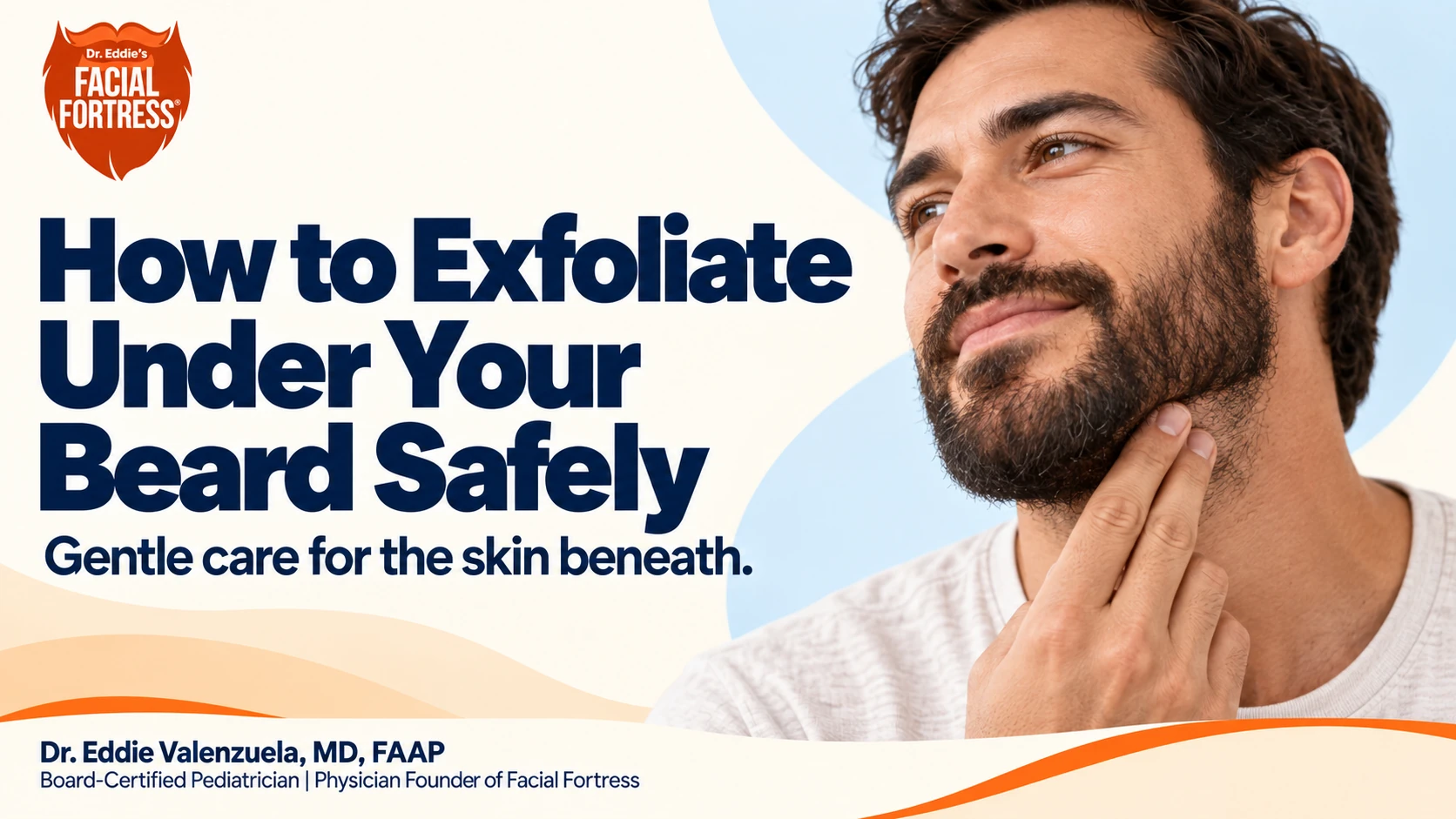
Finding flakes in your beard can make you want to scrub until every last one is gone. Before reaching for a brush or acid, ask what you are trying to improve: rough texture, ingrown hairs, product residue, or a recurring rash. Those problems do not all need the same solution.
The Role of Exfoliation in Beard Care
Facial hair does not automatically create a need for exfoliation. If your skin feels comfortable with cleansing and moisturizer, you can keep that routine. Gentle exfoliation may be useful for selected concerns, including a tendency to develop ingrown hairs during the stubble phase. The AAD’s beard-care guide includes that specific use.
| What you notice | A useful next step |
|---|---|
| Comfortable skin with no particular concern | Keep your routine simple. An exfoliant is optional. |
| Residue after using wax, balm, or styling products | Start with thorough, gentle cleansing and use less of the product that leaves buildup. |
| Ingrown hairs during the stubble phase | Review shaving technique. Gentle exfoliation may help prevention if your skin tolerates it. |
| Tight, dry, flaky skin | Reassess cleansing and moisturizing before adding another active product. |
| Recurring scale with redness or itch | Consider beard dandruff or another skin condition. Avoid trying to scrub away the rash. |
| Pus, pain, open sores, or patchy hair loss | Get the skin examined before exfoliating. |
Flakes alone cannot establish a diagnosis. Our beard dandruff vs. dry skin guide explains the clues that help distinguish common patterns.
Scrubs, Brushes, and Chemical Exfoliants
Mechanical exfoliation uses friction from a scrub, cloth, or brush. Chemical exfoliation uses ingredients such as alpha hydroxy acids or salicylic acid to help release surface skin cells. Neither category is automatically gentler: the formula, pressure, frequency, and your skin’s response all matter.
A comb is mainly a grooming tool. Use it to detangle hair, without dragging its teeth across the skin. A brush should not leave scratch marks or make your face feel raw. There is no need to combine a brush, scrub, and acid in one session.
Chemical exfoliants are not automatically unsuitable simply because you have a beard. For example, the AAD lists salicylic- or glycolic-acid cleansers as options for oily or acne-prone beard skin. That does not make them the right choice for an irritated seborrheic dermatitis flare. Match the product to the concern instead of choosing by the word “beard” on the bottle.
Gentle Exfoliation Technique
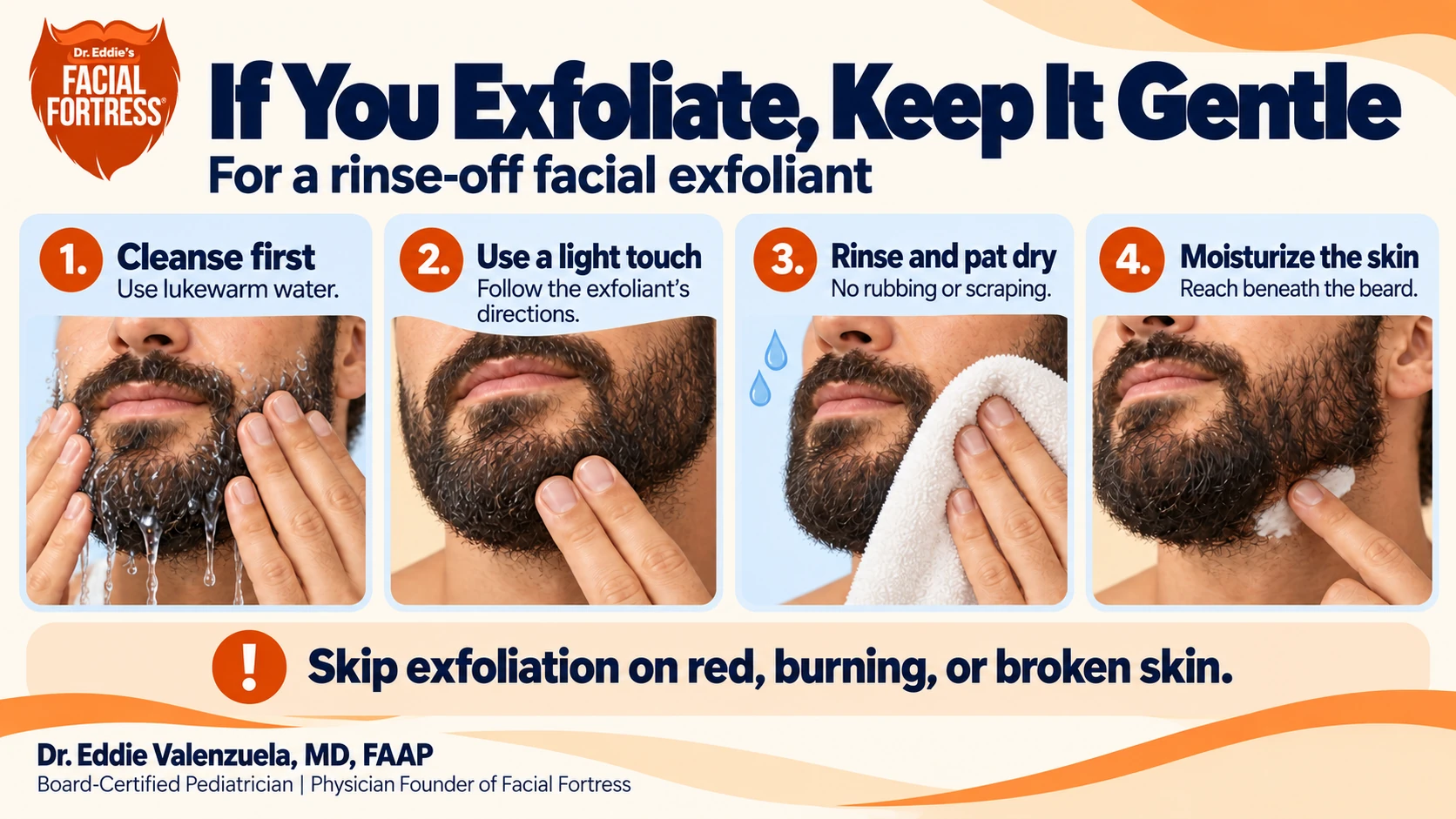
- Check the skin first. Postpone exfoliation over cuts, sunburn, or skin that is burning or visibly inflamed. If you already use retinoids or benzoyl peroxide, ask whether adding an exfoliant fits your treatment plan.
- Read the directions. Use a facial product and follow its instructions for amount, application, and rinsing. A leave-on exfoliant and a rinse-off scrub are different products.
- Reach the skin gently. For a fuller beard, part the hair in small sections. Apply with fingertips rather than fingernails. Avoid the eyes and lips.
- Keep friction light. With a scrub, use small, gentle circles. With a soft cloth or brush, use short, light strokes. Do not pick at attached scale or dig out an ingrown hair.
- Finish with moisturizer. Rinse when directed, pat dry, and work moisturizer through the hair onto the skin. Stop the exfoliant if it causes persistent stinging, peeling, or worsening irritation.
These steps apply the AAD’s safe-exfoliation guidance to skin beneath facial hair. If your beard prevents comfortable access, adding pressure is not the solution.
Exfoliation Frequency
There is no universal schedule. The right frequency depends on the method, other products you use, and how your skin responds. For people prone to ingrown hairs during the stubble phase, the AAD’s beard guide describes a gentle scrub once or twice weekly, followed by moisturizer. That is a targeted suggestion, not a requirement for every beard.
Do not apply that schedule automatically to a stronger peel or a leave-on acid. Follow the specific product directions and reduce or stop use if irritation develops. Skin that is doing well without an exfoliant does not need one added to meet a weekly quota.
Dandruff Needs Care for Its Cause
Beard dandruff commonly reflects seborrheic dermatitis. Loosening a few surface flakes does not address the whole condition. Focus on gentle cleansing, suitable medicated treatment, and a moisturizer your skin tolerates. The AAD’s seborrheic dermatitis guidance emphasizes minimizing irritation.
Do not scrape off thick, attached scale. If it persists, a clinician can advise how to soften and treat it. See our beard-dandruff treatment guide for the full routine.
Facial Fortress 3-in-1 Medicated Face, Hair & Beard Wash contains 0.95% pyrithione zinc to help relieve flaking, scaling, and itching associated with dandruff and seborrheic dermatitis. Its fragrance-free, dye-free formula uses gentle cleansing ingredients chosen for sensitive skin. They create a lather that helps lift away oil and buildup so they can rinse off easily. It also includes glycerin, panthenol, and licorice root extract to help soothe the appearance of redness. It is a medicated wash, not an exfoliating scrub.
Follow the Drug Facts directions: for best results, use at least twice weekly or as directed by a doctor; wet thoroughly, massage onto scalp and skin, and rinse. Avoid contact with eyes. Stop use and ask a doctor if the condition worsens or does not improve with regular use as directed.
Moisturizing After Exfoliation
Choose a moisturizer for the skin beneath the beard. A balm’s styling hold or an oil’s shine does not establish that it is the best moisturizer for your skin. Formula and tolerance matter. Our beard oil vs. moisturizer guide explains the different jobs these products do.
If adding exfoliation makes the routine uncomfortable, simplify it. The face and beard skincare routine gives you a practical starting point.
When to Get Medical Advice
Have persistent or worsening redness, scale, or itch assessed, particularly if the diagnosis is unclear. Pus-filled bumps, open sores, or patches of beard hair loss deserve evaluation rather than more scrubbing. Several conditions can affect beard skin, including infections that need a different treatment. AAD: Signs of ringworm, including beard-area infection.
Frequently Asked Questions
Does exfoliation make a beard grow faster?
Should I scrub off beard dandruff?

Dr. Eddie created Facial Fortress, a medicated 3-in-1 face, hair and beard wash for dandruff and seborrheic dermatitis.
More about Dr. Eddie
- Seborrheic Dermatitis on the Body: Chest, Skin Folds & Belly Button - September 17, 2026
- Seborrheic Dermatitis Treatment: Zoryve and Other Options for the Face and Beard - September 17, 2026
- GLP-1 Medications and Beard Changes: What Do We Know? - September 17, 2026