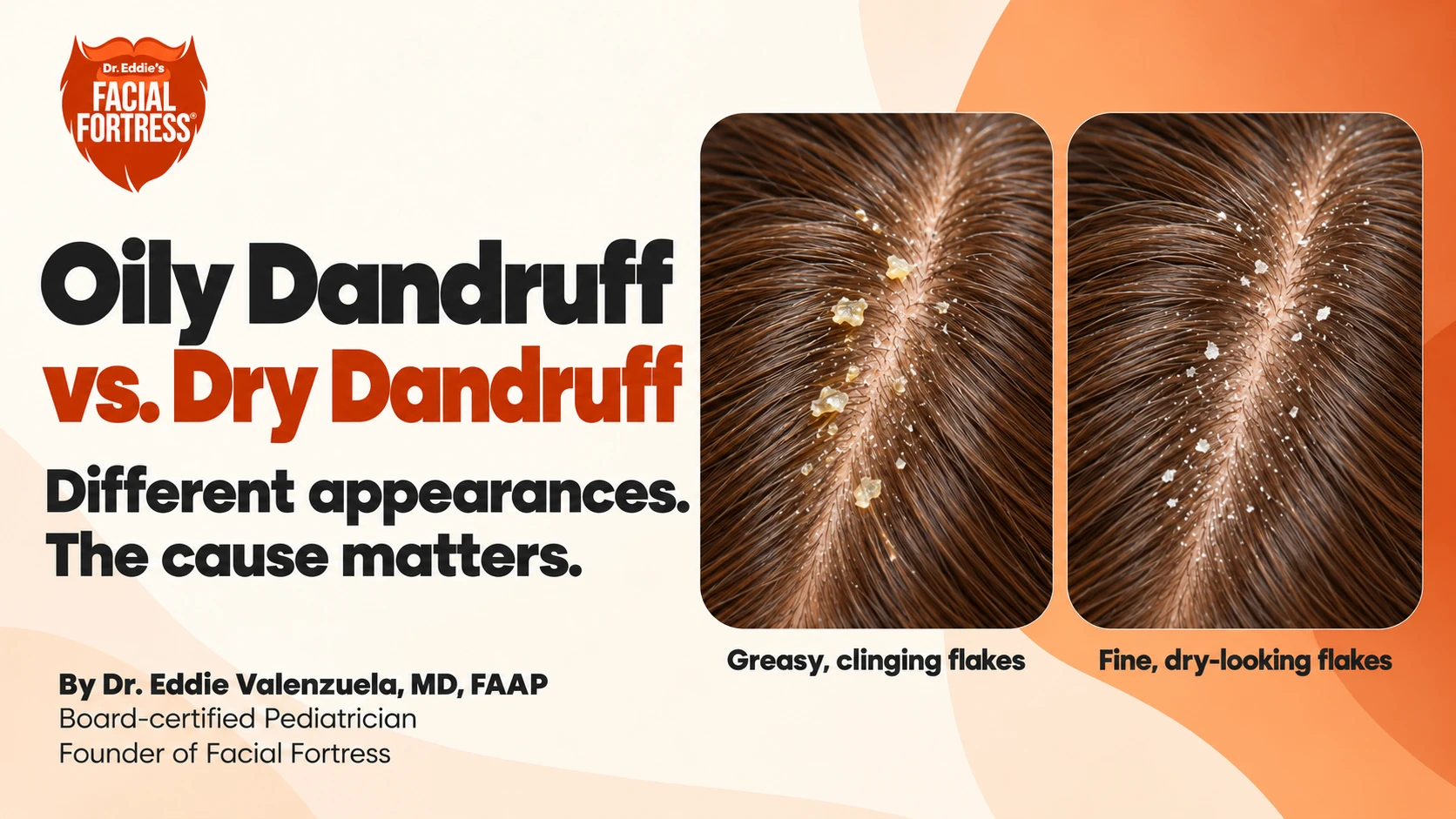
Quick answer: “Oily dandruff” and “dry dandruff” describe how scalp flakes look; they are not separate medical diagnoses. Greasy, clinging scale may fit dandruff or seborrheic dermatitis, while dry-looking flakes can come from either dandruff or simple dry scalp. Skin comfort, inflammation, timing and the areas affected provide more useful clues than flake color alone.
Fine white flakes and sticky yellowish scale can lead people toward very different shampoos. Appearance is useful to notice, but it cannot tell the whole story. A scalp can be oily and irritated at the same time, and seborrheic dermatitis can produce dry-looking scale as well as greasy flakes.
This comparison focuses on scalp flakes and the everyday labels used for them. For symptoms under facial hair, use the beard dandruff and dry-skin comparison. For a complete care routine, see our beard dandruff treatment and prevention guide.
Dandruff and Dry Scalp
Dandruff and Seborrheic Dermatitis
Dandruff is generally considered the mild, scalp-limited end of the seborrheic dermatitis spectrum, with flaking and little obvious inflammation. More inflamed or widespread disease may involve the eyebrows, sides of the nose, ears or beard as well. Our adult seborrheic dermatitis guide explains the condition across those locations.1
The process involves normally present Malassezia yeast, skin oils and an individual’s skin response. It is not simply evidence of poor hygiene or too much oil. Visible greasiness is not required, and repeatedly stripping the scalp can add irritation. The Malassezia article covers the biology without turning every flake into a fungal infection.12
Simple Dry Scalp
Dry scalp describes skin that is not retaining moisture well. It may feel tight or rough, with fine flakes, particularly after harsh washing or during dry weather. A gentle non-medicated shampoo may be more appropriate for simple dryness than adding more dandruff treatment.3
Oiliness and hydration are different properties. Someone can have greasy roots and uncomfortable dry skin, or develop dryness while using treatment for dandruff. Improvement with gentler care is useful information, but it does not prove that dryness was the only problem.
Oily and Dry-Looking Flakes Compared
Use these patterns as clues for a conversation about care, not as a diagnosis from a photograph. The descriptions overlap, and the same scalp can look different from one flare to another.
| Clue | Oily or greasy-looking flakes | Dry-looking flakes |
|---|---|---|
| Appearance | Scale may cling together or to the scalp and look white or yellowish. | Flakes may be finer, loose and white. Dandruff can have this appearance too. |
| Skin and hair feel | Roots may feel heavy or greasy; the scalp can still be irritated or dry. | Tightness and roughness suggest dryness, but do not exclude seborrheic dermatitis. |
| Timing | Recurring scale and itch in familiar areas can support a dandruff pattern. | Symptoms after strong cleansing or dry weather may point toward moisture loss or irritation. |
| Other areas affected | Eyebrow, nose-fold, ear or beard involvement can add clues to seborrheic dermatitis. | Dry skin elsewhere may support a broader dryness problem; distribution alone is not decisive. |
| Care direction | Appropriate dandruff treatment plus cleansing matched to hair and skin needs. | Gentler care for simple dryness; medication may still be needed if the cause is dandruff. |
Inflammation is not always bright red. Darker skin may show lighter, darker or purple-toned areas instead. A new product, persistent burning, thick plaques or hair loss can point toward a different problem and should not be forced into an oily-versus-dry category.1
Care Based on the Cause of the Flakes
Care for an Oily, Flaky Scalp
When dandruff fits the pattern, a medicated shampoo can help control flaking. Over-the-counter options include pyrithione zinc, selenium sulfide, ketoconazole, salicylic acid, sulfur and coal tar. These ingredients have different roles and precautions; salicylic acid helps loosen scale, while antifungal ingredients address yeast-related activity. Product choice also depends on hair texture and tolerance.4
Apply the product to the scalp and follow its own directions for frequency and contact time. Some dandruff shampoos need time on the scalp before rinsing; others have different instructions. More frequent use or a longer leave-on time is not automatically better.
Ordinary cleansing can follow a different schedule from medication. Fine, straight hair with oily roots may need washing more often than dry, curly or coily hair. Rinse well and reconsider heavy styling products if the roots feel coated. The dandruff washing-frequency guide explains these adjustments, and the greasy-hair guide distinguishes returning oil from product residue.
Care for Dry Scalp or Irritation
For simple dryness, start with a gentle shampoo, comfortable water temperature and less avoidable friction. If washing leaves your scalp tight or stinging, review the cleanser and frequency instead of scrubbing away every flake. A fragrance-free product may be useful when fragrance irritates your skin.3
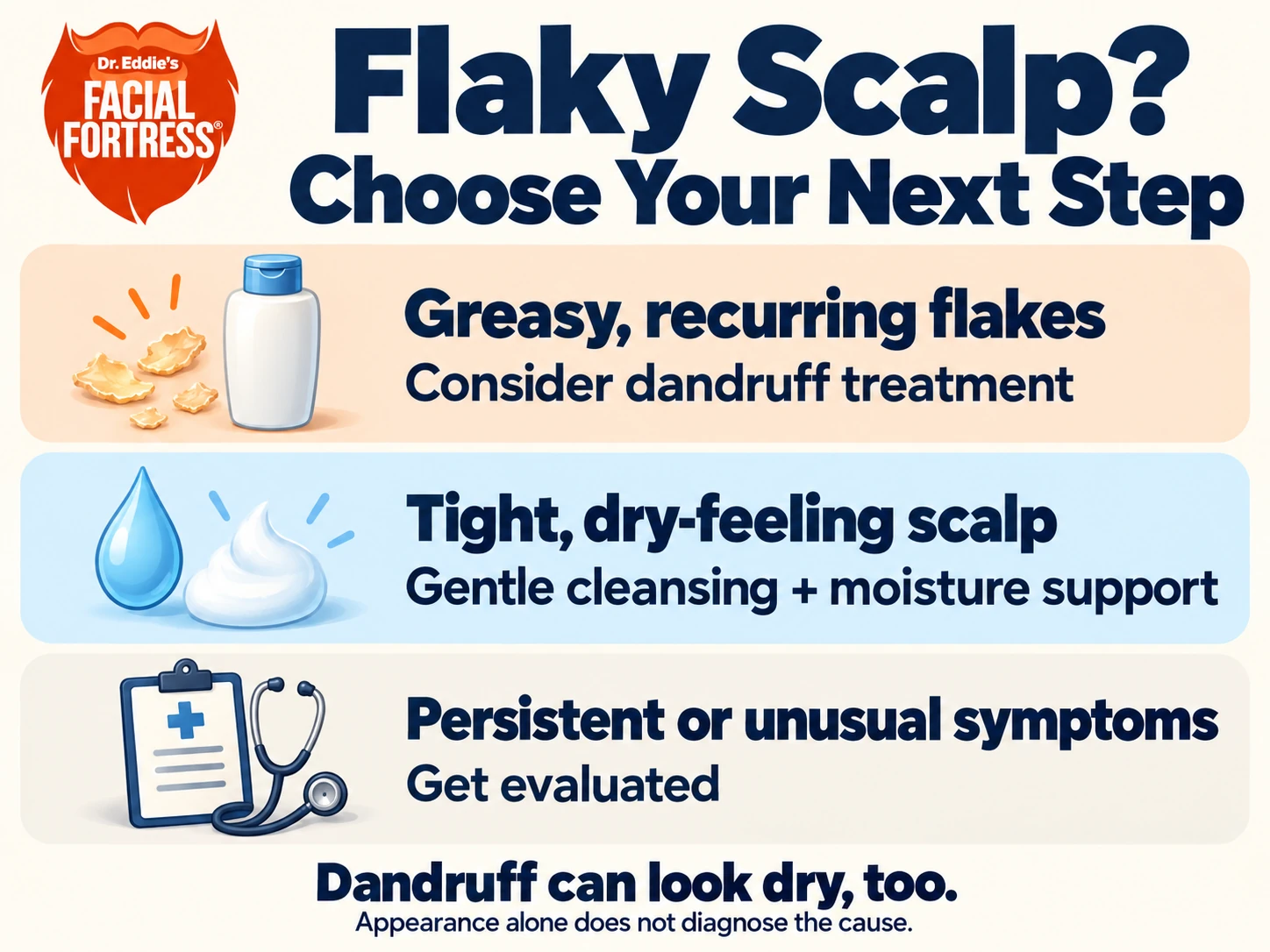
Persistent scale still needs attention even when it looks dry. Recurring itch, inflammation or involvement around the ears and central face can make seborrheic dermatitis more likely. A rash that began with a new shampoo, dye or styling product may instead involve irritation or allergy. A clinician can help distinguish these possibilities when a simpler routine does not settle the problem.
Facial Fortress as a Dandruff Wash Option
Facial Fortress 3-in-1 Medicated Wash contains 0.95% pyrithione zinc for flaking, scaling, itching and irritation associated with dandruff and seborrheic dermatitis. The fragrance-free, dye-free formula includes glycerin and panthenol for moisture and conditioning support. It is an option when dandruff is the problem, rather than a requirement for every dry scalp.5
Follow the complete Drug Facts: wet thoroughly, massage onto the scalp and skin, and rinse; use at least twice a week for best results or as directed by a doctor. Avoid the eyes. Stop and ask a doctor if the condition worsens or does not improve.5
Scalp Symptoms That Need Assessment
Arrange an assessment if flaking persists despite appropriate care, the diagnosis is uncertain or symptoms keep worsening. Psoriasis, contact dermatitis and other scalp conditions can resemble dandruff and need a different approach.
Pain, oozing, crusting, marked swelling, pustules, broken hairs or distinct areas of hair loss deserve prompt attention. The seborrheic dermatitis and hair-loss guide explains why these changes should not automatically be attributed to ordinary dandruff.
The aim is a comfortable scalp and a routine suited to the cause. “Oily” and “dry” can describe what you notice, but they should not decide treatment on their own.