
Quick answer: Seborrheic dermatitis can cause recurring flakes and irritated patches around the eyebrows, sides of the nose, beard and ears. People often call this “facial dandruff.” Care combines treatment suited to facial skin with gentle cleansing and moisturizer where needed. Persistent symptoms, eye involvement or an uncertain diagnosis need assessment.
Flakes on the face are especially noticeable, and treating them like a dirty patch of skin can make irritation worse. The location and recurring pattern help identify seborrheic dermatitis, but they do not rule out other rashes. A useful plan accounts for both the condition and the sensitivity of the area being treated.
The Facial Pattern of Seborrheic Dermatitis
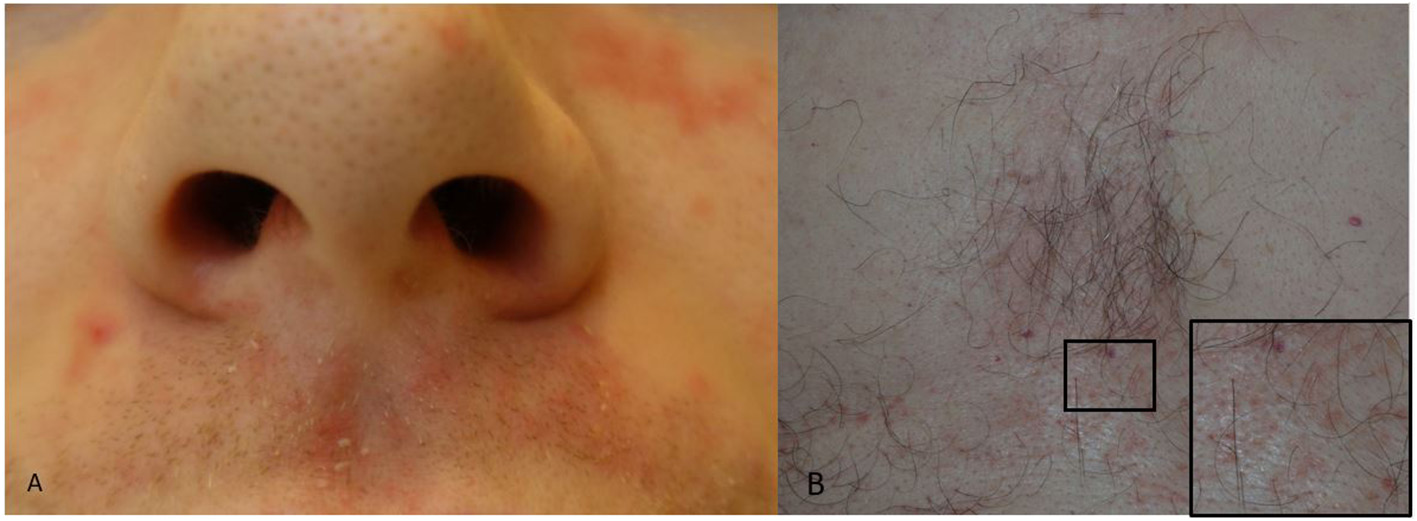
Common sites include the eyebrows and the space between them, the folds beside the nose, the beard or mustache, and the skin around the ears. Symptoms may occur in several of these places or accompany scalp dandruff. The adult seborrheic dermatitis overview explains how facial, scalp and body symptoms can be related.1,2
Scale can look fine and white or more yellowish and greasy. The skin may itch, burn or feel sensitive. Inflammation often looks pink or red on lighter skin, while darker skin may show purple-toned, darker or lighter patches. Relying on redness alone can miss an active rash.1
Seborrheic dermatitis tends to improve and then return in familiar areas. It is not contagious or caused by poor hygiene. “Facial dandruff” is a convenient description, but dandruff more precisely refers to scalp flaking at the milder end of the spectrum. The dandruff and seborrheic dermatitis comparison explains that distinction.2
Causes and Flare Triggers
The condition involves Malassezia, a normal skin yeast, along with skin oils and the response of susceptible skin. The barrier and inflammatory response matter; it is too simple to describe every flare as excess oil or too much yeast. People can have seborrheic dermatitis without feeling especially oily.2,3
Cold or dry weather, stress and irritating products can accompany flares. These are potential triggers, not interchangeable explanations for every facial rash. A family tendency or particular medical conditions may influence susceptibility, but ordinary facial flaking by itself does not establish an underlying illness.
For a closer explanation of yeast, oils and the skin barrier, see Malassezia and seborrheic dermatitis. Avoid trying to strip all oil from the face: a harsh routine can add dryness and irritation to an already inflamed area.
Similar-Looking Facial Rashes
Simple dry skin, contact dermatitis, atopic eczema, psoriasis and rosacea can overlap in appearance with seborrheic dermatitis. Their causes and treatment needs differ. A reaction concentrated where a product touches the skin, for example, should not be folded into a list of seborrheic dermatitis causes.
Atopic eczema often involves persistent itch and dry, inflamed skin, while seborrheic dermatitis commonly follows the oil-rich facial distribution described above. Both can occur in the same person. Happy Cappy’s comparison of seborrheic dermatitis and eczema in adults explains the broader differences and overlap.
If burning or itching follows a cleanser, fragrance, beard dye or other grooming product, our guide to seborrheic dermatitis and product reactions covers that pattern. Acne-like bumps and pustules are also worth distinguishing from scale: not every problem around a hair follicle is dandruff.2
Treatment Suited to Facial Skin
The face needs treatment chosen for both the diagnosis and the location. A scalp shampoo may contain a useful ingredient while having directions or a formula that make it unsuitable near the eyes or on sensitive facial skin. Review the intended use rather than extending a scalp treatment to every flaky area.
Medicated Wash Options
Common dandruff actives include ketoconazole, pyrithione zinc, selenium sulfide and salicylic acid. The first three are used in dandruff or seborrheic dermatitis care; salicylic acid helps loosen scale and may be drying or irritating. Product strengths, facial suitability and directions vary. Use a wash labeled for the affected area, or the specific product and method your clinician recommends.4,5
Apply it gently to the skin. Follow the directions for use and any specified contact time, then rinse completely. More lather, a longer waiting time or extra scrubbing does not automatically improve the result. The medicated shampoo guide for beard skin explains these application decisions where facial hair makes access more difficult.
Prescription Antifungal and Anti-Inflammatory Treatment
A clinician may recommend an antifungal cream, such as ketoconazole, for facial patches. More inflamed areas may need a short course of a suitable low-potency topical corticosteroid. Facial steroid strength and duration matter because prolonged or inappropriate use can cause unwanted effects.
Nonsteroidal options include topical calcineurin inhibitors, such as tacrolimus or pimecrolimus, used off-label for seborrheic dermatitis in selected situations, and prescription roflumilast foam. These are different treatment choices, not steps everyone must progress through. The prescription guide for facial and beard seborrheic dermatitis explains where they may fit.2,4
Eyebrows, Eyelids and the Beard
Eyebrow scale can occur close to the eyes, so keep cleansers and medicated products out of the eyes and off eyelid margins unless specifically directed. Persistent eyelid irritation should be assessed; a wash intended for facial skin is not automatically an eyelid treatment.
In a dense beard, part the hair so treatment reaches the skin. A shorter beard may make application easier, but shaving is not required. The beard-dandruff guide provides the complete beard treatment and maintenance routine.
Daily Care That Supports Treatment
Keep ordinary cleansing gentle. Use lukewarm water, avoid rough cloths and abrasive scrubs, and rinse away cleanser thoroughly. If you are already using a medicated wash, account for that cleansing step before adding another strong cleanser or exfoliating product.
Use a fragrance-free moisturizer on areas that feel dry or tight. Moisturizing can make the routine more comfortable and support the skin barrier, but it does not replace treatment when seborrheic dermatitis is active. Stop a product that consistently causes stinging or worsening inflammation rather than layering another product over it.6
Continue sun protection with a tolerated broad-spectrum sunscreen of SPF 30 or higher on exposed skin, along with shade and protective clothing. If several products seem to irritate your face, simplify the routine and discuss the pattern with a clinician. Our face and beard skin-care routine explains how these daily steps fit together.
Facial Fortress as One Wash Option
Facial Fortress 3-in-1 Medicated Wash contains 0.95% pyrithione zinc and is labeled to help relieve flaking, scaling, itching and irritation associated with dandruff and seborrheic dermatitis. The fragrance-free, dye-free formula includes glycerin and panthenol and was developed for use on the face, beard, hair and scalp. Its mild, non-soap cleansing system contains no SLS or SLES.
Its label directs use at least twice a week for best results, or as directed by a doctor: wet thoroughly, massage onto the scalp and skin, and rinse. Avoid eye contact. Stop use and ask a doctor if the condition worsens or does not improve. Read the complete ingredients and Drug Facts for the finished product’s directions and warnings.7
Recurrence and Medical Review
Improvement does not always mean the tendency to flare has disappeared. Once symptoms settle, intermittent treatment may help maintain control. Keep the plan manageable and follow the relevant directions; repeatedly switching products can make it harder to understand what is helping.4
Seek assessment if the diagnosis is unclear, the rash persists despite appropriate care, or symptoms become extensive. Pain, pus, marked swelling, spreading inflammation or patches of hair loss need attention. Eye pain or changes in vision require prompt evaluation rather than an adjustment to a skin-care routine.
A clinician can examine the distribution, review your products and decide whether testing or a different treatment is needed. The useful outcome is a clear explanation of the rash and a routine that treats it without making the surrounding facial skin less comfortable.
Medical References
- American Academy of Dermatology. Seborrheic dermatitis: Signs and symptoms.
- DermNet. Seborrhoeic dermatitis.
- American Academy of Dermatology. Seborrheic dermatitis: Causes.
- American Academy of Dermatology. Seborrheic dermatitis: Diagnosis and treatment.
- American Academy of Dermatology. How to treat dandruff.
- American Academy of Dermatology. Seborrheic dermatitis: Self-care.
- DailyMed. Facial Fortress pyrithione zinc shampoo: Drug Facts.