The role of diet and stress in beard dandruff and skin inflammation
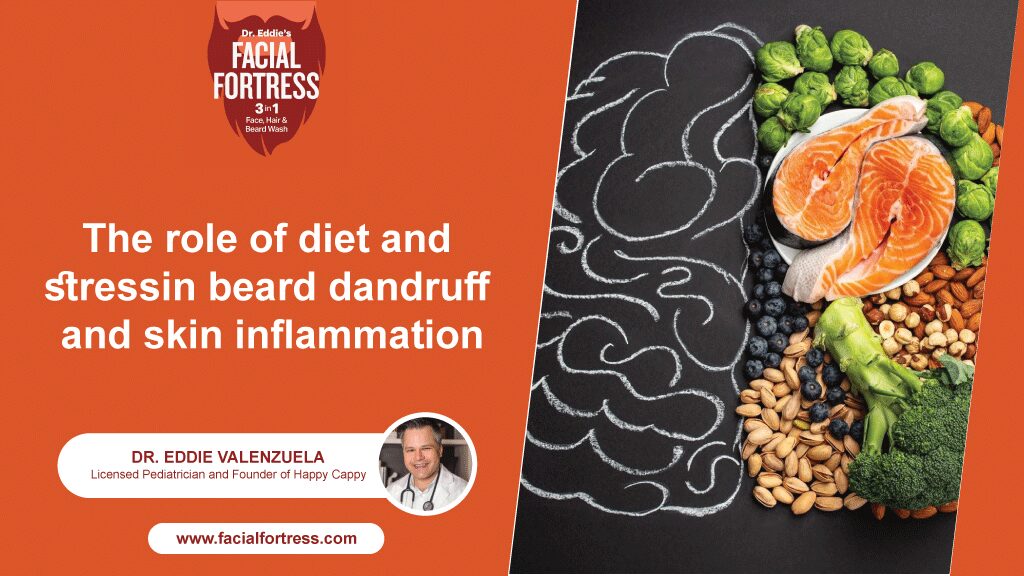
Doctor Answer: Can Stress and Diet Affect Beard Dandruff?
Yes–indirectly.
Stress and diet don’t cause beard dandruff on their own, but they can worsen flares by increasing oil production, inflammation, and skin sensitivity.
Stress raises cortisol, which can disrupt the skin barrier and promote yeast-driven inflammation. Diets high in sugar, alcohol, or processed foods can also increase inflammation and make dandruff harder to control.
The most effective treatment focuses on gentle cleansing, antifungal support, and protecting the skin barrier–not aggressive exfoliation.
–Dr. Eddie Valenzuela
Mustache and beard dandruff are common. Some flakes are simply dry skin, but true “beard dandruff” is usually seborrheic dermatitis under facial hair–often linked to oil (sebum), Malassezia yeast activity, and skin inflammation.
If you’ve ever wondered “Does stress cause dandruff?” or “Can diet make beard dandruff worse?” you’re asking the right questions. Stress and diet usually don’t create dandruff out of nowhere, but they can influence oil production, inflammation, and flare frequency which can make beard flaking and itching harder to control.
In this guide, you’ll learn what beard dandruff really is, what triggers it, and what actually works to calm flakes without irritating the skin barrier.
What is Beard Dandruff?
Beard dandruff is flaking and irritation of the skin underneath facial hair. In many men, it’s a form of seborrheic dermatitis, similar to scalp dandruff, just occurring in the beard and mustache area.
It may look like white or yellow flakes, sometimes greasy, and it can come with:
- Itching
- Redness
- Oily or irritated skin
- Scaling or crusting (more typical of seborrheic dermatitis)
Quick note: If the flakes are very fine and powdery with minimal redness, it may be simple dry-skin flaking rather than seborrheic dermatitis, but the treatment still starts with gentle cleansing and barrier support.
What Causes Dandruff?
Common reasons for dandruff include excess oil production, sensitivity to Malassezia yeast, and skin inflammation. These factors help explain why some people experience more severe dandruff during periods of stress.
Beard dandruff is rarely caused by a single issue. Instead, it develops when several factors overlap and disrupt the skin environment under facial hair.
Excess oil (sebum) plays a role because the face and beard area naturally produce more oil than many other parts of the body. While sebum helps protect the skin, higher levels can create conditions where dandruff is more likely to flare—especially in men who are prone to seborrheic dermatitis.
Malassezia yeast activity is another key factor. Malassezia is a yeast that normally lives on the skin, but in oil-rich areas it can become more active. In susceptible individuals, this increased activity contributes to scaling and irritation associated with dandruff.
Skin sensitivity and inflammation determine who actually develops visible flakes. When Malassezia breaks down skin oils, it produces byproducts such as fatty acids (including oleic acid). In people with sensitive skin, these byproducts can trigger inflammation, leading to faster skin cell turnover, flaking, itching, and redness.
Important: Many people have oily skin or Malassezia on their skin and never develop dandruff. Beard dandruff usually appears only when oil production, yeast activity, and skin inflammation occur together.
Does Stress Cause Dandruff?
Stress usually doesn’t directly cause dandruff, but it can trigger flares or make beard dandruff worse–especially if you already have seborrheic dermatitis.
When you’re under chronic stress, the body can shift immune signaling and increase inflammation. Stress can also interfere with sleep and skin-barrier recovery. Together, this can make the beard area more reactive leading to more itching, redness, and flaking.
This is why many men notice “stress dandruff” or dandruff due to stress during intense work periods, poor sleep, or major life changes.
Stress and Beard Growth
Another common question men ask is: Can stress affect beard growth?
The answer is yes, but indirectly.
Chronic stress does not permanently change beard hair type or directly cause beard hair loss. However, stress can influence beard appearance and texture by affecting the skin and hair follicles underneath.
When the body is under ongoing stress, it releases higher levels of cortisol. Elevated cortisol can:
- Disrupt the normal hair growth cycle
- Increase inflammation around hair follicles
- Weaken the skin barrier beneath facial hair
When inflammation is present under the skin, beard hair may grow less evenly and feel rough, very coarse, or patchy, even if overall hair density has not truly changed. Dry, irritated skin can also increase friction along the hair shaft, making the beard feel wiry or uneven.
In men who already have beard dandruff, sensitive skin, or seborrheic dermatitis, stress-related inflammation can worsen symptoms and further impact how the beard looks and feels.
Key point: Stress affects beard health primarily through skin inflammation and follicle disruption, not by permanently altering hair growth. Supporting the skin barrier, reducing inflammation, and managing dandruff are far more effective than aggressive grooming when stress is involved.
The Role of Diet in Skin Inflammation and Beardruff
Diet does not directly cause beard dandruff, but it can influence the internal conditions that make flaking, redness, and irritation more likely. This can happen more in men who are already prone to seborrheic dermatitis or sensitive skin.
Beard dandruff is driven primarily by excess oil production, Malassezia yeast activity, and inflammation. Certain dietary patterns can worsen these factors by increasing systemic inflammation, altering oil production, or affecting immune signaling in the skin.
How Diet Can Influence Beard Dandruff
Research suggests that diets high in inflammatory foods may contribute to skin inflammation and barrier disruption. While food alone does not create dandruff, it can intensify existing symptoms.
Diet-related factors that may worsen beard dandruff include:
- Increased systemic inflammation
- Stimulation of sebaceous (oil) glands
- Weakened skin barrier function
- Heightened inflammatory immune responses
These changes can create an environment where Malassezia yeast becomes more active, leading to flaking, scaling, and irritation under the beard.
Foods That May Worsen Skin Inflammation
Some dietary patterns are associated with higher levels of inflammation and oil production, which can aggravate beard dandruff in susceptible individuals.
Common examples include:
- Refined carbohydrates (white bread, pastries, sugary snacks)
- Sugary beverages and desserts
- Alcohol, which can increase inflammation and disrupt skin barrier function
- Highly processed or trans-fat–rich foods
- High-fat diets in some individuals
These foods do not cause dandruff on their own, but they may trigger flare-ups or make existing beard dandruff harder to control.
Sugar and Skin Inflammation
High sugar intake deserves special attention because of its effect on hormones and inflammation.
Excess sugar can:
- Spike blood glucose and insulin levels
- Stimulate sebaceous glands to produce more oil
- Increase pro-inflammatory cytokine activity
- Disrupt gut-skin immune signaling
In men prone to dandruff or seborrheic dermatitis, these changes can worsen redness, itching, and flaking under the beard.
What an Anti-Inflammatory Diet Supports
An anti-inflammatory diet does not replace proper beard care or medicated cleansing, but it can support healthier skin from the inside out.
Foods commonly associated with lower inflammation include:
- Fatty fish rich in omega-3 fatty acids (salmon, sardines, mackerel)
- Leafy greens (spinach, kale, chard)
- Berries (blueberries, strawberries)
- Nuts and seeds
- Whole, minimally processed foods
Over time, these choices may help reduce background inflammation, support the skin barrier, and improve overall beard and skin health.
Bottom Line
Diet alone does not cause beard dandruff—but it can influence how severe or persistent symptoms become.
For men dealing with flakes under the beard, the most effective approach combines:
- Proper cleansing with a beard-safe, medicated wash when needed
- Supporting the skin barrier
- Managing inflammation internally and externally
Nutrition plays a supporting role, not a standalone cure. Treating beard dandruff at the skin level remains essential.
How to Get Rid of Dandruff in a Beard?

Beard dandruff is a chronic, inflammatory skin condition. While it cannot be permanently “cured,” it can be effectively controlled with the right approach.
The key is treating the underlying causes: yeast overgrowth, excess oil, inflammation, and skin barrier disruption, rather than focusing only on removing visible flakes.
1. Use a Medicated Beard Cleanser
For beard dandruff and seborrheic dermatitis, regular soap or cosmetic beard washes are often not enough.
A medicated cleanser is the foundation of effective treatment.
Look for a beard-safe wash that:
- Is gentle and fragrance-free
- Is soap-free and pH-balanced
- Contains an antifungal active ingredient
Pyrithione zinc is one of the most commonly used and well-studied antifungal ingredients for dandruff. It helps reduce Malassezia yeast activity and calm inflammation associated with flaking, scaling, and itching.
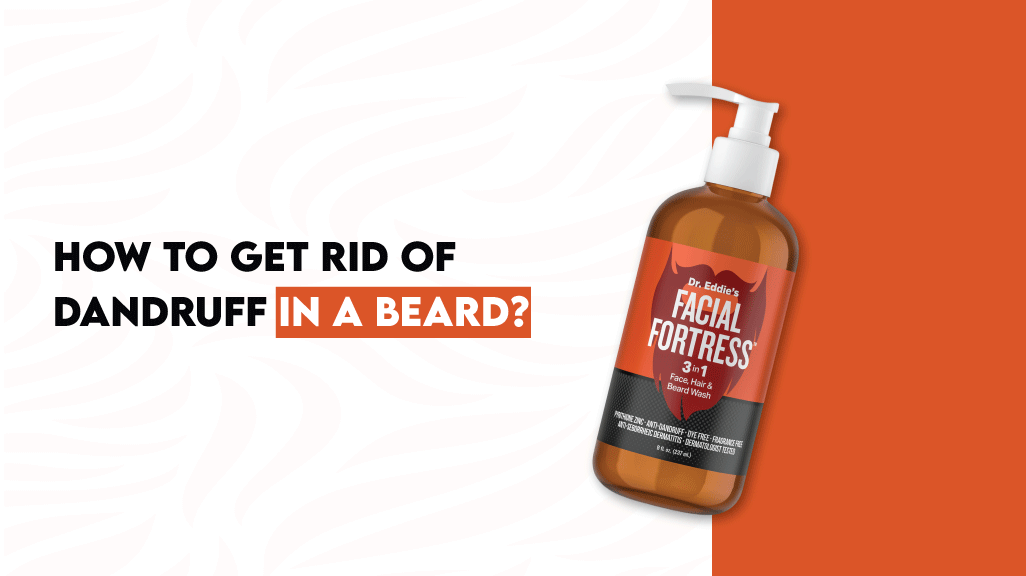
If you are searching for a skin-friendly option, Facial Fortress 3-in-1 Face, Hair, and Beard Wash was developed specifically for sensitive, dandruff-prone skin. It is fragrance-free, soap-free, pH-balanced, and contains 0.95% pyrithione zinc, an FDA-approved active ingredient that helps control the flaking, scaling, and itching associated with dandruff and seborrheic dermatitis.
How to use it effectively:
- Use once daily during active flares
- Massage gently into the beard and down to the skin
- Leave on for a short contact time before rinsing
- Reduce frequency to 2–3 times per week once symptoms improve
Consistent use is far more important than aggressive scrubbing.
2. Avoid Over-Exfoliating or Scrubbing
While flakes may be visible, beard dandruff is not caused by poor hygiene or “dead skin buildup” alone.
Over-scrubbing can:
- Disrupt the skin barrier
- Increase inflammation
- Worsen itching and redness
- Trigger more flaking
If flakes do not rinse away easily, focus on medicated cleansing, not mechanical exfoliation.
3. Support the Skin Barrier
Healthy beard skin depends on a strong skin barrier.
After cleansing:
- Use a light, non-comedogenic moisturizer or beard balm if the skin feels tight or dry
- Avoid heavy oils if you are dandruff-prone, as they may feed yeast growth
- Apply products gently—never rub aggressively
Barrier support helps reduce irritation and makes flare-ups less frequent over time.
4. Manage Triggers That Worsen Flare-Ups
Beard dandruff often flares due to external and internal triggers.
Common triggers include:
- Stress and poor sleep
- Cold, dry weather
- Alcohol or inflammatory diets
- Harsh grooming products
- Inconsistent cleansing routines
Addressing these factors can significantly reduce the frequency and severity of flares.
5. Be Consistent, Not Aggressive
Dandruff management works best when care is:
- Gentle
- Regular
- Targeted at the cause
Skipping treatments or switching products frequently can delay improvement.
With consistent use of a medicated beard wash and supportive skin care, most men see noticeable improvement within a few weeks.
Bottom Line
Getting rid of beard dandruff isn’t about scrubbing harder, it’s about addressing yeast activity, supporting the skin barrier, and avoiding unnecessary irritation.
A simple, consistent routine that includes a beard-safe, medicated cleanser, such as Facial Fortress, is often far more effective than exfoliation-heavy grooming routines, which can disrupt the skin barrier and worsen flaking.
Conclusion
Beard dandruff is not caused by poor hygiene or a lack of exfoliation. It develops from a combination of excess oil, yeast sensitivity (Malassezia), inflammation, and a disrupted skin barrier.
While stress and diet do not directly cause dandruff, they can significantly worsen flare-ups by increasing oil production and promoting inflammation in the skin. This is why beard dandruff often becomes more noticeable during periods of high stress, poor sleep, or inflammatory dietary patterns.
For most men, aggressive grooming and frequent exfoliation do more harm than good. The skin beneath facial hair sheds naturally, and over-scrubbing can worsen irritation, itching, and flaking, especially in sensitive or seborrheic dermatitis–prone skin.
The most effective approach to managing beard dandruff focuses on:
- Gentle, consistent cleansing
- Medicated antifungal support when needed
- Protecting the skin barrier rather than stripping it
- Reducing lifestyle triggers such as stress and inflammatory diets
Using a beard-safe, anti-dandruff beard shampoo like Facial Fortress 3-in-1 Face, Hair, and Beard Wash, which contains pyrithione zinc, helps control the yeast activity associated with dandruff, reducing flaking and itching and often making exfoliation unnecessary.
A healthy beard isn’t built by scrubbing harder. It’s built on gentle cleansing, skin-barrier support, and a routine that addresses the source of flakes rather than just removing what you see on the surface.

Recent Post
Frequently Asked Questions
What actually causes beard dandruff?
Does stress cause beard dandruff?
Can diet affect beard dandruff?
Should I exfoliate under my beard to get rid of flakes?
Can exfoliating make beard dandruff worse?
What is the best way to get rid of beard dandruff?
How often should I exfoliate my beard if I choose to do it?
Is exfoliation necessary for healthy beard growth?
What is the best daily routine for skin under the beard?