
How to Fix a Patchy Beard: Causes & What Actually Helps
A patchy beard can mean very different things. For some men, it is simply a normal growth pattern shaped by genetics and age. For others, new round bald spots, inflammation, or sudden shedding can point to a condition that deserves medical attention.
Patchiness is common, and a beard does not have to be perfectly uniform to look good. The useful question is not simply how to force more growth, but why the patchiness is there and what can realistically improve its appearance.
This guide focuses specifically on patchiness: common causes, what actually helps, ways to make sparse areas look fuller, and when to see a doctor. If your main goal is faster or thicker overall growth, see our separate guide to how beard growth works and what can—and cannot—speed it up.
What is a Patchy Beard?
A patchy beard is facial hair that grows unevenly, with areas that are noticeably thinner or bare compared with the surrounding beard. The pattern may be normal for you, may change with age, or may occasionally reflect breakage, inflammation, or a medical hair-loss condition.
A splotchy beard is very common in men, especially if you are growing it for the very first time. Before we jump into how to fix beard patchiness, it is important to understand the underlying cause behind it first.
What Causes a Patchy Beard?
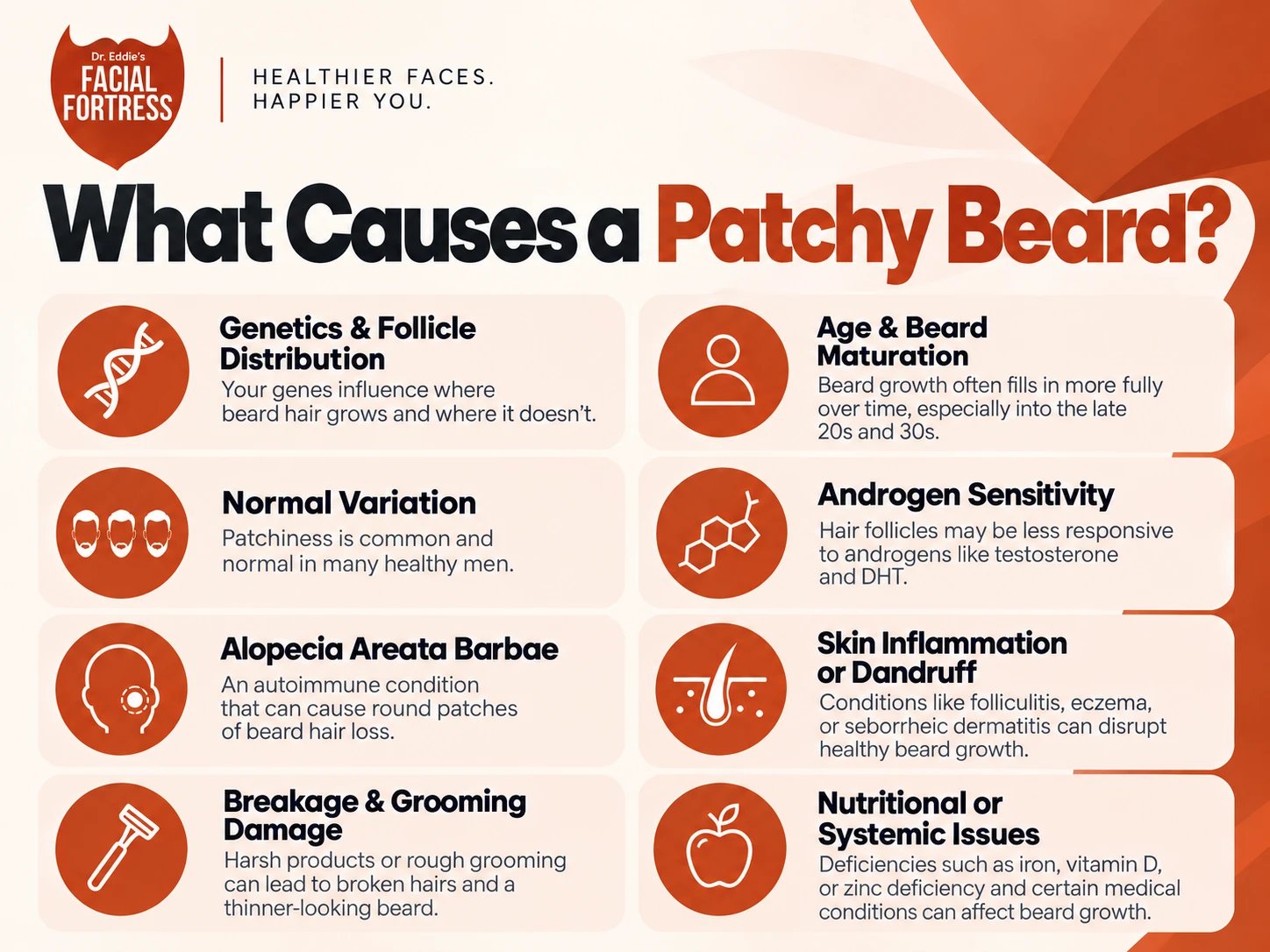
Ever wondered why you have a patchy goatee while your best friend is blessed with a full, thick beard? Patchy beard growth is caused by various factors, while some are in your control, others aren’t.
Here are some of the most common reasons for a patchy beard:
Androgens such as testosterone and dihydrotestosterone influence facial-hair development, but a patchy beard does not automatically mean you have low testosterone. Genetics, age, follicle distribution, and medical conditions are often more relevant explanations.
1. Hormones
One medical condition known as hypogonadism, which is either inherited or caused by factors such as injury and infection, can cause a decrease in the level of testosterone in the body.
Clinically significant androgen deficiency can reduce facial-hair development, but isolated beard patchiness is not a reliable way to diagnose low testosterone. If patchiness is accompanied by symptoms such as low libido, reduced muscle mass, or delayed puberty, a clinician can decide whether hormone testing is appropriate.
2. Genetics
Genetics is one of those factors that you have no control over. Genetics plays an important role in determining the thickness and growth pattern of hair. This is why some people may just naturally have thick, full beards due to genetics, while others may not.
Your DNA can affect various aspects of beard growth, such as hair follicle distribution and growth rate variation. If your genes say you will have fewer hair follicles in certain areas of your beard, then you would probably experience a patchy beard.
3. Age
A beard usually starts to grow around the age of 16 during puberty. While some may experience healthy hair growth even at this stage, others may only notice a light fuzz around their jawline and upper lips.
Facial-hair density and coarseness often continue changing through the late teens and 20s, so an uneven beard at 18 may look different several years later. There is no single age when every man’s beard is fully ‘mature,’ and genetics remain a major determinant of the final pattern.
So if your beard looks patchy before the age of 25, then don’t worry, it may fill in with time.
4. Nutritional Deficiency
Severe nutritional deficiencies can contribute to hair shedding or poor hair quality, but supplements do not reliably make a normal genetically patchy beard fill in. A balanced diet with adequate protein and micronutrients is sensible; targeted testing or supplementation is most useful when a true deficiency is suspected.
If your body is lacking any of these nutrients, it will focus on providing those available nutrients to other important organs rather than hair growth. As a result, you may experience thinner, weaker, and uneven beard growth.
5. Beard Alopecia
Alopecia areata is a condition that can cause bald patches on your scalp. This condition can also affect your beard, then it is usually known as alopecia barbae. In this condition, the white blood cells in the body start attacking the hair follicles.
And as a result, you experience sudden hair loss in the form of round patches. These patches can appear anywhere on the body, including your beard. So if you suspect that you are experiencing alopecia, immediately consult a doctor for the right treatment plan.
6. Skin Conditions
Skin conditions can also make a beard look patchier, especially when inflammation, scratching, scale, or hair breakage is involved. Examples include folliculitis, psoriasis, eczema, dandruff, and seborrheic dermatitis. These conditions do not all cause true follicle loss, but they can change the appearance of the beard and sometimes increase shedding or breakage.
Inflammatory skin conditions can make a beard look patchier through scale, irritation, scratching, breakage, or temporary shedding, but they do not all cause true follicle loss. If seborrheic dermatitis is part of the picture, our doctor’s guide to seborrheic dermatitis and hair loss explains what temporary shedding can look like and when another diagnosis deserves consideration.
7. Lifestyle
Lifestyle can affect overall hair and skin health, especially when poor nutrition, significant stress, smoking, or an underlying illness contributes to shedding or breakage. These factors are worth addressing, but they are not the usual explanation for a stable, lifelong patchy beard pattern.
Healthy sleep, nutrition, exercise, and avoiding tobacco support overall health and hair quality, but they cannot be counted on to change a genetically sparse beard pattern.
8. Styling Damage
Caring for your beard and styling it are healthy habits. However, most of us often make some small mistakes that can affect the beard’s health. Some of these common mistakes are:
- Overbrushing your beard.
- Using fragranced or strongly cleansing beard products that your skin does not tolerate.
- Blow drying on high heat.
- Vigorously rubbing your beard while drying it.
These mistakes can make your beard dry, brittle, and more prone to breakage, resulting in a patchy beard.
Can you Fix a Patchy Beard?
Can you fix a patchy beard? Sometimes—but it depends on the cause. Normal genetic growth patterns may never become perfectly uniform, while patchiness related to grooming damage, inflammation, or a treatable medical condition may improve when the underlying problem is addressed. If you are considering a peptide product, read our review of peptides and patchy-beard claims.
Patience is key. Beards often appear patchy in the early stages of growth. However, with time, they may naturally fill in. So, before doing anything, wait and give your beard enough time to grow to its full potential.
Proper care can make a patchy beard look healthier and more intentional, but it cannot change the number or distribution of your hair follicles. The next steps depend on whether your goal is to improve appearance, reduce breakage or inflammation, or investigate a true hair-loss problem.
How to Fix a Patchy Beard?
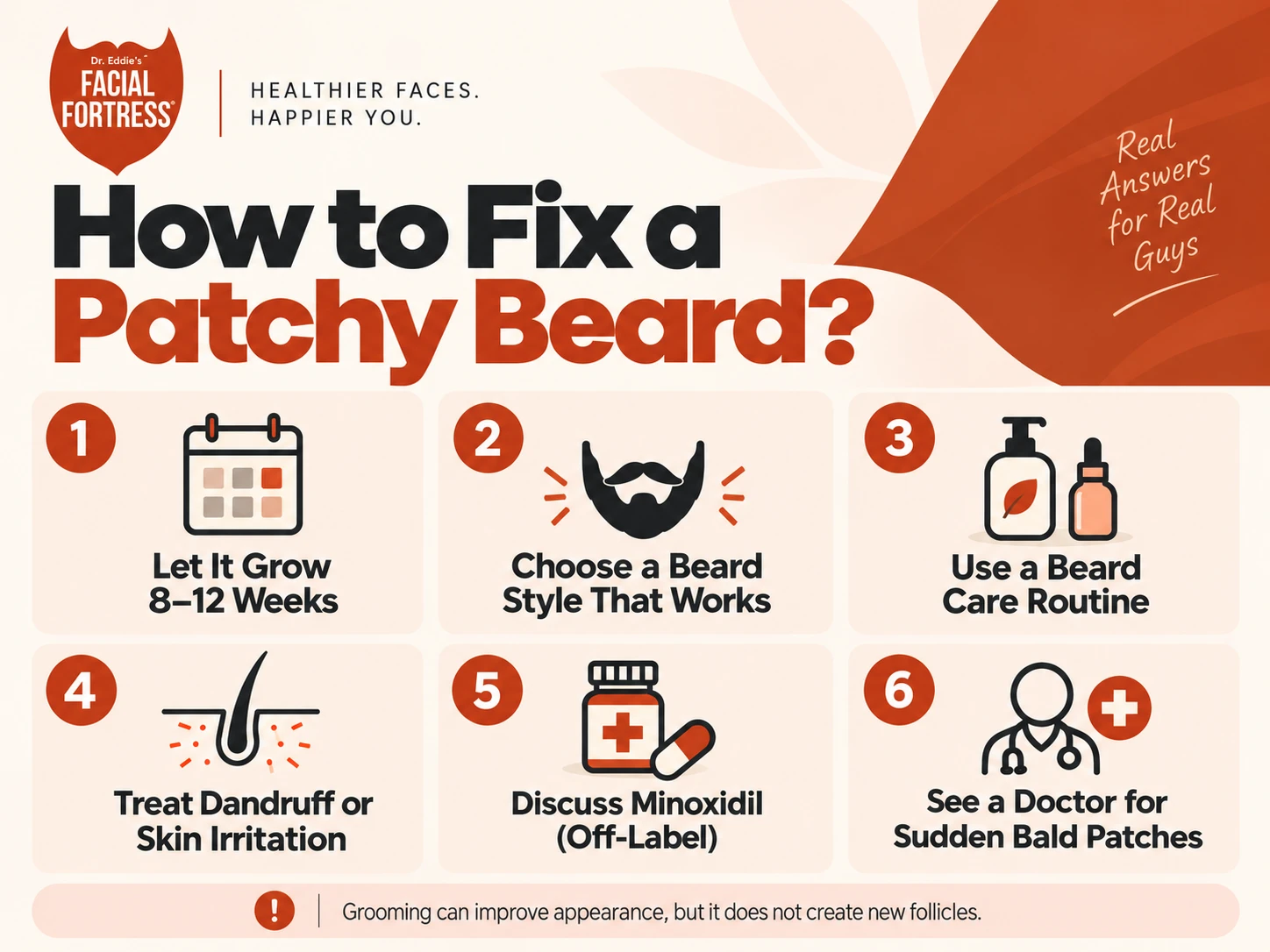
Here are practical ways to improve the appearance of a patchy beard and address common reversible contributors without promising that every sparse area will fill in.
Let it Grow
As we were discussing before, growing a full and healthy beard takes time and patience. In the early stages of growth, it is pretty common to experience awkward, sparse spots and uneven growth in some areas.
Letting the beard grow for roughly 8 to 12 weeks can make its natural pattern easier to judge because longer neighboring hairs may cover some sparse areas. That is a useful grooming experiment—not a guarantee that new follicles will appear or that every patch will fill in.
If you are early in the process of growing a beard, give it enough time to see the pattern before deciding it needs treatment. If you develop sudden smooth bald circles, significant redness or scale, scarring, or ongoing shedding, do not simply wait it out—have the area evaluated.
Follow a Beard Care Routine
A good beard-care routine can reduce dryness, irritation, tangling, and breakage and can make a patchy beard look more intentional. It does not change your underlying follicle pattern. Useful basics include:
- Cleansing: Cleanse your beard with the help of a beard shampoo at least 2 to 3 times a week. Washing removes sweat, oil, debris, and loose scale from the beard and the skin beneath it. Clean skin can feel and look better, but ordinary cleansing does not create new follicles or make genetically sparse areas grow in.
- Moisturizing: just like our skin, the beard also requires moisturizing. Without proper hydration, your beard can become dry, rough, and irritate the skin beneath it.
Dry, irritated skin can make you scratch more, and repeated scratching can increase breakage or worsen inflammation. If your skin tolerates it, a simple moisturizer or beard product can reduce dryness; stop any product that seems to trigger burning, redness, or worsening flakes.
- Brushing: Gentle brushing can help distribute natural oils, detangle the beard, and train longer hairs to lie in a direction that makes sparse areas less noticeable. It can improve appearance, but it does not create new follicles or reliably stimulate new beard growth.
Additionally, brushing also trains your beard to grow in a consistent direction, giving it a fuller look.
You can also brush your beard and style it strategically by covering up the patchy areas.
Apart from adding these steps into your beard routine, you should also take care that you avoid the most common mistake of using harsh products on your beard. Instead, use a beard wash that is fragrance-free, paraben-free, and sulfate-free.
Harsh or irritating grooming products can dry the hair shaft or inflame the skin beneath the beard, which may increase breakage, itching, or shedding. Choosing a gentle, fragrance-free cleanser can be helpful if your skin is sensitive.
Treat the Skin Condition
If inflammation, scale, or scratching is making your beard look patchier, treating the underlying skin condition can improve the skin and reduce breakage or shedding. For dandruff or seborrheic dermatitis, a medicated anti-dandruff beard wash can help relieve flaking, scaling, and itching associated with those conditions. It will not create new beard follicles.
If you are experiencing eczema, then you must follow a proper eczema skincare routine that includes the use of an eczema shampoo or cleanser to wash the skin and an eczema cream to keep it moisturized.
If you are unsure which skin condition you are experiencing or how to treat it, it is best to consult a doctor and get the right treatment on time.
Eat Healthy
The food we eat can have an impact on our hair, skin, and overall health. It can also affect the growth of your beard. As we discussed before, certain nutrient deficiencies can lead to a patchy beard.
So, taking a healthy, balanced diet becomes essential to achieve a fuller beard. As beard hair is mainly made of keratin, consuming foods rich in protein, such as eggs, fish, nuts, and seeds, can support healthier hair growth.
A few other important nutrients that you must consume are:
Vitamin D: Vitamin D is important to normal body function, and deficiency has been associated with some hair-loss conditions. Correct a documented deficiency rather than taking extra vitamin D specifically to make a patchy beard fill in.
Iron: Iron deficiency can contribute to hair shedding in some people. If you have symptoms or risk factors for deficiency, a clinician can determine whether testing and supplementation are appropriate.
B vitamins: Biotin deficiency can affect hair, but deficiency is uncommon and routine high-dose biotin has not been shown to make a normal patchy beard grow in. High-dose biotin can also interfere with some laboratory tests.
Zinc: Zinc is an essential nutrient, and severe deficiency can affect hair. Extra zinc is not a proven beard-growth treatment when your zinc level is already adequate.
Stay normally hydrated for overall health, but drinking extra water is not a proven way to make a patchy beard grow in. Beard density is determined much more by genetics, age, hormones, and whether a true hair-loss condition is present.
Using Minoxidil
Minoxidil is approved for certain types of scalp hair loss, but using it to increase beard growth is off-label. Some small studies and clinical experience suggest topical minoxidil may increase facial-hair growth in some men, but evidence is limited and side effects can include irritation, unwanted hair growth, dizziness, or changes in heart rate. Talk with a clinician before using it on your face; oral minoxidil has broader systemic risks and should only be used when prescribed.
Its exact hair-growth mechanism is not fully understood. If a clinician thinks it is reasonable for you, topical minoxidil may be tried on sparse areas, but results are variable and it will not overcome every genetic growth pattern or treat conditions such as alopecia areata.
Stop Smoking
Most of us don’t actually consider this, but smoking can affect the growth of your beard and hair on the scalp. Nicotine can restrict the blood flow to your hair follicles, cutting off the essential oxygen and nutrients that hair requires to grow properly, and increasing inflammation in the body; all of these effects can weaken your hair and slow down beard growth.
So if you are serious about fixing your beard patches, then cutting down on cigarettes or quitting them altogether can make a great difference.
Exercise
Exercise is good for overall health, sleep, and stress management, but it should not be presented as a direct treatment for a patchy beard. Short-term hormonal changes from exercise do not reliably translate into new facial-hair growth.
These factors matter to general health, but they should not be treated as proven ways to fill beard patches:
Testosterone: Androgens influence facial-hair development, but normal exercise-related hormone fluctuations are not a treatment for a patchy beard.
Circulation: Exercise supports cardiovascular health, but increased blood flow has not been shown to create new facial-hair follicles or reliably fill genetically sparse areas.
Stress: Managing stress is worthwhile for overall health and may matter when stress contributes to shedding, but stress reduction does not override the beard pattern you inherited.
So by staying active and adding any form of exercise, such as walking, yoga, running, or biking, will not only improve your physical health but also your beard health.
Relax
Good sleep supports overall health and normal hormone regulation, but short-term changes in testosterone from poor sleep should not be presented as a direct cause of a patchy beard. If you are otherwise healthy, improving sleep is beneficial—but it is not a proven way to fill genetically sparse facial hair.
Additionally, stress can negatively impact your beard growth, causing hair thinning or even hair loss in some cases. This is why it is essential to get plenty of sleep and manage stress. Staying calm and relaxed can help you get a healthy beard.
PRP or Beard Transplant
This is, you can say, the last resort, if nothing else is working, and you are desperate to fix a patchy beard, then you can go for clinical procedures like Platelet-Rich Plasma (PRP) and beard transplant.
In PRP therapy, platelet-rich plasma is extracted from your blood and injected into areas of thinning in an attempt to support hair growth. Evidence for PRP in alopecia barbae is limited, and it should not replace evaluation and treatment by a dermatologist. On the other hand, in a beard transplant, individual hair follicles are implanted at natural growth angles in the patchy areas to create a fuller look. These hair follicles are usually extracted from the neckline, back of the head, or other body areas.
How to Fill in a Patchy Beard?
Now that we have discussed some of the best and effective ways to fix a patchy beard. Did you know some simple tricks can actually make your beard look fuller without doing much?
If you are wondering “How to Make a Beard Less Patchy”. Here are a few things that you can do.
Brush it out
Brushing your beard every morning and covering the patchy areas with the rest of the hair can help you achieve a fuller look.
Apply Beard Balm
A beard balm not only helps nourish your beard, but it also helps in styling longer hair over the patchy areas. Beard balm can help keep everything in place for a longer period.
Use Topical Fibers
If you need a quick fix for an important occasion, then you can use topical fibers. Lightly sprinkle or spray the fibers in the patchy areas and pat the area with your fingers or brush your beard to give it a more natural look.
You can also use a fixing spray to keep the fibers in place for the rest of the day. One important thing about these fibers is that they are not permanent; they will rinse out when you wash your beard.
These quick fixes can be very beneficial for those who don’t want to go through PRP or beard transplant, and nothing else is working for them.
Taking Care of a Patchy Beard With Facial Fortress
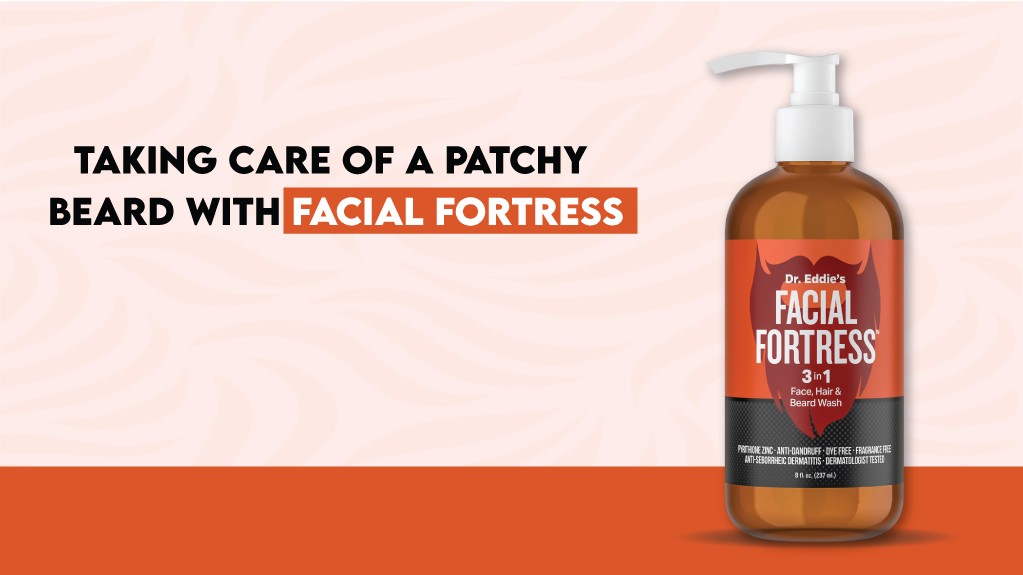
Having a patchy beard does not mean you cannot wear it confidently. If dandruff or seborrheic dermatitis is also making the skin beneath your beard flaky or itchy, Facial Fortress 3-in-1 Face, Hair, and Beard Wash can help relieve the flaking, scaling, and itching associated with those conditions while cleansing the beard and the skin underneath. It is not a beard-growth treatment.
The key to a great beard is following a proper beard care routine and regular cleansing. Our medicated beard shampoo contains pyrithione zinc as an active ingredient that can help relieve the flaking, scaling, and itching associated with dandruff and seborrheic dermatitis. It contains provitamin B5 to nourish your hair and skin, and natural skin and hair moisturizers such as apple, licorice root (no scent), and glycerin.
Plus, it is fragrance-free, paraben-free, and sulfate-free, making it a great option for those with sensitive skin.
Here are a few beard styles that can help you embrace your patchy beard.
Chin Strap Beard: This is great if you patchy beard on the cheeks. This style maintains a thin strip of hair along the jawline, extending to the sideburns.
Goatee: If you have thicker hair growth around the chin and mustache, then this style is for you. It creates a clean beard look around the chin and mustache while keeping the cheeks clean-shaven.
Modern Mutton Chop: If you have thick sideburns but a patchy beard on the cheeks and chin, then try this style.
Van Dyke Beard: If you have patchy beard around the cheeks then you can rock this look. Keep the beard around the chin and maintain your mustache; it is pretty much like a goatee, but the mustache and beard are disconnected from each other.
5’O’clock Shadow: This is a faint beard that gives a rugged, effortless look while subtly covering the patchy areas.
Brett Beard: This style focuses on the chin and jawline while keeping the cheeks bare. Which is a great option if you have a patchy beard on the cheeks.
Key Takeaways
- Patchy beards are very common in men, especially during the early stages of beard growth.
- Beard patchiness can be caused by various reasons, from genetics, hormonal imbalance, age, nutritional deficiencies, certain skin conditions, to your lifestyle choices.
- If you have a patchy beard due to genetics, it can be difficult to fix. However, you can easily fill in the patchy area by right brushing techniques, using beard balm, or using topical fibers.
- Healthy grooming, nutrition, exercise, and sleep support overall hair and skin health, but they do not reliably fill a genetically sparse beard. Address reversible causes such as irritation, breakage, nutritional deficiency, or a medical hair-loss condition when present.
- If dandruff or seborrheic dermatitis is making the skin beneath the beard flaky or itchy, treating those symptoms can improve the skin and reduce irritation-related breakage or shedding—but an anti-dandruff wash does not create new beard follicles.
- As for the last resort, if nothing works, then you can consult a doctor to explore options like minoxidil, PRP, and beard transplant.
- While you are working on fixing the patches you can embrace your patchy beard by choosing the right beard style like goatee, chin strap, van dyke, and brett beard. And keep your beard clean and healthy, and flake-free with the help of Facial Fortress Beard Shampoo for best results.


Frequently Asked Questions
Can a patchy beard be fixed?
Will a patchy beard grow out?
What is the 3-month beard rule?
Is a patchy beard due to lower testosterone?
How can I make my patchy beard look fuller?
Does shaving fix a patchy beard?

Dr. Eddie created Facial Fortress, a medicated 3-in-1 face, hair and beard wash for dandruff and seborrheic dermatitis.
More about Dr. Eddie
- Seborrheic Dermatitis on the Body: Chest, Skin Folds & Belly Button - September 17, 2026
- Seborrheic Dermatitis Treatment: Zoryve and Other Options for the Face and Beard - September 17, 2026
- GLP-1 Medications and Beard Changes: What Do We Know? - September 17, 2026