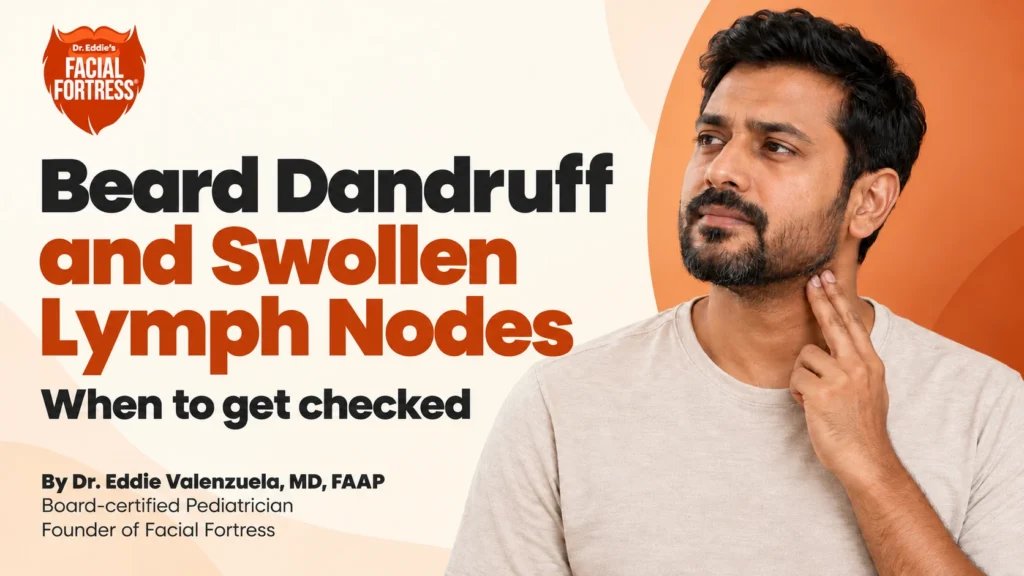

Quick answer: Beard dandruff is flaking of the skin beneath a beard or mustache, often associated with seborrheic dermatitis. An appropriate medicated wash, gentle cleansing and moisturizer where needed can help control flakes and itching. Treatment must reach the skin, and recurring symptoms often need maintenance care. Dry skin and other rashes can look similar, so persistent or unusual symptoms deserve assessment.
Flakes caught in a beard can be frustrating, especially when washing or adding beard oil has not helped. A useful routine begins with the skin underneath: recognize the pattern, choose treatment suited to facial skin, and keep grooming comfortable as the flare settles.
Recognizing Beard Dandruff
“Beard dandruff” is an everyday name for flaking associated with seborrheic dermatitis in the beard or mustache. The scale may be white and loose or yellowish and more adherent. Itching and irritated patches often accompany it, although symptoms vary. Pink or red inflammation can be easier to see on lighter skin; darker skin may show lighter, darker or purple-toned areas instead.1
The pattern often comes and goes in the same places. Flaking in the eyebrows, beside the nose, around the ears or on the scalp can be another clue. Our overview of adult seborrheic dermatitis connects those locations, while the mustache guide addresses care around the upper lip.
Similar-Looking Beard Problems
Flake color alone cannot distinguish seborrheic dermatitis from simple dryness. Tight, rough skin after harsh washing may point toward a moisture problem, but the two can coexist. The beard dandruff and dry-skin comparison explains the useful clues and their limits.
Product reactions and psoriasis can also produce scale. A rash that follows the area where a beard product was applied deserves attention even if you have used that product before. Thick, persistent plaques or similar patches elsewhere may raise the possibility of psoriasis. Happy Cappy’s comparison of seborrheic dermatitis and psoriasis explains these broader skin patterns and how they can overlap. For a wider range of beard symptoms, see the itchy-beard guide.
Causes and Flare Triggers
Seborrheic dermatitis involves an interaction between Malassezia, a yeast normally found on skin, the skin’s oils, and individual susceptibility. The skin barrier and inflammatory response help determine whether that interaction produces troublesome scale. Having the yeast is normal; the condition is not proof of poor hygiene and is not contagious.2,3
Oil-rich areas are common sites, but visibly oily skin is not required. Trying to remove every trace of oil with strong cleansers can add irritation without resolving the underlying tendency to flare. The Malassezia and beard seborrheic dermatitis article explains the biology in more detail.
Cold or dry weather, stress and irritating grooming products can accompany worsening symptoms. Triggers differ from person to person, and a flare does not always have an obvious explanation. Notice repeatable patterns rather than assuming that one food, a long beard or a missed wash caused the condition. Our diet and stress discussion separates potential influences from claims that remain uncertain.
Treatment That Reaches the Skin
Treatment has two connected jobs: controlling the seborrheic dermatitis and avoiding additional irritation. A cosmetic beard cleanser can remove dirt and residue, but it does not necessarily contain an active ingredient for dandruff. Read the intended use and Drug Facts rather than relying on the word “beard” on the front of the bottle.
Medicated Washes
Common over-the-counter dandruff ingredients include ketoconazole, pyrithione zinc, selenium sulfide and salicylic acid. Ketoconazole targets yeast; pyrithione zinc and selenium sulfide are also used in medicated dandruff care. Salicylic acid helps loosen scale rather than serving the same antifungal role. Availability, strength and directions differ, and a scalp formula is not automatically suitable for facial skin.4,5
Choose a product labeled for the area you are treating, or use the specific product your clinician recommends. Work it gently through the hair onto the affected skin, follow its contact-time instructions, and rinse thoroughly. Do not borrow a leave-on time from a different shampoo. Our guide to using anti-dandruff shampoo on the beard covers selection, application and precautions.
A Comfortable Washing Routine
Wet the beard and skin with lukewarm water. Part dense hair with your fingertips so the cleanser reaches flaky areas, and massage without scratching. After rinsing, pat dry instead of rubbing vigorously with a towel. Loose flakes may come away during gentle washing; attached scale does not need to be scraped off.
On days when a medicated wash is not due, adjust ordinary cleansing to sweat, residue and your skin’s comfort. A tight, stinging face after every wash suggests that the overall routine needs attention. Adding more medicated washes without checking the label can make treatment harder to tolerate.
Moisture Support
A fragrance-free moisturizer can help when the skin feels dry or tight. Work a small amount through the beard to the skin instead of coating only the hair. Choose a texture you can use comfortably and stop a product that consistently worsens irritation. Moisturizer supports the skin barrier; it does not replace treatment for active seborrheic dermatitis.6,7
Prescription Treatment for Persistent Inflammation
Some flares need more than a wash. A clinician may use a topical antifungal cream, a brief course of an appropriate low-potency corticosteroid, or a nonsteroidal anti-inflammatory treatment. Calcineurin inhibitors are sometimes used off-label for seborrheic dermatitis, and roflumilast foam is another prescription option. Location, severity and prior response guide the choice.3,4
Facial skin needs particular care with steroid strength and duration. Repeatedly applying a leftover steroid can obscure the diagnosis or cause unwanted effects. The prescription treatment guide for the face and beard explains the options and their limits.
Grooming, Oils and Home Remedies
A soft brush or comb can help arrange hair and remove flakes that have already loosened. Brushing is not a treatment for the inflammation beneath the beard, and firm scrubbing can leave the skin more irritated. During a flare, skip abrasive scrubs and picking. The guide to exfoliating under a beard explains when extra exfoliation is likely to be unhelpful.
Beard oil may improve the feel of dry hair, but it does not automatically treat the skin condition causing flakes. Fragranced oils or balms may also irritate some people. If a product repeatedly brings on burning or itching, stop it and simplify the routine. Our beard oil and moisturizer comparison explains their different purposes.
Lemon juice, vinegar and undiluted essential oils can sting or irritate inflamed facial skin. “Natural” does not tell you whether a product is effective or well tolerated. The beard-dandruff home-remedy review looks more closely at popular approaches and the evidence behind them.
Shaving is optional. A shorter beard can make it easier to see and treat the skin, but removing hair does not permanently remove the tendency to develop seborrheic dermatitis. If shaving itself causes irritation, gentle trimming may be more comfortable.
Maintenance and Reducing Recurrences
When symptoms improve, the goal shifts from settling the flare to keeping the skin comfortable. Seborrheic dermatitis commonly returns, so maintenance may include intermittent medicated treatment, gentle cleansing and moisturizer as needed. Follow the product directions or the plan agreed with your clinician rather than stopping and restarting several products whenever a few flakes appear.4,6
Keep track of the routine that helped: the wash used, how often it was applied, and whether other products caused stinging or dryness. If symptoms return, this makes it easier to distinguish inconsistent treatment from a poorly tolerated product or a different rash. The washing-frequency guide discusses adjustments for skin type, climate and sweating.
Prevention here means reducing the frequency or severity of flares, not guaranteeing that they will never happen. A manageable routine is easier to sustain than repeated deep cleaning, aggressive exfoliation or frequent product changes. The daily and weekly beard-care guide can help organize those steps.
Facial Fortress as a Medicated Wash Option
Facial Fortress 3-in-1 Medicated Wash contains 0.95% pyrithione zinc and is labeled to help relieve flaking, scaling, itching and irritation associated with dandruff and seborrheic dermatitis. Its fragrance-free, dye-free formula includes glycerin and panthenol and was developed for the face, beard, hair and scalp. Its mild, non-soap cleansing system contains no SLS or SLES.
The label directs use at least twice a week for best results, or as directed by a doctor: wet thoroughly, massage onto the scalp and skin, and rinse. Avoid eye contact, and stop use and ask a doctor if the condition worsens or does not improve. The complete ingredients and Drug Facts provide the product-specific directions and warnings.8
When Beard Symptoms Need Assessment
Arrange an assessment if appropriate, consistent care is not helping, the diagnosis is uncertain, or the rash keeps becoming more inflamed. Bring the products you use or a list of their ingredients, and describe what changed before the symptoms began.
Pain, pus, marked swelling, spreading inflammation, broken hairs or distinct patches of hair loss deserve attention rather than being treated as ordinary dandruff. Beard ringworm, called tinea barbae, is a different fungal infection and often needs an oral prescription treatment. A dandruff wash is not a substitute for that care.9
Medical References
- American Academy of Dermatology. Seborrheic dermatitis: Signs and symptoms.
- American Academy of Dermatology. Seborrheic dermatitis: Causes.
- DermNet. Seborrhoeic dermatitis.
- American Academy of Dermatology. Seborrheic dermatitis: Diagnosis and treatment.
- American Academy of Dermatology. How to treat dandruff.
- American Academy of Dermatology. Seborrheic dermatitis: Self-care.
- American Academy of Dermatology. A dermatologist’s top tips for a healthy beard.
- DailyMed. Facial Fortress pyrithione zinc shampoo: Drug Facts.
- DermNet. Tinea barbae.