Quick answer: An itchy beard usually starts with the skin underneath it. Dryness, shaving irritation, product reactions and seborrheic dermatitis are common explanations; atopic eczema, psoriasis and infections can also affect the area. Look for the pattern of flakes, patches or bumps, then match care to the cause. Pain, pus, spreading inflammation or patchy hair loss need medical assessment.
Care Matched to the Cause of Itching
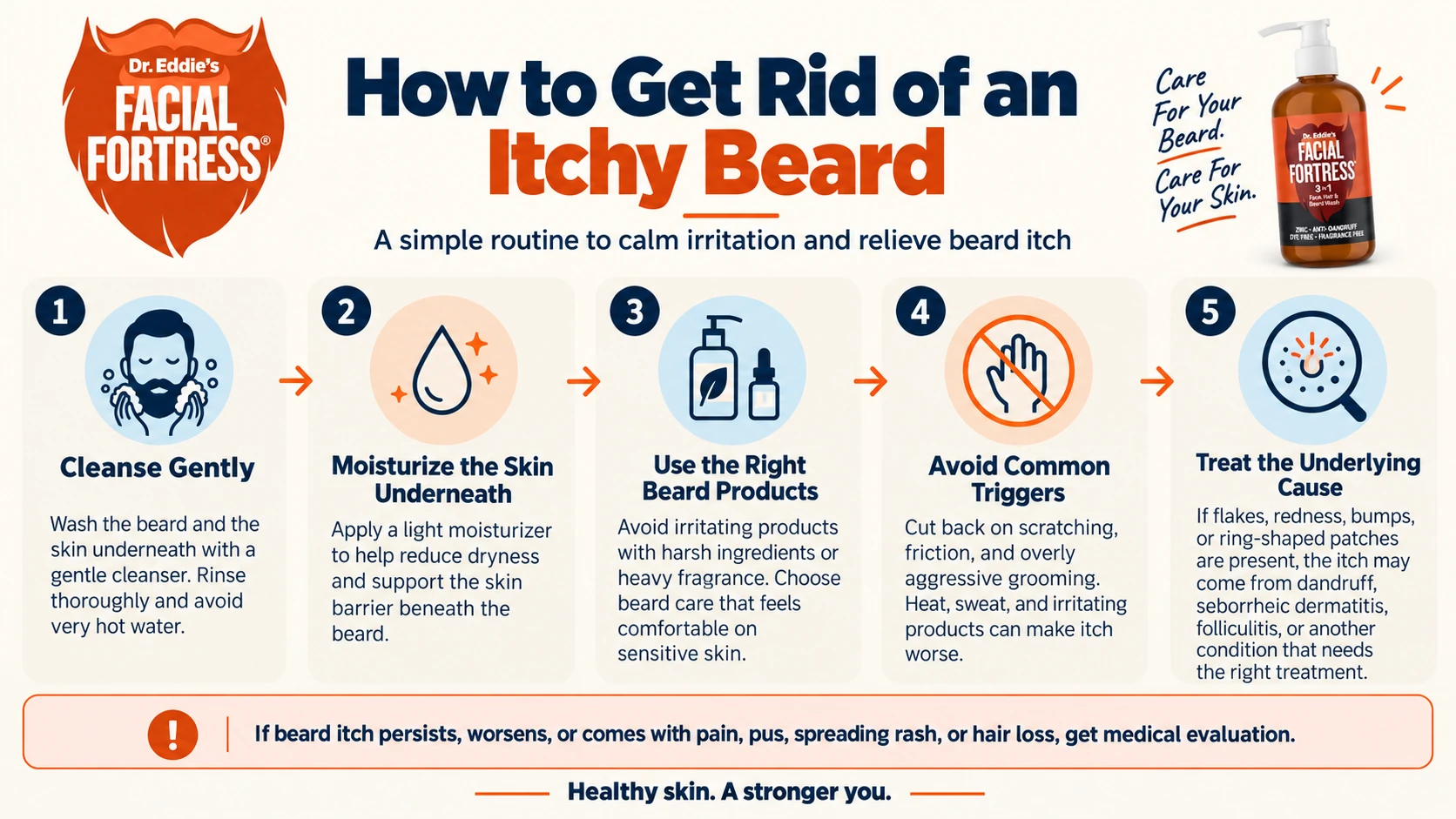
The goal is to care for the skin beneath the beard while avoiding steps that aggravate it. A simple routine also makes it easier to notice which changes help.
Care for dry skin under the beard · Care for beard dandruff
Gentle Cleansing
Use lukewarm water and a gentle cleanser, working it through the beard to reach the skin. Rinse thoroughly and pat dry. Adjust ordinary cleansing to sweat, oil, and skin tolerance; repeated washing that leaves the skin tight or stinging can make irritation worse. If you use a medicated wash, follow its label directions.
Moisture for the Skin Underneath
If the skin feels dry or tight, apply a fragrance-free moisturizer to slightly damp skin, parting the beard with your fingers so it reaches the skin beneath the hair. A cream or ointment is often a better choice for very dry or eczema-prone skin. Oil or balm may soften beard hair, but it is optional and may not provide everything dry skin needs.
A Simpler Product Routine
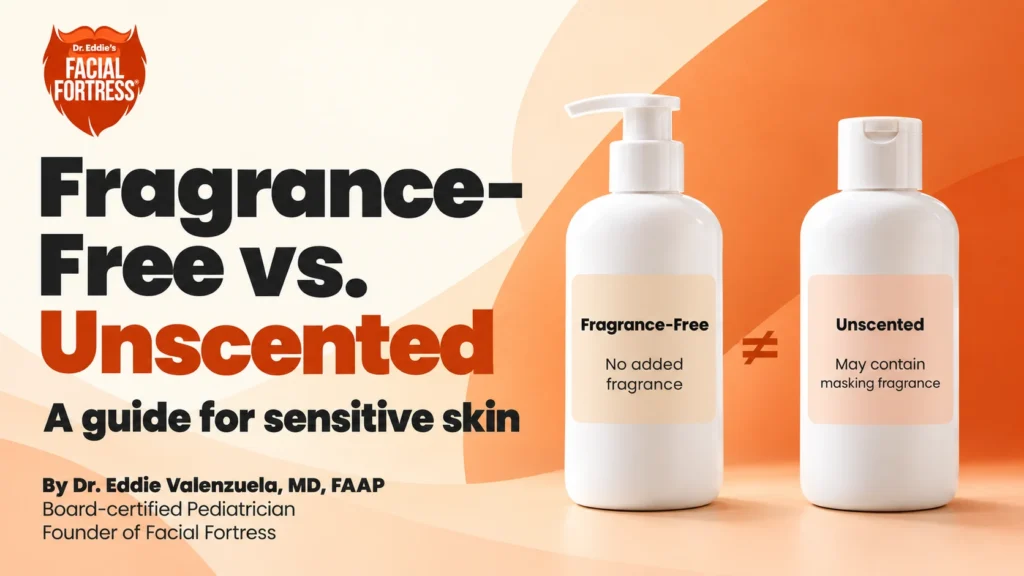
If itching starts or worsens after a cleanser, oil, balm, or dye, stop the suspected product. Fragrance-free products can reduce exposure to a common trigger, but any formula can irritate an individual’s skin. Our guide to beard dandruff versus a product reaction explains useful differences.
Less Friction and Irritation
Avoid scratching, aggressive scrubbing, and very close shaving when they worsen symptoms. Keep grooming tools clean, rinse out product residue, and brush or comb gently without dragging across irritated skin.
Treatment Matched to the Diagnosis
Recurring flakes and inflammation may point to seborrheic dermatitis, but flaking alone does not confirm it. An appropriate medicated dandruff wash can help when dandruff or seborrheic dermatitis is responsible. Atopic eczema, psoriasis, contact reactions, ingrown hairs and infections may need a different approach. If the pattern is unclear or symptoms persist, get the skin examined instead of adding more products.
Beard itch is a symptom rather than a diagnosis. Fine flakes with tight skin suggest a different problem from bumps after shaving or a recurring scaly rash. Looking beneath the hair and checking for similar changes on the scalp, eyebrows or other body areas helps put the itch in context. This guide explains those clues, the limits of recognizing a condition from appearance and the care each pattern may need.
Itching During Early Beard Growth
Short stubble can rub against the skin as a beard grows, while recent shaving, dryness and ingrown hairs may contribute to irritation. Some men notice temporary itching, but it is not an inevitable stage of beard growth and there is no single reliable timeline for it to end.
If the itch keeps returning or comes with persistent scale, a rash, bumps or hair loss, beard length is unlikely to explain the whole problem. The skin changes below deserve a closer look.
Causes of Beard Itch
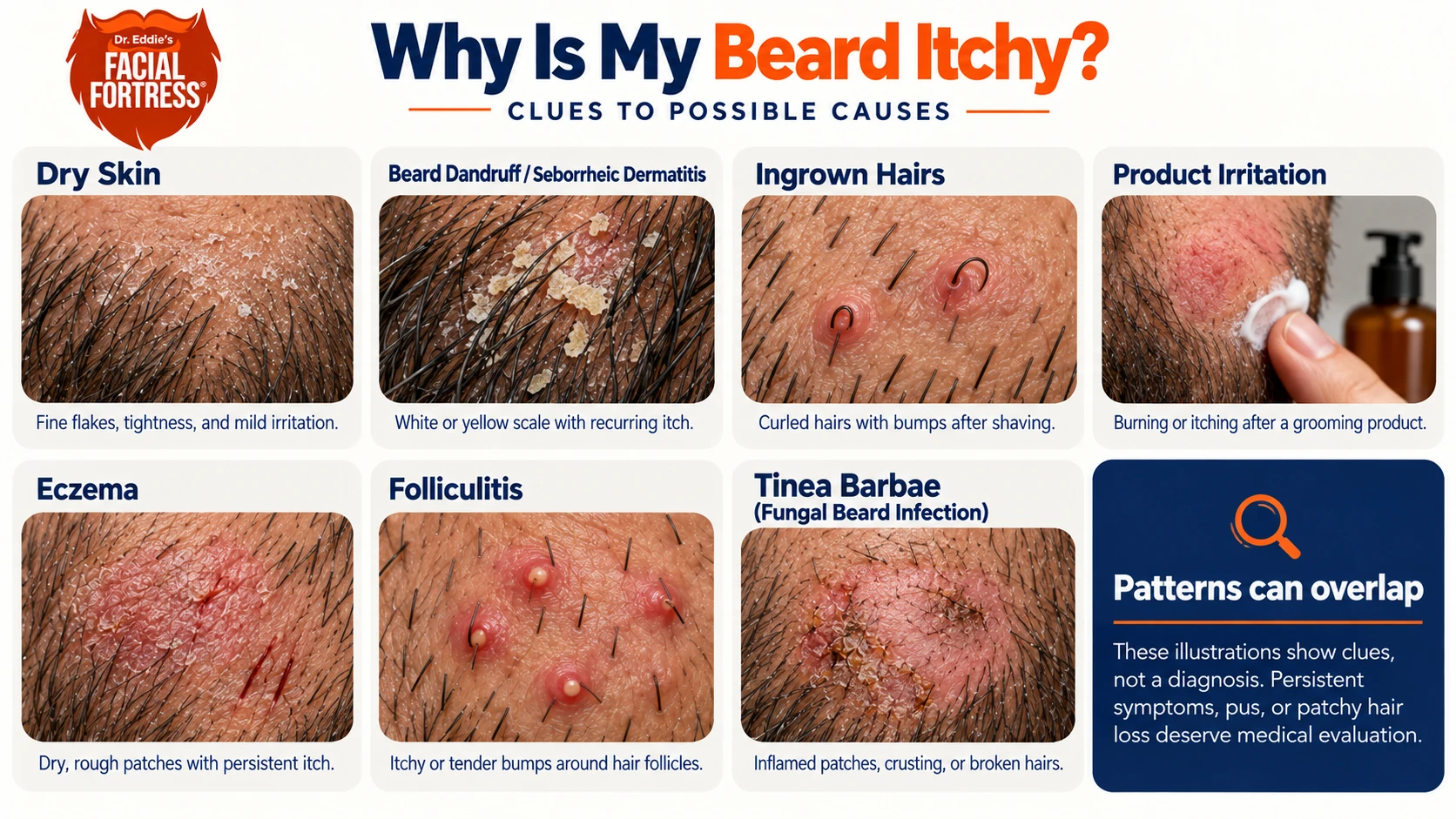
The image above is an illustration of several possible causes, not clinical photography. Additional conditions, including psoriasis, are covered below.
Part the beard gently and look at the skin in good light. Notice whether the main change is fine flaking, a broader scaly patch or individual bumps around hairs. These patterns can overlap, so photographs and illustrations offer context rather than a diagnosis.
Dry Skin
Dry skin, or xerosis, develops when the skin barrier loses moisture. Cold, dry air, hot water and frequent washing with irritating cleansers can contribute. The skin may feel tight after washing and shed fine flakes without the broader inflamed patches seen in some skin conditions.1
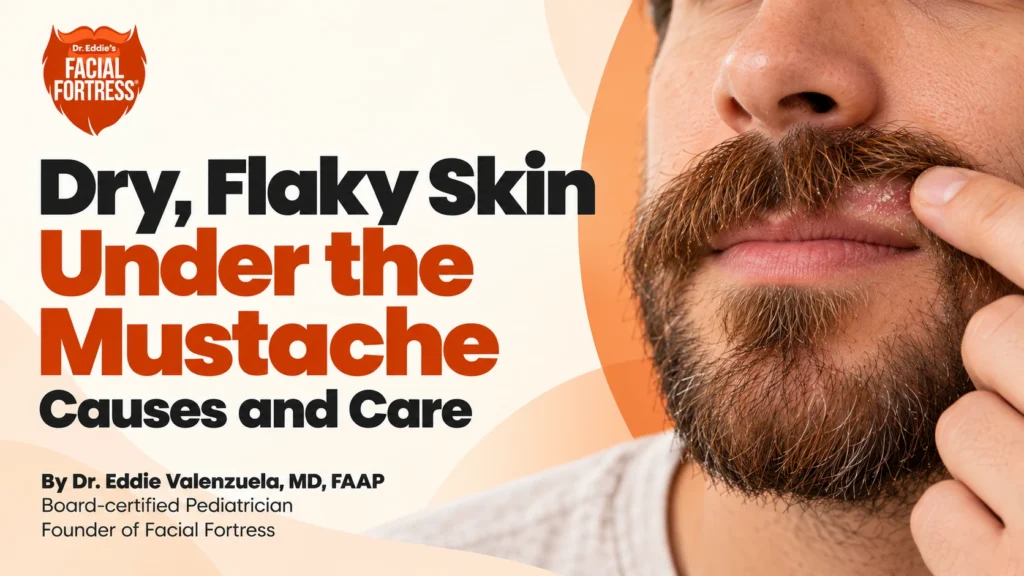
Gentle cleansing and a fragrance-free cream applied to slightly damp skin can help. Part the beard so the moisturizer reaches the skin, rather than coating only the hair. A moisturizing wash does not replace a leave-on moisturizer, and beard oil is optional. The dry skin vs. beard dandruff guide explains the comparison; dryness above the lip is covered in our mustache-area guide.1
Beard Dandruff and Seborrheic Dermatitis
Beard dandruff often refers to flaking related to seborrheic dermatitis, an inflammatory condition involving oil-rich skin and its response to naturally occurring Malassezia yeast. It can cause recurring itch with white or yellow scale that looks dry or greasy. Similar changes on the scalp, eyebrows or sides of the nose strengthen that possibility. Inflammation may appear red, purplish, darker or lighter than nearby skin.2,3
Medicated washes can help when dandruff or seborrheic dermatitis is responsible. Dandruff shampoos may contain pyrithione zinc, ketoconazole, selenium sulfide or salicylic acid, but the complete formula and label determine where and how a product should be used. Do not assume every scalp shampoo is suitable for facial skin. The beard seborrheic dermatitis guide covers the routine and the shampoo-on-beard guide explains product selection.4
For photographs across skin tones, see the AAD’s clinical examples of seborrheic dermatitis.
Ingrown Hairs and Razor Bumps
Ingrown hairs occur when a cut hair curves back into the skin or becomes trapped beneath it. Repeated inflammation from beard hairs is called pseudofolliculitis barbae, or razor bumps. It often follows close shaving and is especially common with tightly curled hair. Raised, itchy or tender bumps may contain a visible curved hair and can leave dark marks.5
Avoid picking or scrubbing the bumps. Reducing close shaving, shaving with the grain and using a trimmer that leaves a little stubble may help limit new ingrown hairs. Persistent bumps, scarring or discoloration warrant a dermatologist’s assessment. DermNet’s razor-bump photographs show how the bumps cluster around hairs.5
Irritating Products and Contact Dermatitis
A wash, oil, balm or beard dye can irritate the skin or trigger an allergy. Burning, stinging or an itchy rash in an area touched by the product provides a clue. A newly introduced product is not the only possibility: allergy can develop after earlier tolerance, and allergic symptoms may be delayed.6
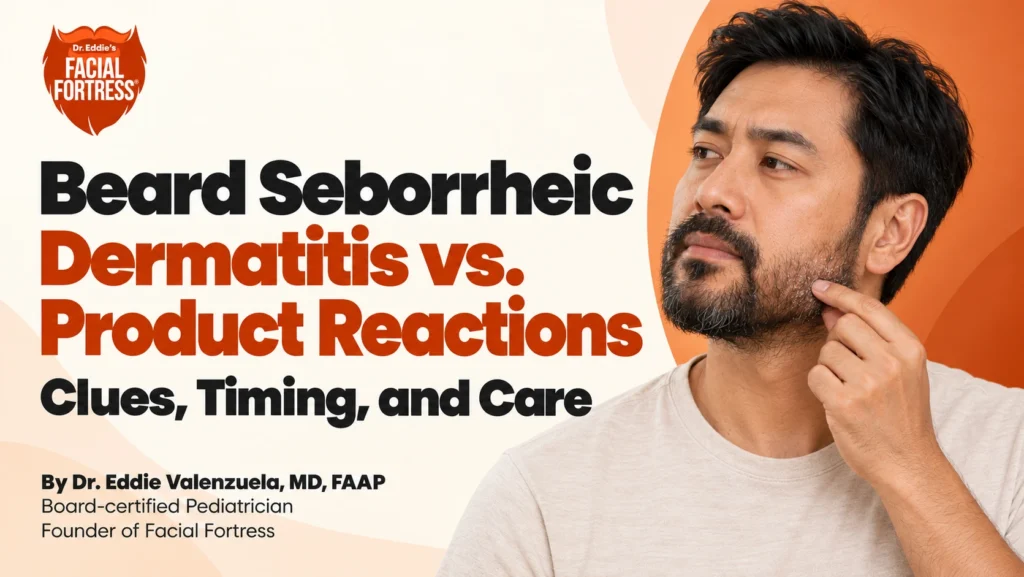
Stop the suspected product, rinse away residue and simplify the routine to gentle products you tolerate. Recurrent reactions may need patch testing to identify an allergen. Our comparison of beard seborrheic dermatitis and product reactions explains timing, irritation and allergy in more detail. DermNet also shows a clinical example of a reaction to beard dye.7
Beard Eczema and Atopic Dermatitis
“Beard eczema” is not one diagnosis. Eczema is a family of inflammatory skin conditions, and the term may refer to atopic dermatitis, contact dermatitis or seborrheic dermatitis affecting the beard area. Atopic dermatitis is the type many people mean when they simply say eczema.8
Atopic eczema tends to cause recurring dry, rough and intensely itchy patches. Repeated scratching can thicken the skin or leave scratch marks. A history of eczema elsewhere, or a personal or family history of asthma or hay fever, may provide context. Redness can be less obvious on darker skin, where affected areas may look purple, brown or gray. The AAD’s clinical photographs of atopic dermatitis show several appearances and body locations; they are examples of the condition, rather than beard-specific diagnostic photographs.9
Gentle cleansing and a fragrance-free cream or ointment support the skin barrier. Persistent facial eczema may need prescribed anti-inflammatory treatment, so have a clinician confirm the cause. A dandruff wash does not substitute for an atopic dermatitis treatment plan.8
Psoriasis in the Beard Area
Psoriasis can affect the facial skin beneath a beard, producing persistent, more sharply defined scaly patches or plaques. Clues elsewhere—such as scale extending beyond the scalp hairline or plaques on the elbows and knees—can help distinguish it from an isolated grooming reaction. Facial psoriasis can also overlap with seborrheic dermatitis, a pattern called sebopsoriasis, so the scale is not always thick or easy to classify.10
See DermNet’s clinical photographs of facial psoriasis for examples. Gentle cleansing and moisturizing can support comfort, but facial psoriasis needs treatment chosen for sensitive facial skin. Ask a clinician before using a psoriasis medication intended for the scalp or body on the face. Facial Fortress is labeled for dandruff and seborrheic dermatitis; it is not a psoriasis treatment.10
For a broader comparison of the two conditions beyond the beard, see Happy Cappy’s eczema vs. psoriasis picture guide.
Folliculitis
Folliculitis means inflammation of hair follicles. Small itchy or tender bumps centered around beard hairs, sometimes with pus-filled tips, can resemble ingrown hairs. Bacterial infection is one possible cause, while irritation and other triggers can also contribute, so treatment depends on the examination.11
Avoid squeezing the bumps and pause shaving if it aggravates them. Keep grooming tools clean. Persistent, spreading or painful pustules need medical evaluation rather than repeated trials of dandruff products. The AAD’s folliculitis guide includes clinical photographs.11
Tinea Barbae: Fungal Beard Infection
Tinea barbae is a dermatophyte fungal infection involving beard-area skin and hairs. Contact with infected animals is one possible source. It may produce swollen, crusted patches or pustules, with hairs that break or loosen easily and areas of hair loss. It does not always look like a tidy ring, and the amount of itch varies.12
A clinician may examine skin scrapings or hairs to confirm the infection. Treatment commonly requires a prescription oral antifungal; an over-the-counter dandruff wash is not a substitute. DermNet’s tinea barbae photographs illustrate why an inflamed patch with hair loss needs assessment.12
Lice in Beard or Mustache Hair
Pubic or “crab” lice can occasionally infest beard or mustache hair. Finding lice or their eggs attached to the hairs is the key clue; itching alone does not establish the cause. A clinician can help confirm the diagnosis and recommend treatment suitable for the facial area. A dandruff wash does not treat lice.13
Medical Assessment for Persistent or Concerning Symptoms
Book an examination for recurring itch, a rash that is not improving, repeated product reactions or unexplained patchy hair loss. Bring a list of grooming products and describe when the symptoms started, whether shaving changes them and where else on the body similar changes appear.
Seek prompt medical care for rapidly spreading inflammation, fever, a tender swollen area, painful or pus-filled bumps, or substantial weeping and broken skin. These findings may need treatment for infection or a significant inflammatory reaction.
Choosing a Beard Wash for Itchy Skin
Choose a wash according to the cause of the itch and the skin’s tolerance. For flaking, scaling and itching associated with dandruff or seborrheic dermatitis, Facial Fortress 3-in-1 Medicated Wash contains 0.95% pyrithione zinc and is formulated for the face, hair and beard. It is fragrance-free and dye-free, with glycerin and panthenol for moisture and conditioning support.14
The ingredients and Drug Facts provide the full formula and directions. Use at least twice weekly for best results, or as directed by a doctor, and avoid contact with the eyes. Stop use and ask a doctor if the condition worsens or does not improve with regular use as directed. For ordinary dryness or a diagnosed condition requiring a different treatment, follow the care appropriate to that cause.14
Medical References
- American Academy of Dermatology: Dermatologists’ tips for relieving dry skin
- American Academy of Dermatology: Seborrheic dermatitis signs and symptoms
- DermNet: Seborrhoeic dermatitis
- American Academy of Dermatology: How to treat dandruff
- DermNet: Pseudofolliculitis barbae
- American Academy of Dermatology: Contact dermatitis signs and symptoms
- American Academy of Dermatology: Contact dermatitis diagnosis and treatment
- American Academy of Dermatology: Atopic dermatitis overview
- American Academy of Dermatology: Atopic dermatitis symptoms
- DermNet: Facial psoriasis
- American Academy of Dermatology: Folliculitis
- DermNet: Tinea barbae
- Centers for Disease Control and Prevention: About pubic lice
- Facial Fortress: Ingredients and Drug Facts