Quick answer: Beard dandruff commonly refers to seborrheic dermatitis in the skin beneath facial hair. It can cause recurring flakes, itching or greasy scale, sometimes with similar symptoms on the scalp, eyebrows or sides of the nose. A grooming-product reaction may cause burning, itching or a rash after contact with a wash, oil, balm or dye. Reactions can involve products used for years, and the two conditions can coexist. Persistent or unclear symptoms need an examination.
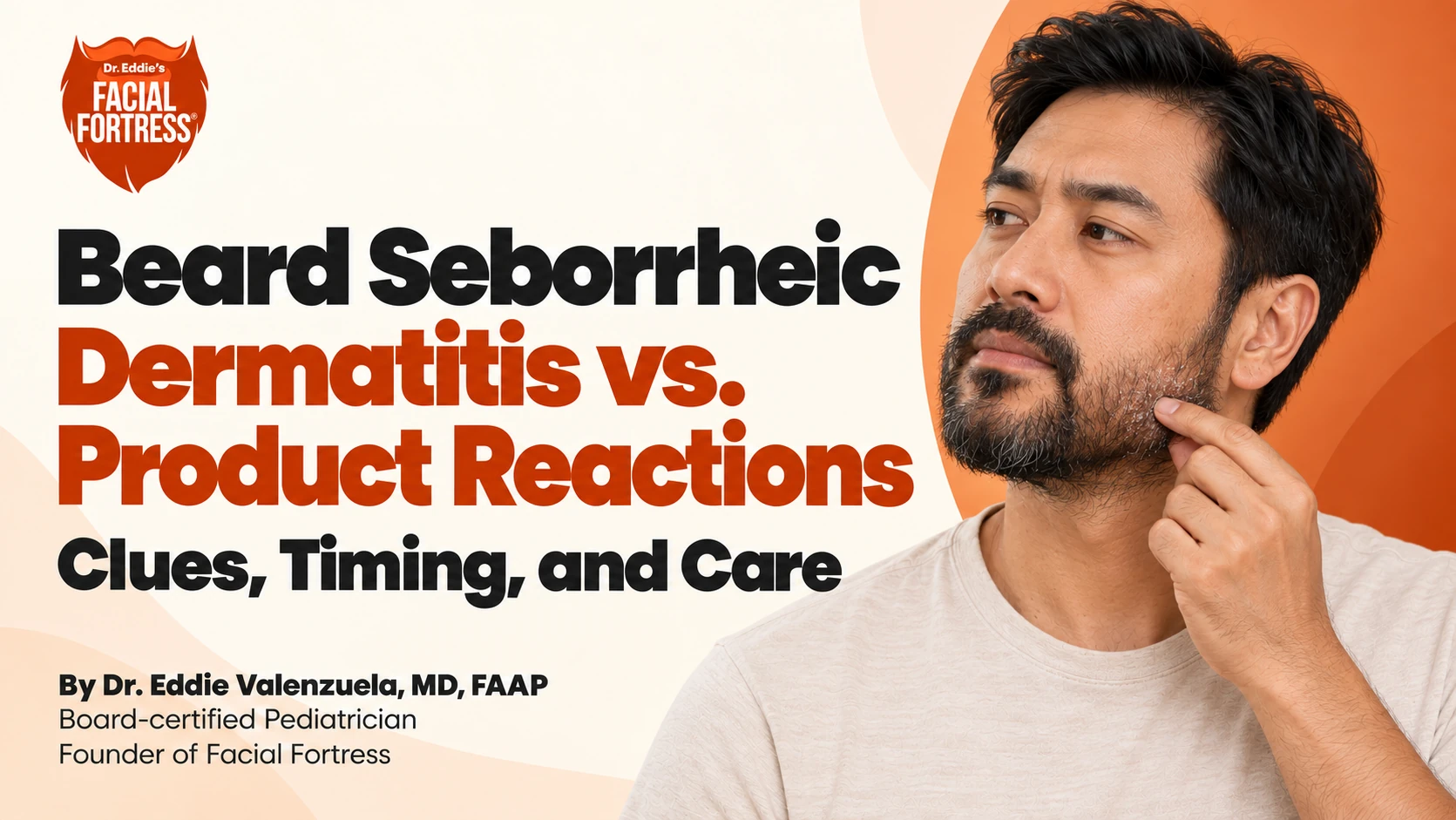
An itchy, flaky beard can reflect beard dandruff, a reaction to grooming products, or another skin condition. This guide compares beard dandruff associated with seborrheic dermatitis and product reactions known as contact dermatitis. Seborrheic dermatitis tends to follow a recurring pattern in oil-rich areas, while contact dermatitis develops when an ingredient irritates the skin or triggers an allergy. The useful clues are where the rash appears, how it changes over time and what touches the affected skin. For broader care guidance, see our guide to beard dandruff causes and treatment.
Features of Beard Seborrheic Dermatitis
Recurring Scale and Inflammation
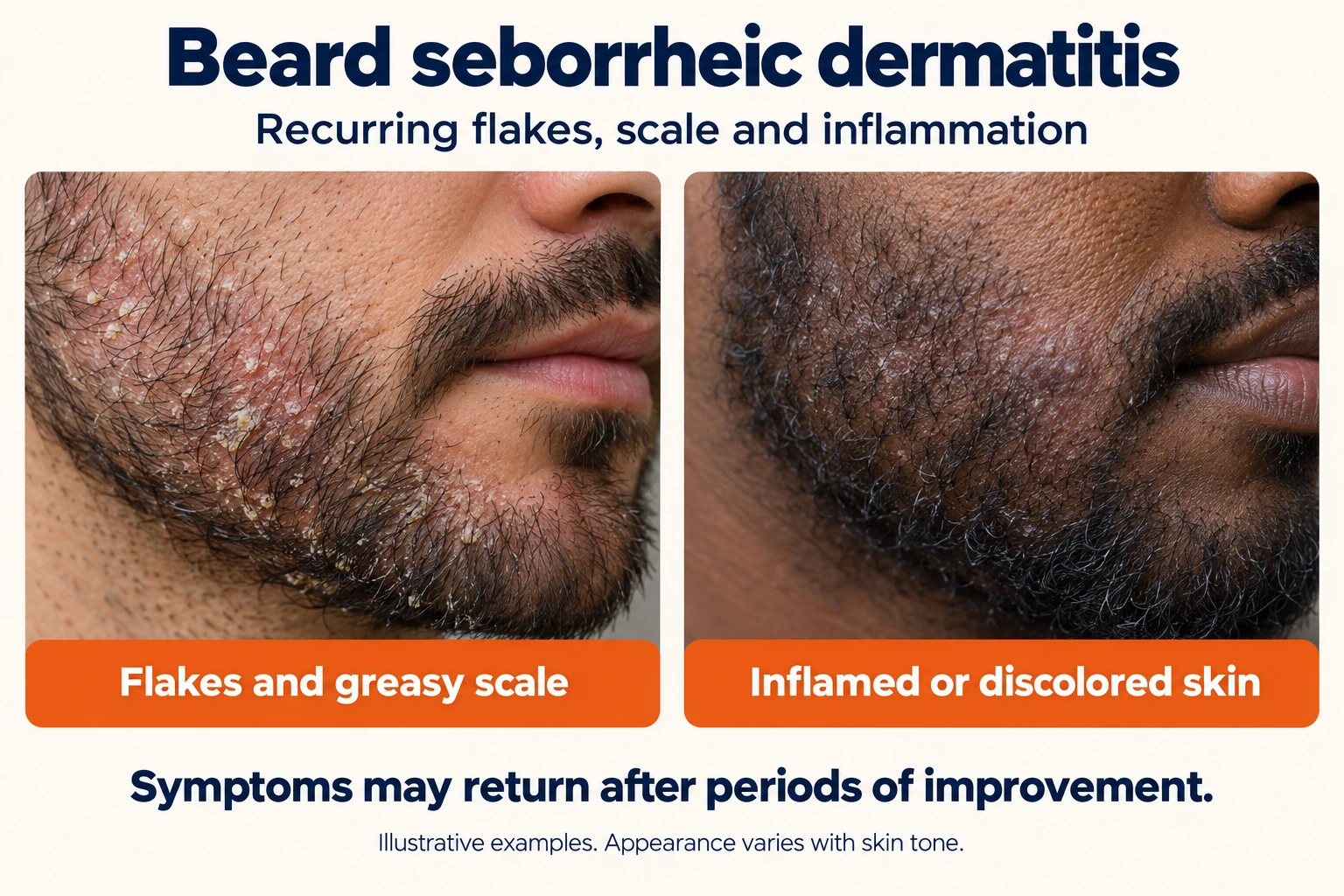
Seborrheic dermatitis can produce white or yellow flakes, greasy scale and itching beneath the beard. Similar flaking may appear on the scalp, in the eyebrows or beside the nose, and symptoms often return after a period of improvement. Inflammation may look pink or red on lighter skin, or darker, purplish or lighter than nearby skin on darker complexions. The location and recurring pattern are more useful than color alone.1
The Role of Skin Oil and Malassezia
The cause is not fully understood. Malassezia, a yeast normally present on skin, and the skin’s inflammatory response are believed to contribute. Having the condition does not mean the beard is dirty. Our guide to Malassezia and beard seborrheic dermatitis explains that relationship.2
Features of a Grooming-Product Reaction
Contact dermatitis is inflammation caused by something touching the skin. Beard washes, oils, balms and dyes can all be sources, but a reaction to one formula does not establish that every product in that category will cause trouble.
Irritation and Allergy
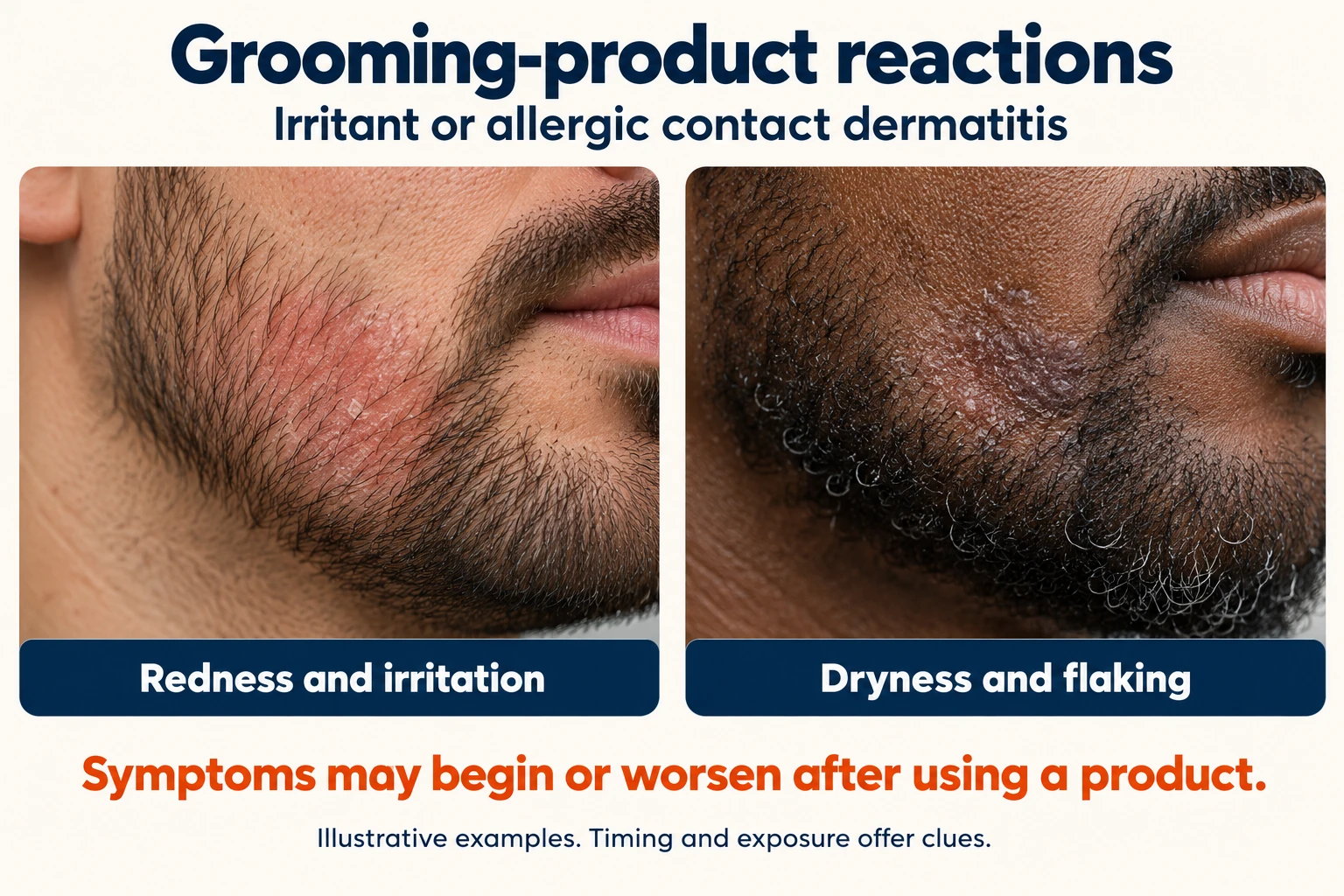
Irritant contact dermatitis develops when exposure damages the skin barrier. A strong irritant can cause symptoms quickly; repeated washing, friction or milder exposures may produce dryness and inflammation gradually. Burning or stinging can be prominent. Allergic contact dermatitis involves an immune response to a particular ingredient, such as a fragrance, preservative or hair-dye chemical.3,4
Allergy can develop after a product has been tolerated for months or years. Labels such as “natural” or “hypoallergenic” do not rule out a reaction, and fragrance-free formulas still need to be assessed against a person’s known allergies.4,5
Symptoms and Their Timing
A product reaction may cause an itchy, dry or scaly rash, burning, swelling or weeping skin. The area where a product is applied offers a clue, although allergic dermatitis can spread beyond that boundary. Allergic symptoms are often delayed by 24–72 hours, so the last product used is not necessarily the cause.4
Write down the products used before a flare, including familiar ones, and bring their ingredient lists to an appointment. A dermatologist may recommend patch testing to investigate delayed contact allergy; appearance or timing alone cannot reliably separate allergy from irritation.5
Seborrheic Dermatitis and Product Reactions Compared
The main differences involve the pattern of flaking, other affected areas, and symptoms linked to grooming products.
| Feature | Seborrheic Dermatitis | Product / Contact Dermatitis |
|---|---|---|
| Typical pattern | Often persistent or recurrent, particularly in oilier areas of the face and beard | May begin or worsen after a new or previously tolerated beard oil, balm, wash or dye |
| Flaking or scale | May cause white or yellow flakes and greasy or crusty scale | Can cause dry, flaky or irritated skin; appearance can vary |
| Other symptoms | Itching, irritation, redness or discoloration | Itching, burning, redness, irritation or rash |
| Common clues | May also affect the scalp, eyebrows or sides of the nose | Symptoms may correspond with exposure to a particular grooming or skin-care product |
| What to do | Medicated dandruff/seborrheic dermatitis care may help when used as directed | Stop the suspected product and see whether symptoms improve; persistent reactions may require medical evaluation or patch testing |
These patterns help organize the history, but they do not establish a diagnosis. Seborrheic dermatitis and contact dermatitis can occur together: a product may irritate skin that is already inflamed, so both the recurring condition and the exposure may need attention.1,3,4
Care Based on the Cause
Removing a product trigger and treating seborrheic dermatitis address different problems. A useful starting point is a simple routine that does not repeatedly sting or leave the skin feeling stripped.
Care for Seborrheic Dermatitis
Medicated dandruff products can help when seborrheic dermatitis is responsible. Choose one suitable for the affected skin and follow its directions or your dermatologist’s advice. Our beard-dandruff care guide explains the full routine, and the guide to dandruff shampoo on the beard covers product selection. A clinician can add treatment when washing alone does not control inflammation.6
Care for a Suspected Product Reaction
Stop the suspected product and keep cleansing gentle. Use a fragrance-free moisturizer you tolerate, and avoid ingredients to which you have a known allergy. Keep the packaging or ingredient list so a clinician can review it. Persistent or repeated reactions may need patch testing and anti-inflammatory treatment selected for facial skin. A medicated dandruff wash does not treat a grooming-product allergy.5
Our fragrance-free versus unscented guide explains what those labels can tell you when choosing a replacement product.
Medical Assessment for Persistent Symptoms
Arrange an examination when symptoms keep returning, remain unexplained or do not improve after removing a suspected trigger. Seek prompt care for marked swelling, painful or spreading inflammation, pus or patchy hair loss. Those findings deserve assessment for other conditions, rather than repeated trials of beard products.
Facial Fortress for Dandruff and Seborrheic Dermatitis
Facial Fortress 3-in-1 Medicated Wash contains 0.95% pyrithione zinc to help relieve flaking, scaling, itching and irritation associated with dandruff and seborrheic dermatitis. It is formulated for the face, hair and beard. The fragrance-free, dye-free formula also includes glycerin and panthenol for moisture and conditioning support.7

When dandruff or seborrheic dermatitis is the cause, follow the Drug Facts directions and warnings. The label directs use at least twice weekly for best results, or as directed by a doctor. Avoid contact with the eyes and stop use and ask a doctor if the condition worsens or does not improve with regular use as directed.7
Beard Eczema and Other Causes of Flaking
“Beard eczema” describes an area and a group of inflammatory skin conditions; it is not one specific diagnosis. People may use the term for atopic dermatitis, contact dermatitis or seborrheic dermatitis. Atopic dermatitis often involves recurring dry, itchy patches, while psoriasis may produce more defined scaly plaques. Neither a photograph nor the word “eczema” establishes which condition is present.8,9
The itchy-beard guide’s eczema section explains those clues, and its beard psoriasis section covers psoriasis and overlap with seborrheic dermatitis. For fine flakes with tight, dry skin, see dry skin vs. beard dandruff.
Medical References
- American Academy of Dermatology: Seborrheic dermatitis signs and symptoms
- DermNet: Seborrhoeic dermatitis
- DermNet: Irritant contact dermatitis
- DermNet: Allergic contact dermatitis
- American Academy of Dermatology: Contact dermatitis diagnosis and treatment
- American Academy of Dermatology: Seborrheic dermatitis diagnosis and treatment
- Facial Fortress: Ingredients and Drug Facts
- American Academy of Dermatology: Atopic dermatitis overview
- DermNet: Facial psoriasis