Quick answer: Dry, flaky skin under a mustache can come from moisture loss, a grooming-product reaction, or seborrheic dermatitis. Tightness after washing, burning after a product, and recurring scale provide different clues. Gentle cleansing and moisturizer help ordinary dryness; persistent inflammation or suspected dandruff needs care matched to its cause.
For dryness beneath the rest of your beard, see our dry-skin and beard-dandruff comparison.
A Gentle Routine for Dry or Irritated Mustache Skin
Keep the routine simple enough to notice what helps. Repeated washing, scrubbing, and rapid product changes can make an already uncomfortable area harder to assess.
Gentle Cleansing and Thorough Rinsing
Use lukewarm water and a gentle cleanser suited to your skin. Part the mustache with your fingertips so the cleanser reaches the skin, then rinse away residue and pat dry. Avoid dragging a comb across irritated skin or rubbing repeatedly with a towel. If washing consistently leaves the area tight or stinging, reassess the cleanser and technique rather than washing harder.4
Moisture Beneath the Hair
Apply a fragrance-free moisturizer while the skin is slightly damp, working a small amount beneath the mustache. A cream can be helpful for dry skin, provided you tolerate the formula. An oil or styling balm may soften the hair without meeting the skin’s moisture needs; the beard oil and moisturizer comparison explains their different roles.34
Dermal Defense Moisturizing Cream for Face & Body offers fragrance-free hydration for dry, sensitive skin. Work a small amount beneath the mustache so it reaches the skin, and use the same cream on dry areas elsewhere on your face and body. Its role here is moisture support; recurring dandruff still needs care matched to its cause.
Less Friction and Fewer Triggers
Pause scrubs and irritating grooming products while the area settles. Trim gently if longer hair makes care difficult, but shaving is not required. Notice repeatable triggers such as hot water, a particular wax, or dry indoor air. A brief note about what changed before a flare can be useful if the problem returns.
Choosing between cream and medicated wash: Use a fragrance-free cream for moisture support when the skin feels dry or tight. When dandruff or seborrheic dermatitis is responsible for the flakes and itch, Facial Fortress Medicated Wash has a different role. See care for the cause of flaking for the product directions and precautions.
The skin above the lip can feel tight or sore even when the mustache itself looks healthy. Hair can hide a developing rash and make it harder to rinse away cleanser or apply moisturizer to the skin. Looking beneath the hair, and noticing when the problem began, is more useful than judging the flakes alone.
This guide helps you sort through dryness and irritation in the mustache area. For recurring flaking already identified as seborrheic dermatitis, the mustache-dandruff treatment guide explains medicated care and maintenance.
Dry Skin, Dandruff, and Product Reactions Compared
Several conditions can leave small flakes caught in facial hair. Timing, discomfort, and changes elsewhere on the face help distinguish the possibilities, although more than one problem can occur at once. White flakes are not proof of dryness, and yellowish scale does not establish a diagnosis by itself.12
| Possible cause | Useful clues | Initial approach |
|---|---|---|
| Ordinary dryness | Tight, rough skin after washing or during dry weather. | Gentle cleansing and a fragrance-free moisturizer. |
| Product irritation or allergy | Burning, itching, or a rash where a wash, wax, balm, or dye touches the skin. | Stop the suspected product and simplify the routine. |
| Seborrheic dermatitis | Recurring scale and inflammation; eyebrows, sides of the nose, or scalp may also be affected. | Appropriate dandruff treatment suitable for facial skin. |
| Another inflammatory rash | Persistent itchy patches, a distinctive rash elsewhere, or symptoms that do not follow the expected pattern. | Have the skin examined so treatment fits the diagnosis. |
Causes of Dry, Flaky Skin Under the Mustache
Moisture Loss and the Skin Barrier
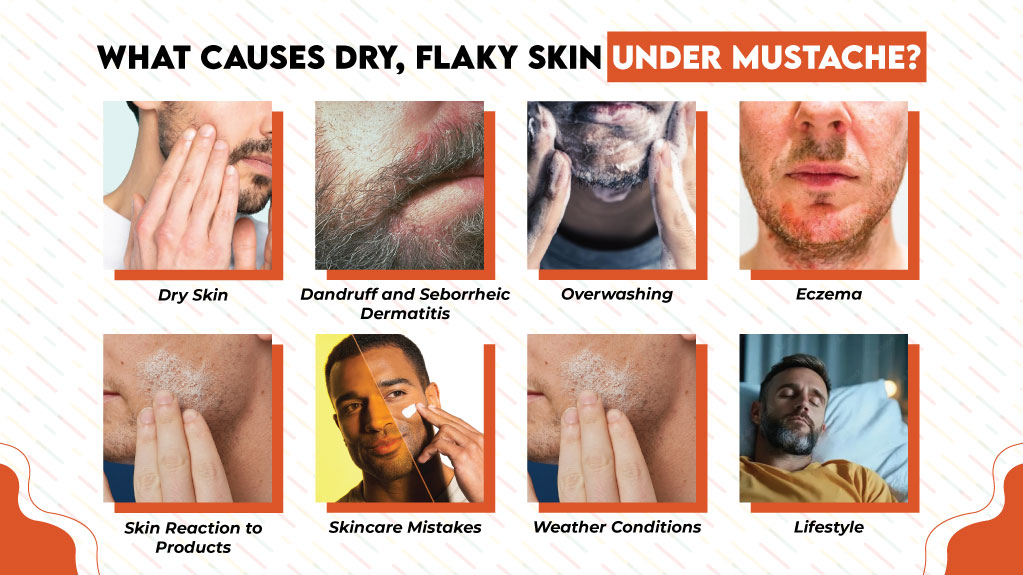
Dry skin, also called xerosis, develops when the skin does not retain enough moisture. Long, hot showers, dry indoor air, harsh cleansing, and repeated rubbing can leave the upper lip rough, tight, or itchy. A mustache does not protect the skin from these exposures, and moisturizer that coats only the hair may leave the skin underneath untreated.3
For example, tightness that appears immediately after washing suggests that the cleansing routine deserves attention. A gentler wash and moisturizer applied to the skin can make more sense than adding a scrub. Happy Cappy’s explanation of the hydrolipidic film and skin barrier describes how surface oils and the outer skin layer help limit water loss.
Irritation and Allergy to Grooming Products
A cleanser, mustache wax, balm, fragrance, or beard dye can cause irritation or an allergic reaction. Burning or stinging may appear quickly, while an allergic rash can be delayed. A product does not have to be new: allergy can develop after earlier use without difficulty. The distribution of the rash matters as much as the date on which the product was introduced.2
Stop a suspected trigger and avoid layering several new products onto irritated skin. If reactions keep returning, a clinician may recommend patch testing for contact allergy. The seborrheic dermatitis and product-reaction comparison explains this distinction more fully. A fragrance-free or hypoallergenic label may help with selection, but it cannot guarantee individual tolerance.
Recurring Seborrheic Dermatitis
Seborrheic dermatitis often affects the central face and scalp. Beneath a mustache, it can produce recurring scale, itch, and inflamed patches. Inflammation may look pink or red on lighter skin, or darker, lighter, or purple-toned on darker skin. Similar changes beside the nose or in the eyebrows add useful context.1
The condition involves interactions among normal Malassezia yeast, skin oils, and the skin’s response. It is not evidence of poor hygiene, and trying to remove every trace of oil can add irritation. The facial seborrheic dermatitis guide covers the wider facial pattern.
Eczema and Other Persistent Rashes
Atopic eczema can cause dry, intensely itchy patches, while psoriasis and other facial rashes can also resemble a stubborn flaky area. Recurrent cracking, a rash elsewhere, or changes that persist despite a simple routine deserve a closer look. The broader itchy-beard guide explains these and other possibilities. A dandruff wash does not replace treatment for every kind of eczema or facial rash.
Choosing Care for the Cause of Flaking
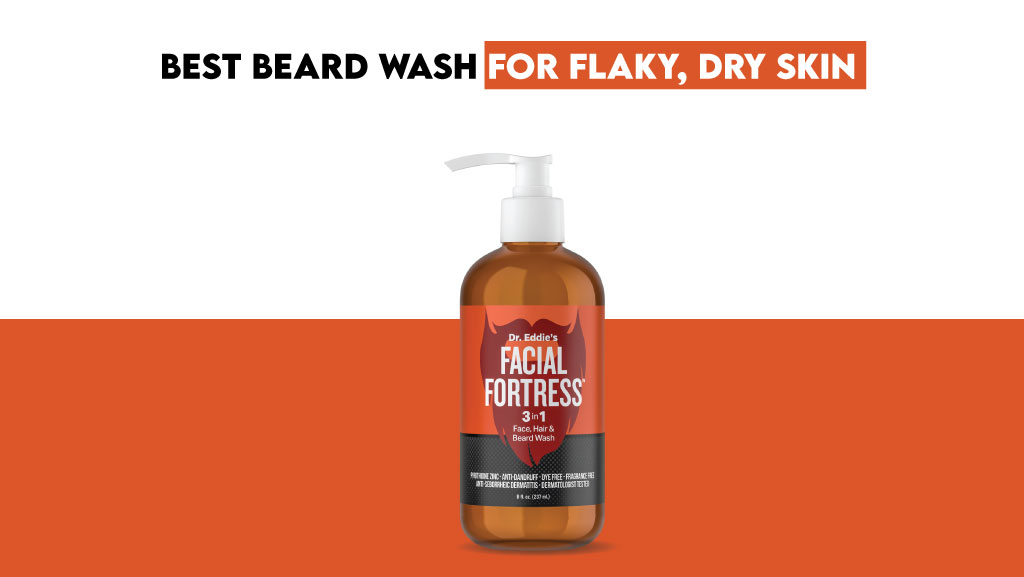
For ordinary dryness, begin with gentle cleansing and moisturizer. For a suspected product reaction, removing the trigger is the first step. When dandruff or seborrheic dermatitis is responsible, an appropriate medicated wash can address the associated flaking and itching.
Facial Fortress 3-in-1 Medicated Wash contains 0.95% pyrithione zinc for dandruff and seborrheic dermatitis symptoms. Its fragrance-free, dye-free formula includes glycerin and panthenol. The mustache-dandruff guide explains its role in a medicated routine; follow the product’s directions rather than treating every kind of flaking as dandruff.5
Medical Assessment for Persistent or Changing Symptoms
Have persistent, worsening, or repeatedly returning symptoms assessed, particularly if the cause remains unclear. Pain, pus, spreading inflammation, drainage, or patches of hair loss need attention. Bring the products you use and explain whether symptoms follow washing, grooming, or a recurring pattern. That history helps turn a vague description of “dry skin” into a more useful care plan.
Medical References
- DermNet. Seborrhoeic dermatitis.
- American Academy of Dermatology. Contact dermatitis: Signs and symptoms.
- American Academy of Dermatology. Dermatologists’ tips for relieving dry skin.
- American Academy of Dermatology. A dermatologist’s top tips for a healthy beard.
- DailyMed. Facial Fortress pyrithione zinc shampoo: Drug Facts.