Quick answer: Dandruff is generally the mild, scalp-limited end of the seborrheic dermatitis spectrum. It causes flaking with little obvious inflammation. Seborrheic dermatitis can cause a more noticeable rash on the scalp and may also affect the face, beard, chest, or skin folds. Flake color alone cannot reliably tell them apart.
Dandruff and seborrheic dermatitis are closely related, which explains why their names and treatments often overlap. The useful distinction is how much inflammation is present and which areas need care. A few loose scalp flakes and an irritated patch beside the nose can belong to the same broad condition while needing different treatment choices.
This comparison explains those differences without turning them into a diagnosis from a single symptom. The adult seborrheic dermatitis overview covers the condition as a whole.
Dandruff on the Scalp
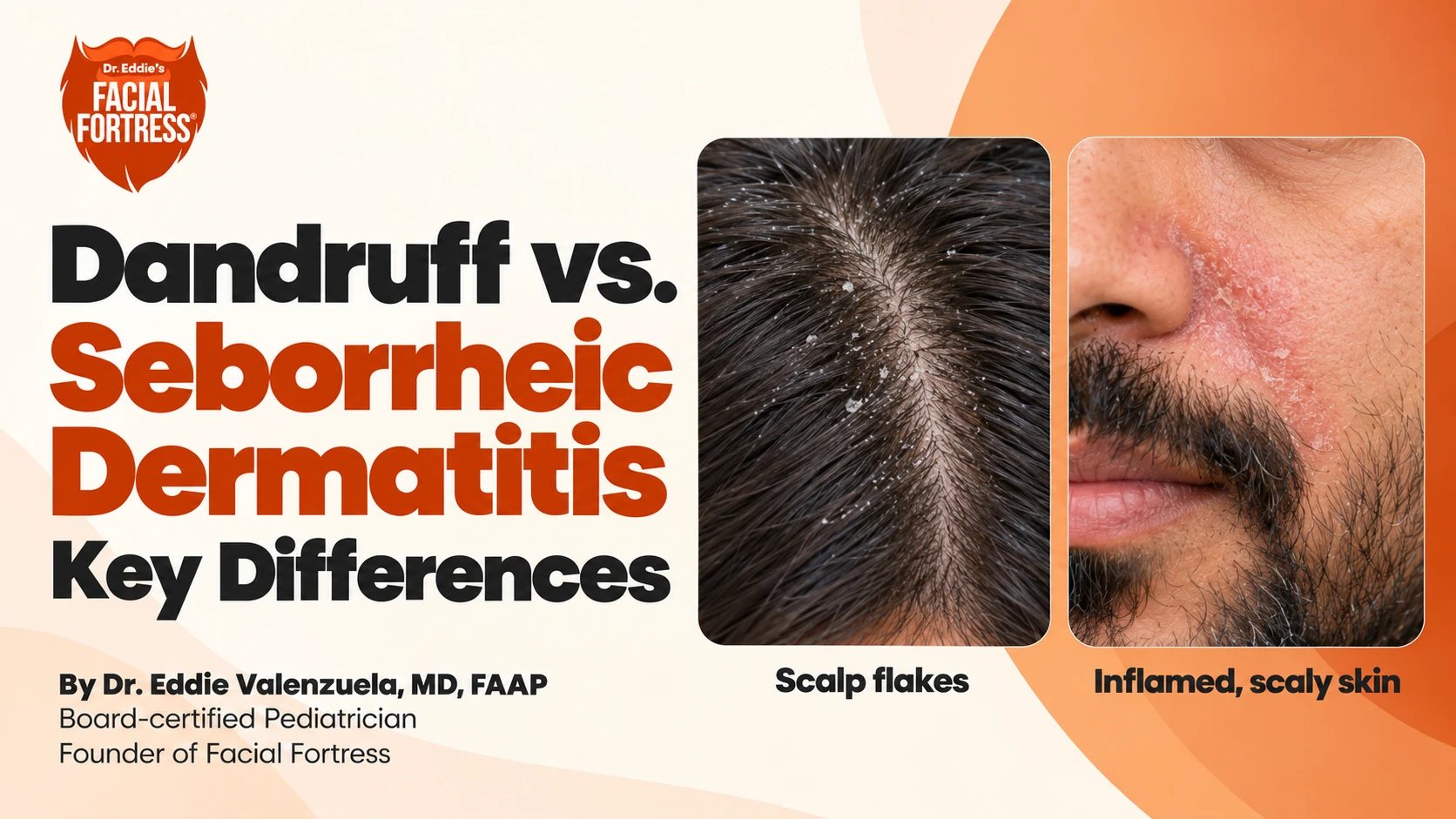
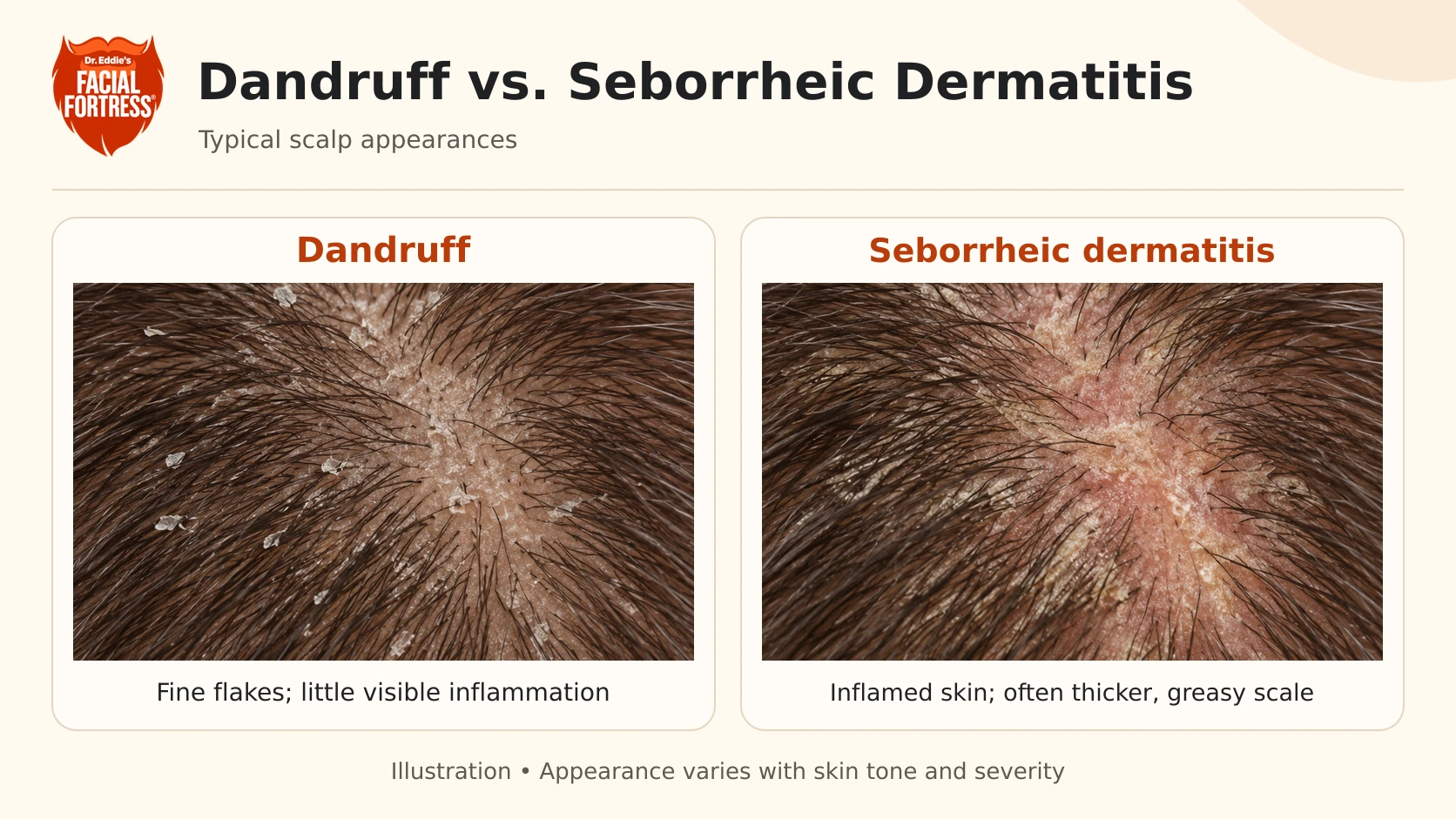
Dandruff usually means diffuse scalp flaking without a clearly inflamed rash underneath. The flakes may look white or yellowish, and the scalp can itch. Some flakes fall easily onto clothing; others remain caught near the roots. Their appearance does not establish that the scalp is simply dry or that you need to wash harder.1
“Little obvious inflammation” describes what is visible. It should not be read as proof that dandruff has completely separate biology from seborrheic dermatitis. Both involve the scalp’s response to its normal environment, and the boundary between the terms is not always sharp.
Seborrheic Dermatitis and Visible Inflammation
Seborrheic dermatitis produces recurring scale with more noticeable inflammation. Affected skin may itch or feel irritated, and scale can be fine or more adherent. On lighter skin, the rash often appears pink or red. On darker skin, it may look lighter, darker, or somewhat purple, so redness is an unreliable measure by itself.2
The scalp may be the only affected area. Seborrheic dermatitis can also involve the eyebrows, sides of the nose, ears, beard, chest, and some folds. Symptoms outside the scalp therefore support the broader pattern, but their absence does not rule it out. The facial seborrheic dermatitis guide explains common facial locations.
Key Differences and Areas of Overlap
The whole pattern is more useful than the color of an individual flake. Both conditions can produce white or yellow scale, and itching varies. This table compares typical presentations rather than providing a checklist that can confirm a diagnosis.
| Feature | Dandruff | Seborrheic dermatitis |
|---|---|---|
| Location | Scalp-limited by the usual definition. | May be scalp-only or involve other characteristic areas. |
| Inflammation | Little or no visibly inflamed rash. | More noticeable inflammation or skin-color change, which varies with skin tone. |
| Scale | Often loose, fine flakes; color and oiliness vary. | Fine or more adherent scale; may look greasy, but not always. |
| Itching | Can occur. | Can occur; intensity does not reliably separate the two. |
| Treatment needs | A suitable dandruff shampoo may be enough. | May need a wash, a leave-on medicine, or additional control of inflammation suited to the location. |
Shared Contributing Factors
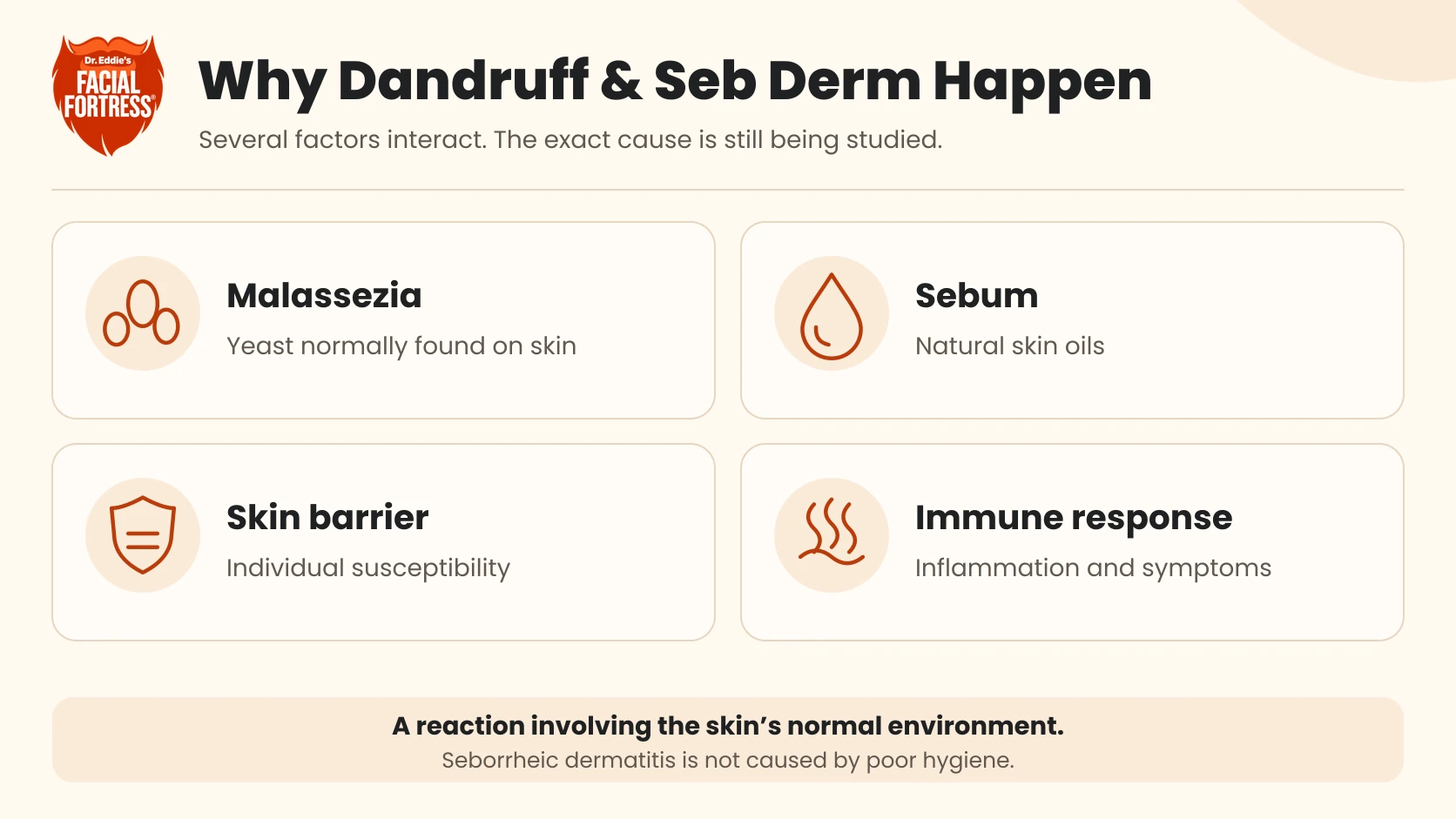
Malassezia is a yeast that normally lives on skin. In dandruff and seborrheic dermatitis, its activity interacts with skin oils, the skin barrier, and the individual’s inflammatory response. The presence of yeast alone does not explain who develops symptoms, and neither condition should be reduced to having too much oil or poor hygiene.3
This shared biology helps explain why some treatments benefit both conditions. It also explains why simply removing visible flakes does not prevent another flare. The Malassezia guide develops the yeast and skin-response relationship in more detail.
Other Conditions That Can Resemble Dandruff
Flaking is a symptom, not a diagnosis. Dry skin, contact dermatitis, psoriasis, and fungal infections can resemble dandruff or occur alongside it. A new product followed by burning or itching suggests a different history from flakes that repeatedly return in the same oil-rich areas.
For scalp flakes, the oily and dry-looking dandruff comparison explains why appearance alone does not identify the cause.
For symptoms beneath facial hair, our beard dandruff and dry-skin comparison explains the moisture distinction, while the product-reaction guide covers irritant and allergic patterns. Thick, well-defined plaques can suggest psoriasis, but overlapping appearances need clinical judgment.
Painful swelling, pus, broken hairs, or distinct patches of hair loss deserve assessment. Ringworm involving the scalp or beard can affect hairs and needs a different treatment plan. Those changes should not be managed indefinitely as ordinary dandruff.8
How the Difference Affects Treatment
Scalp Flaking
A dandruff shampoo may be sufficient when flaking is confined to the scalp and there is little visible inflammation. Common over-the-counter active ingredients include pyrithione zinc, selenium sulfide, ketoconazole, salicylic acid, sulfur, and coal tar. They have different roles and directions, so follow the chosen product’s label, including how long to leave it on and how often to use it.4
The medicine needs to reach the scalp beneath the hair. Hair texture and dryness also affect the surrounding washing routine; the washing-frequency guide explains those practical adjustments.
Inflamed Skin and Other Sites
More inflamed or persistent seborrheic dermatitis may need a leave-on antifungal or an anti-inflammatory prescription. Facial skin and moist folds require choices suited to those locations. A scalp shampoo’s directions should not automatically be carried over to the face or eye area.5 The prescription-treatment guide explains those options, and the beard-dandruff guide develops the full beard routine.
Facial Fortress is one rinse-off option containing 0.95% pyrithione zinc for associated flaking, scaling, and itching. Its role is medicated symptom control, rather than treatment for every possible cause of flakes. Follow the Drug Facts directions and warnings for the intended area.6
Reducing Recurrence
Both dandruff and seborrheic dermatitis can return after they improve. A maintenance schedule may keep symptoms controlled without treating every day as an active flare. Keep cleansing gentle, avoid scraping attached scale, and adjust products that repeatedly irritate your skin. Cold or dry weather and stress can accompany flares, but a recurrence does not mean you have done something wrong.7
If an appropriate routine is not helping, reassess the diagnosis and treatment instead of repeatedly adding products. Understanding the pattern lets you choose care for the skin you actually have: mild scalp flaking, a more inflamed rash, or another condition that needs its own approach.
Medical References
- DermNet: Seborrhoeic dermatitis.
- American Academy of Dermatology: Signs and symptoms.
- American Academy of Dermatology: Causes.
- American Academy of Dermatology: How to treat dandruff.
- American Academy of Dermatology: Diagnosis and treatment.
- DailyMed: Facial Fortress Drug Facts.
- American Academy of Dermatology: Self-care.
- American Academy of Dermatology: Ringworm signs and symptoms.